Hibiscus is a great flower to photograph. The contrast between the green sepals and bracts, showy red petals (this particular variety), deep red pistils surrounded by bright yellow stamens make a great study in contrast especially against a dark background. You may not enjoy the botany below, but I’m sure you’ll agree that nature truly offers a marvelous spectacle in the microscopic.
Click on any picture to see a larger version!!
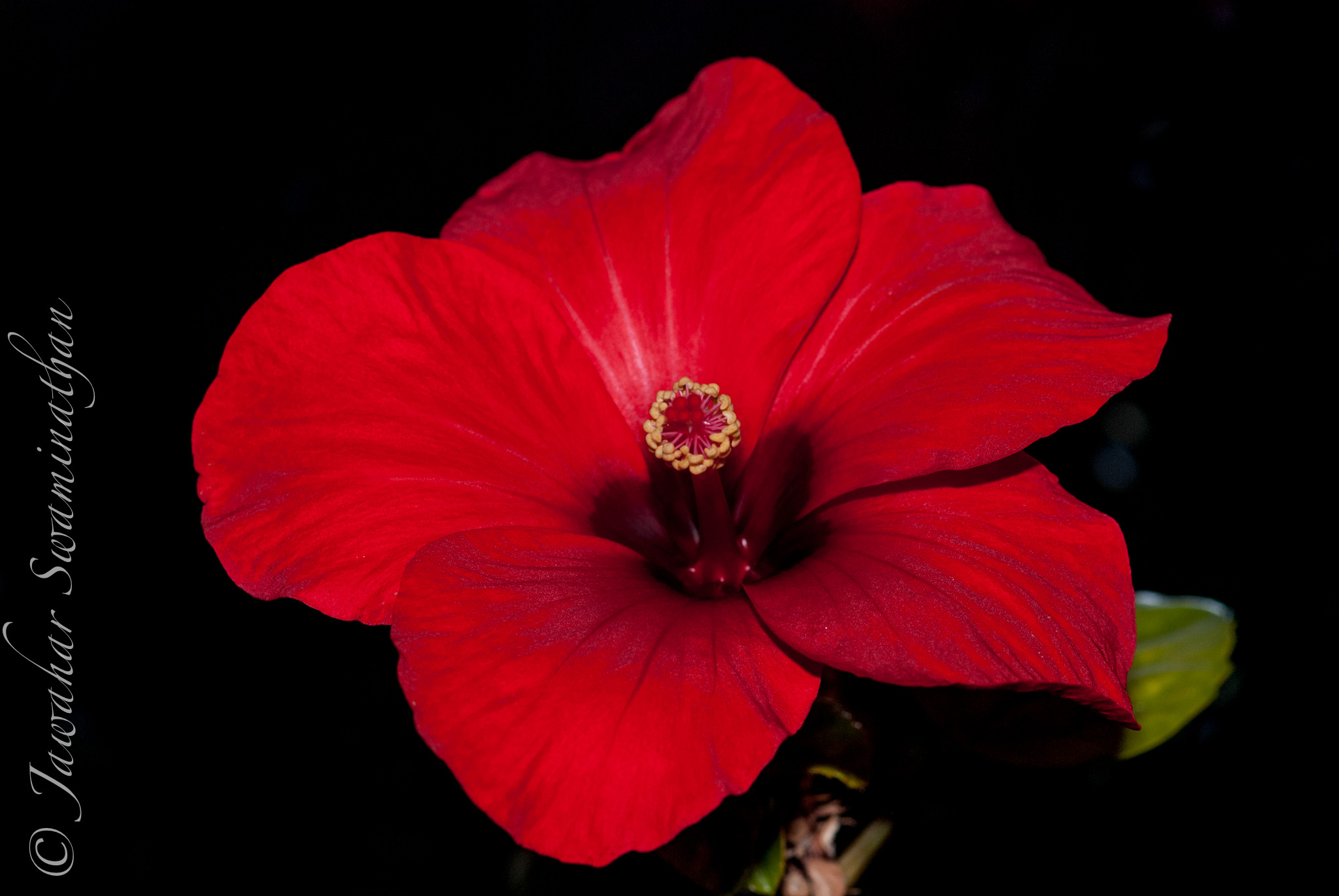
A fully open hibiscus flower
We all learned in school botany (well some of us!) about the various parts that make up a flower. Generally, flowers have 3 components –
Calyx – made up of sepals that protect the bud in infancy and form the base of the flower
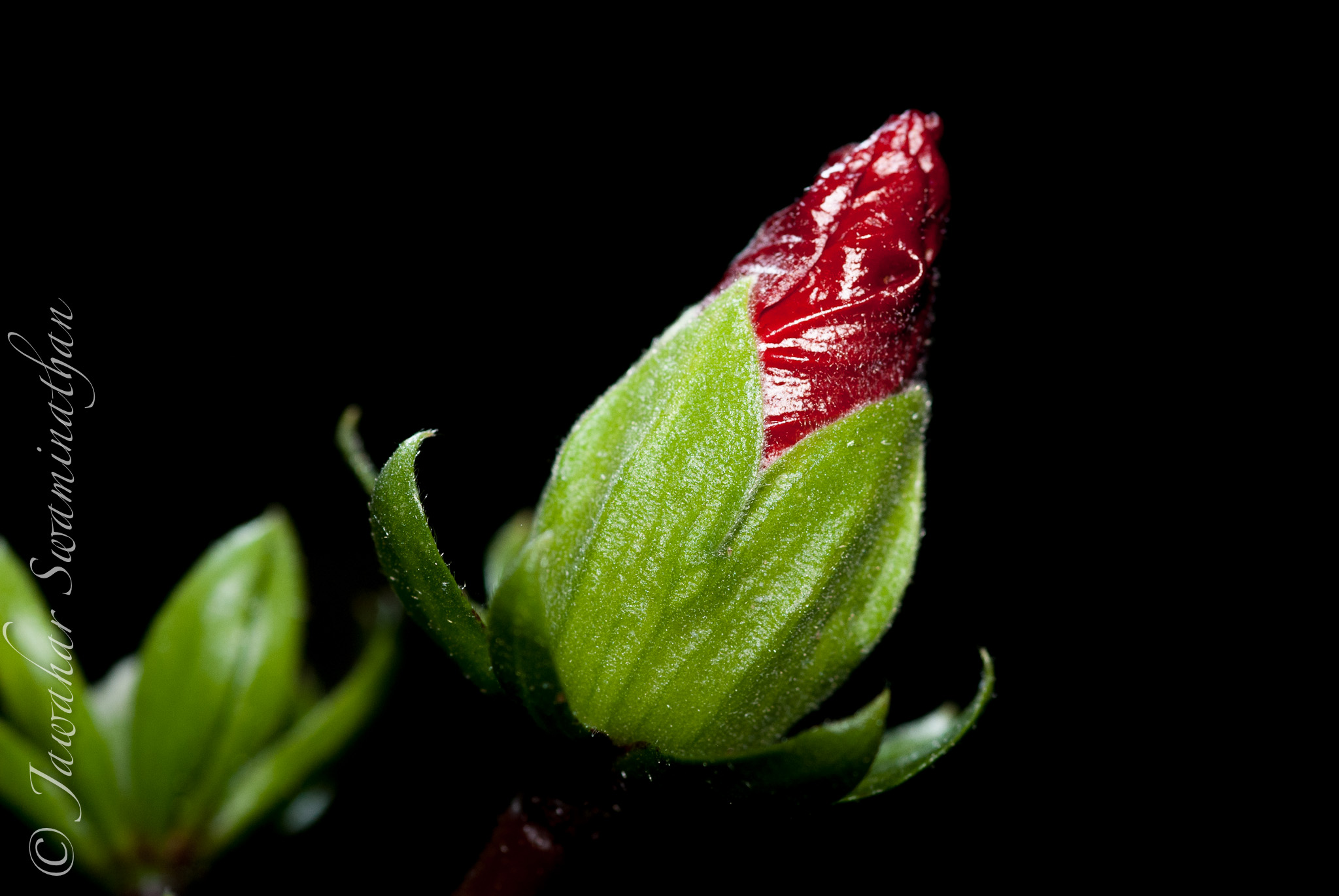
A hibiscus bud showing bracts and the calyx (which are both modified leaves!)
Corolla – made up of showy petals that encase the reproductive organs
A hibiscus petal
Reproductive parts (Corolla, Stamen) that are in turn
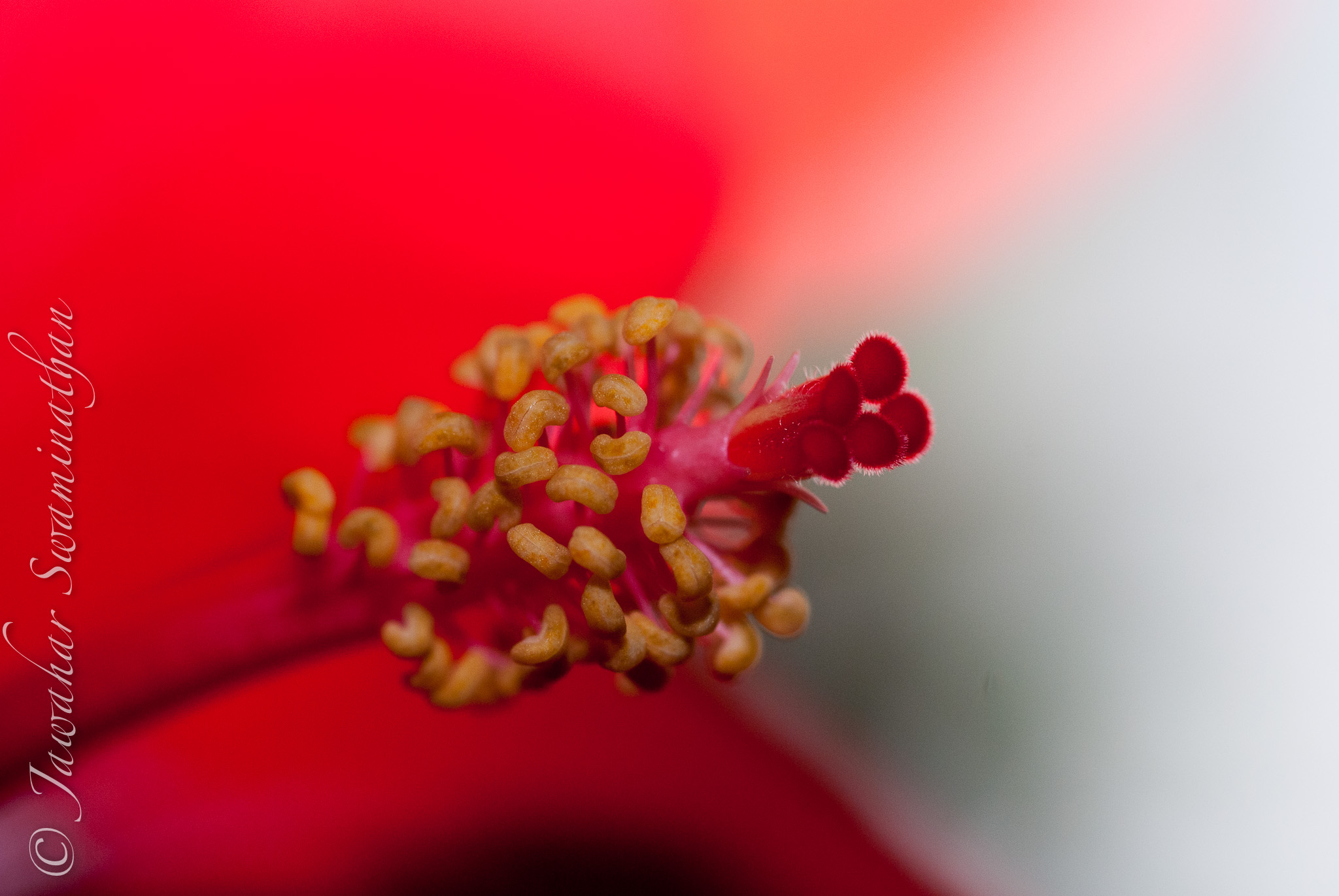
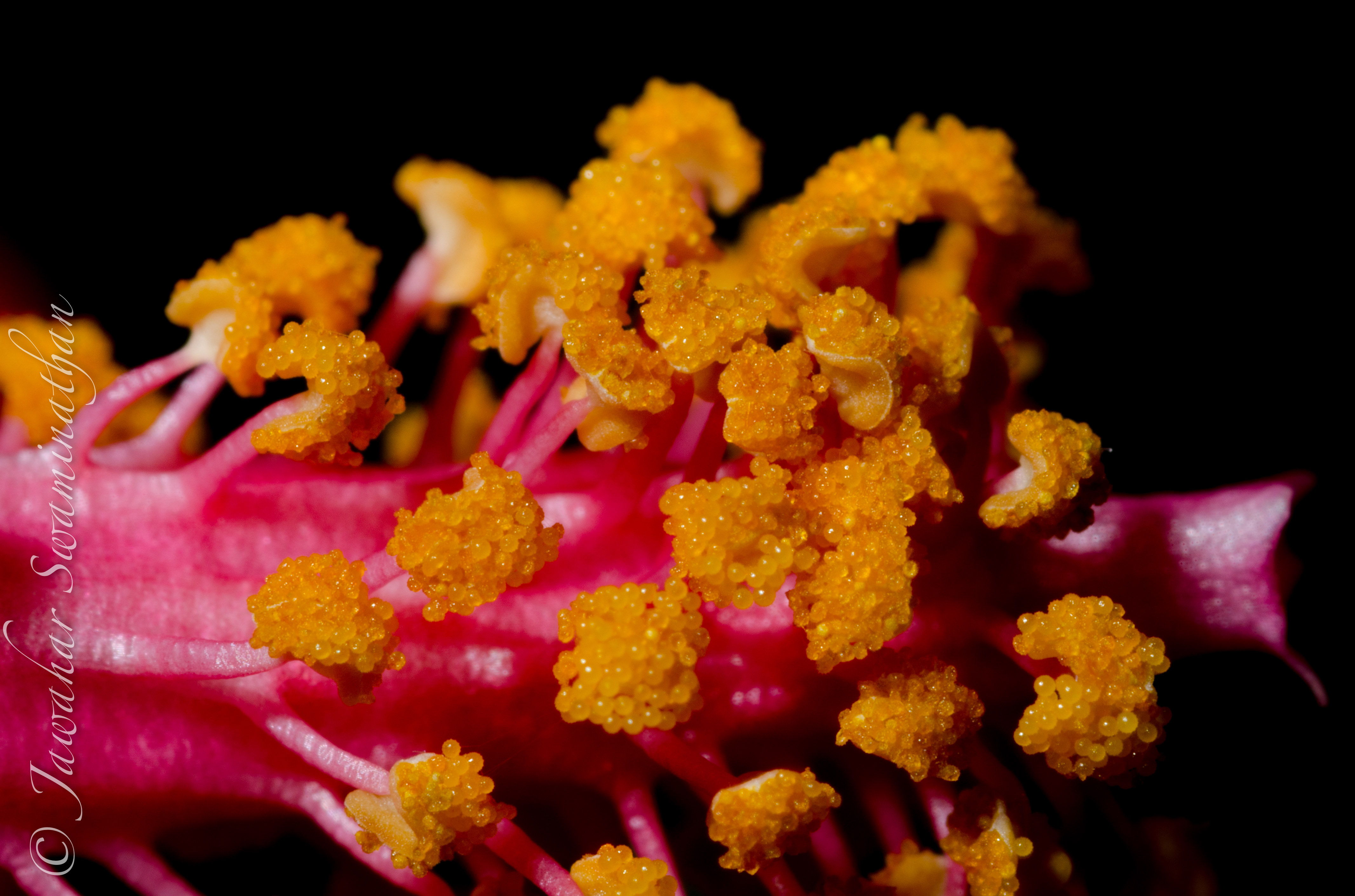
Detail of a hibiscus stamen (male) and pistil (female)Close-up of the reproductive organs of a Hibiscus flower. The yellow stamens and the red pistils.
Stamen – that make up the male reproductive parts – in turn made up of the filament that holds up the pollen sac or anther. The anther releases pollen when open.
Detail of a Hibiscus flower stamen.Even closer. Glittering Hibiscus pollen on anthers held up by the filament – forming the stamen of the Hibiscus flower.
Pistil – The female reproductive parts of a flower. These are also made up of three components
Ovary – that finally forms the seed after fertilization
Style – a stalk above the ovary
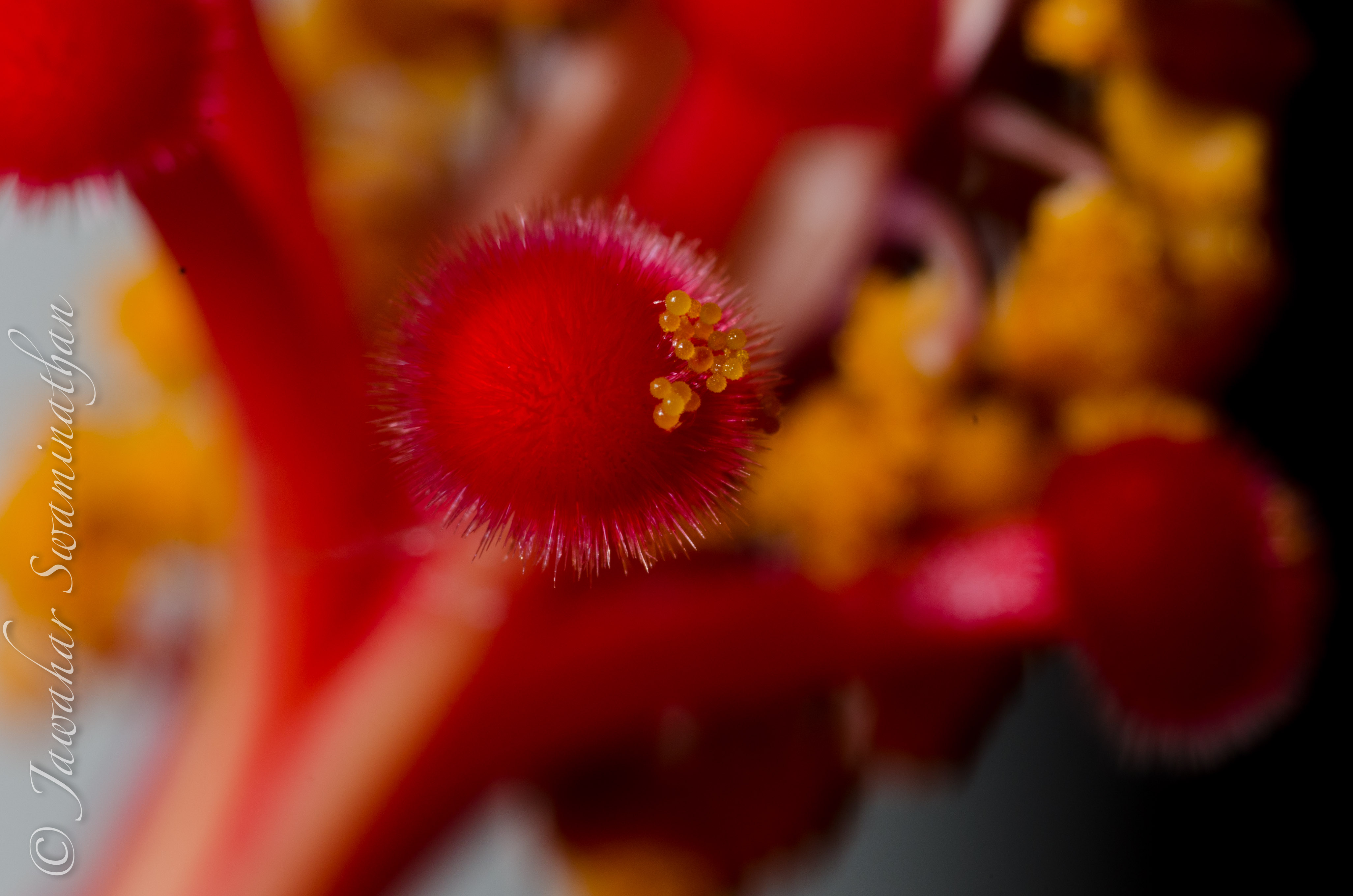
Stigma – the farthest extend of the female part of the flower which receives the pollen for fertilization. This is usually sticky and allows pollen to attach.
The stigma of a Hibiscus flower, with pollen on them.
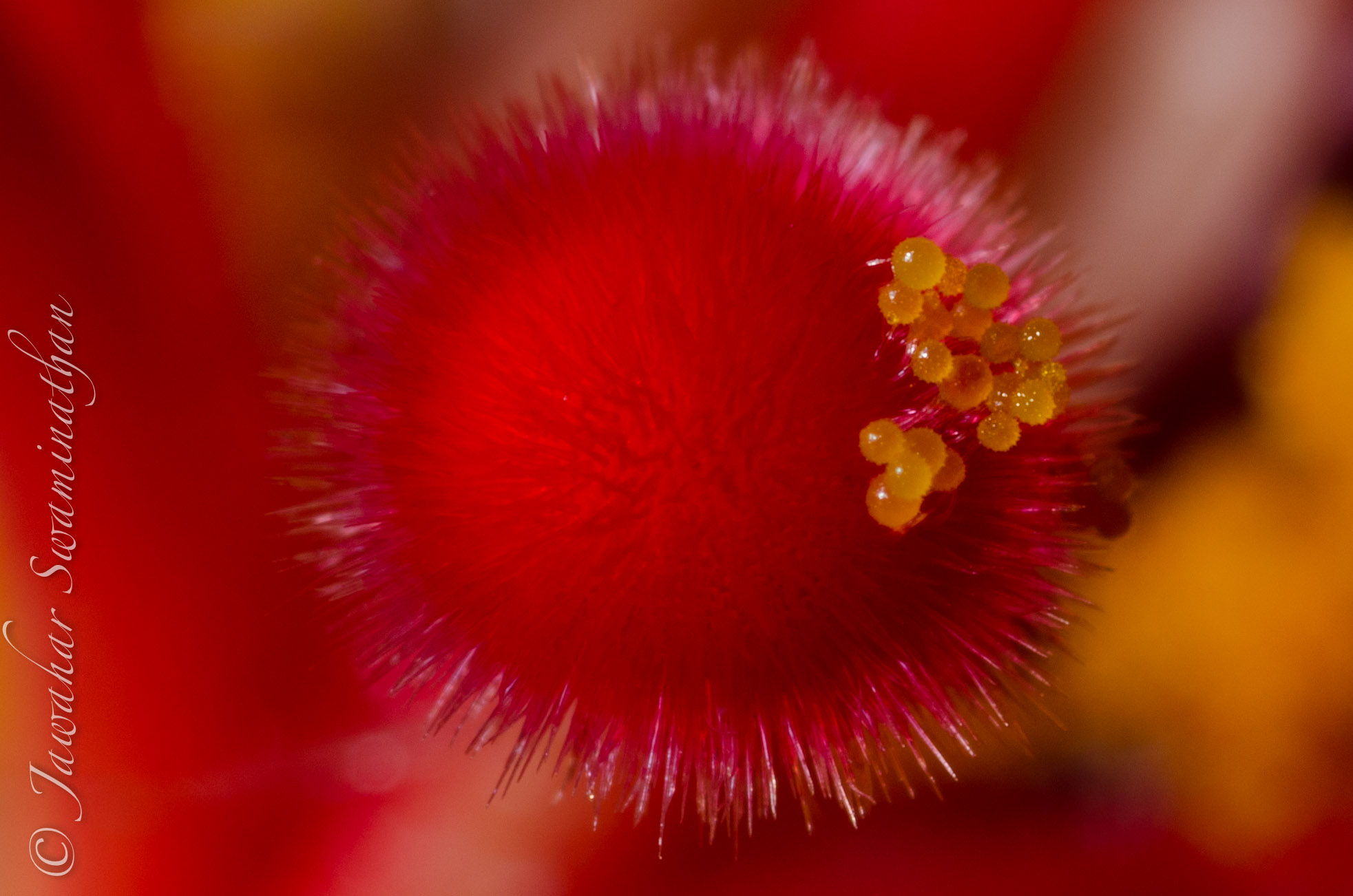
The pollen in the above picture look spherical, don’t they? But in the picture below, which is a crop of the above, you can see that the pollen grains are spiky, thereby allowing them to stick to the stigma surface.
100% crop of a stigma showing the real structure of pollen.
Well, that’s my botany lesson! Thanks for stopping by….
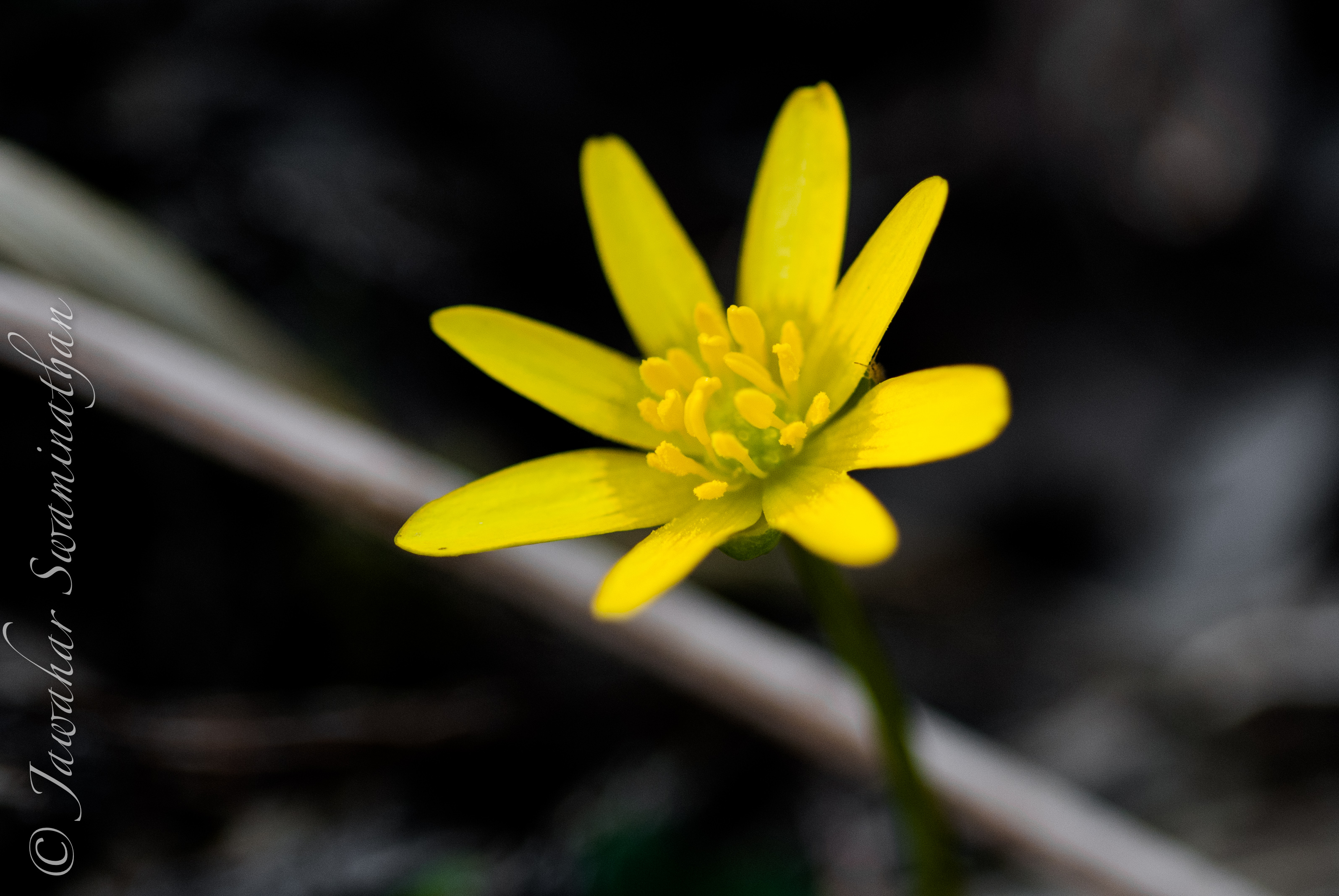
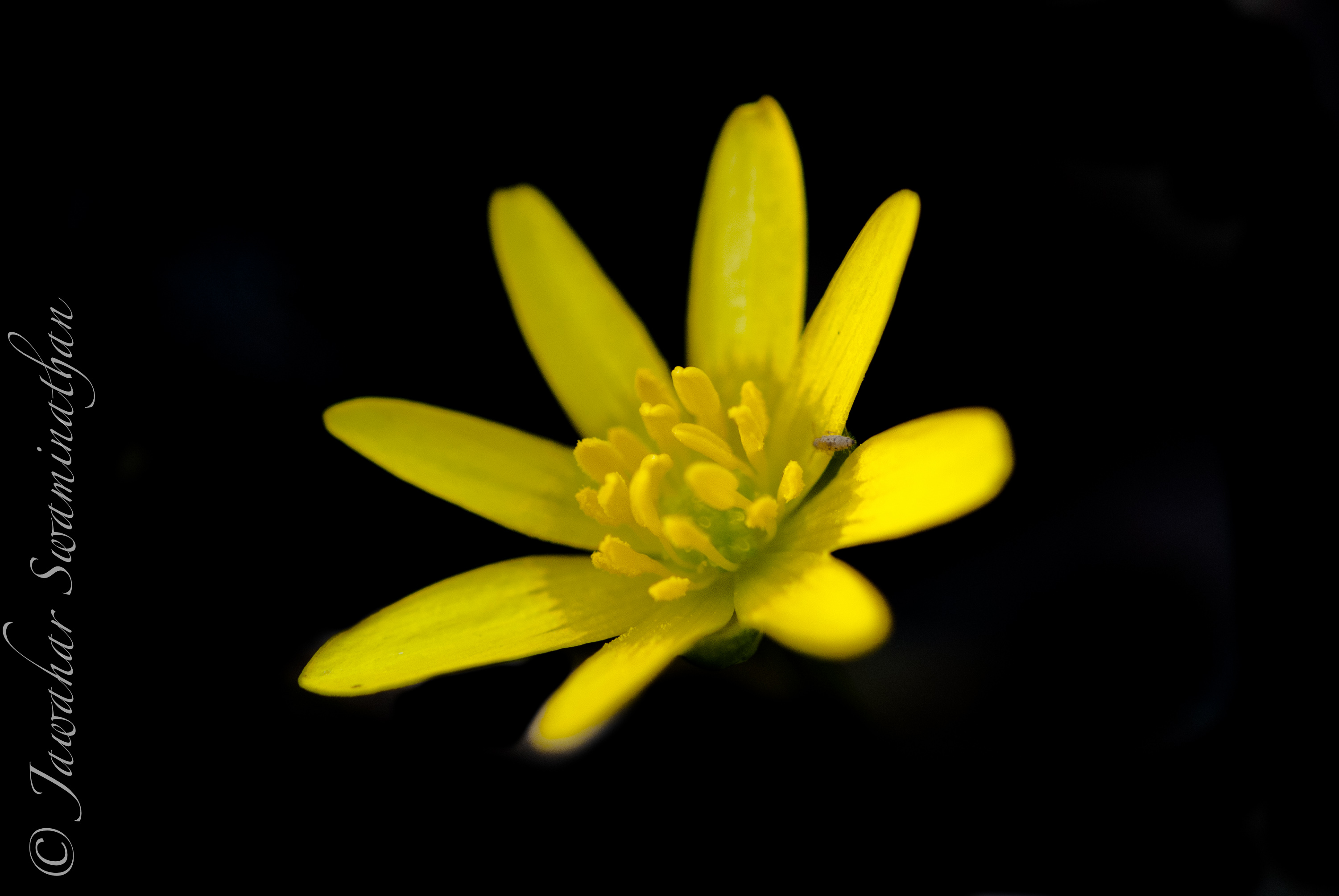
The world hasn’t ended so far today and it seems unlikely to do so in the next 8 hours left (or maybe the Mayan Calendar was just crap to begin with)!! But if it does in the next 8 hours and 22 minutes, I wanted to leave you with a couple of pictures in what could be my last blog posting!!
Did you spot the tiny spider in both the pictures on the middle-right of the picture? These flowers are those of the Lesser Celandine. Also known as pilewort since the plant was believed to be useful for the treatment of piles. Impressive knowledge to have if the world comes to an end.
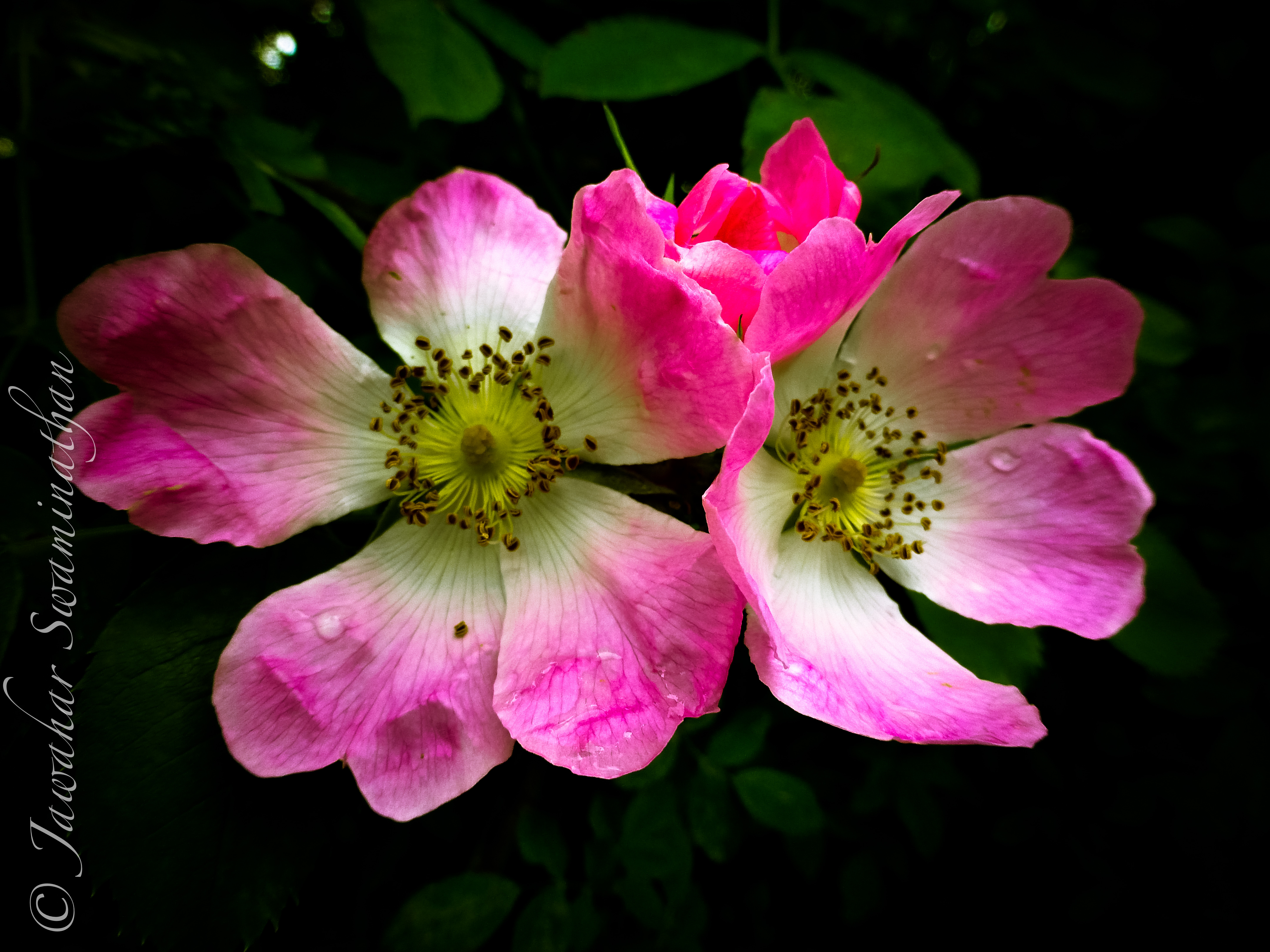
The name dog rose conjures up images either roses for dogs, or rose in the shape of dogs. This is neither! Dog rose or Rosa canina is a common species of climbing wild rose native to Europe.
The seeds (hips) of this rose are very rich in vitamin C and used in the preparation of rose-hip tea (see my post Hip Hip Rose). As for the name of this rose, Wikipedia lists two possibilities – common or worthless or as a treatment for the bite from rabid dogs. I think the former is more likely etymology for this plant as it is genuinely common along hedgerows in England. The flowers are pink, have little or no fragrance.
Photographed on one of my summer walks using a Panasonic TZ30 compact camera.
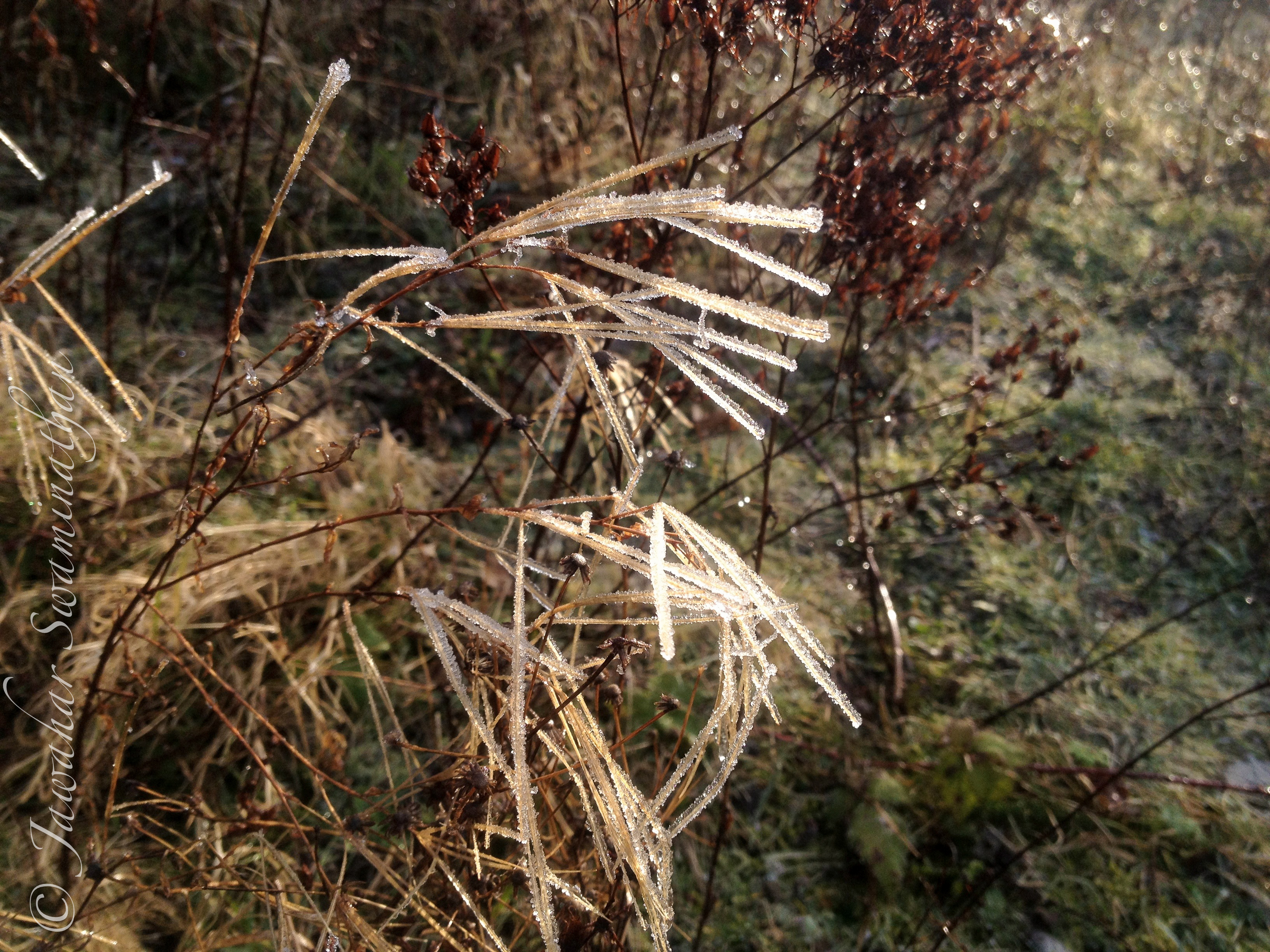
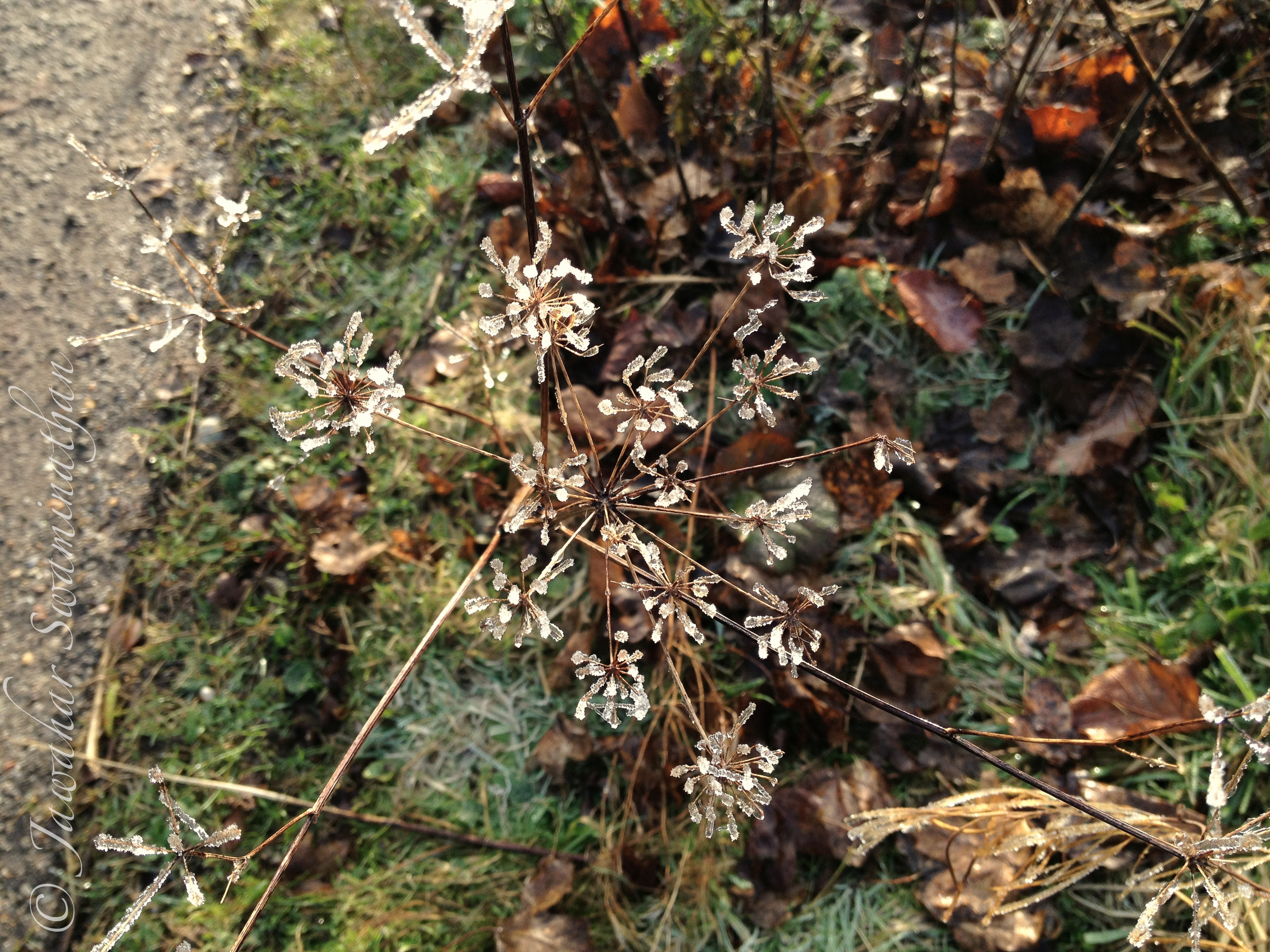
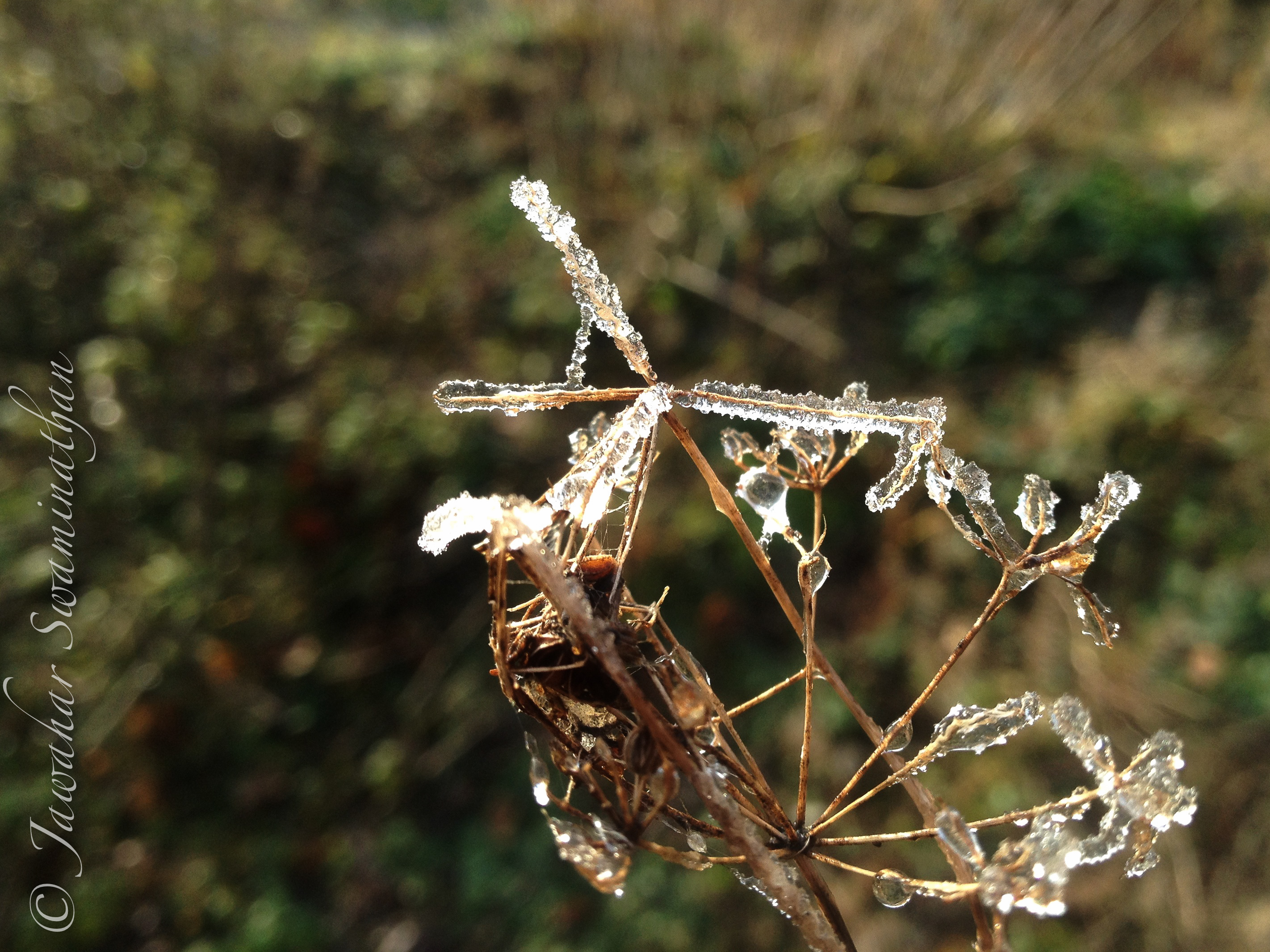
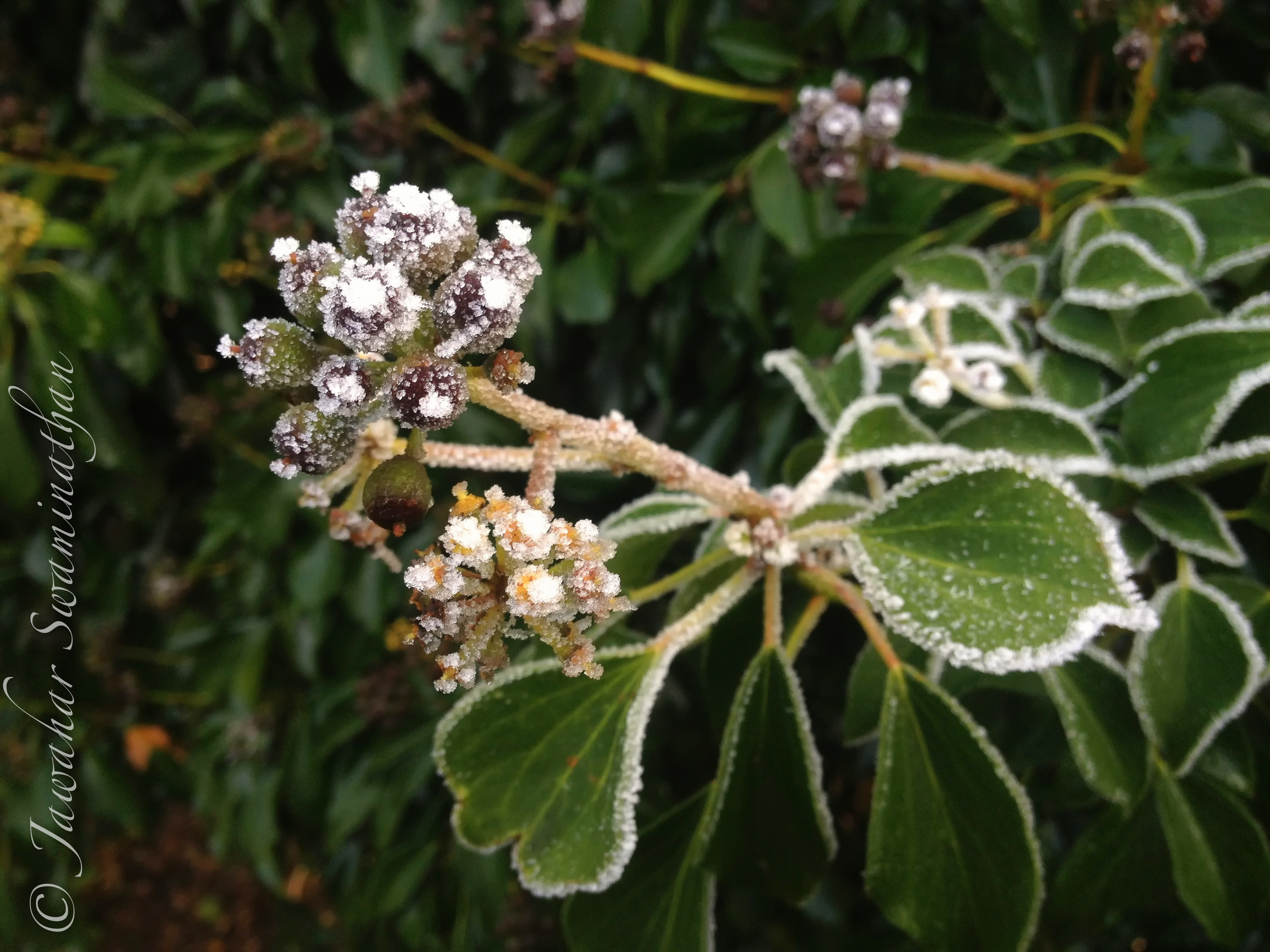
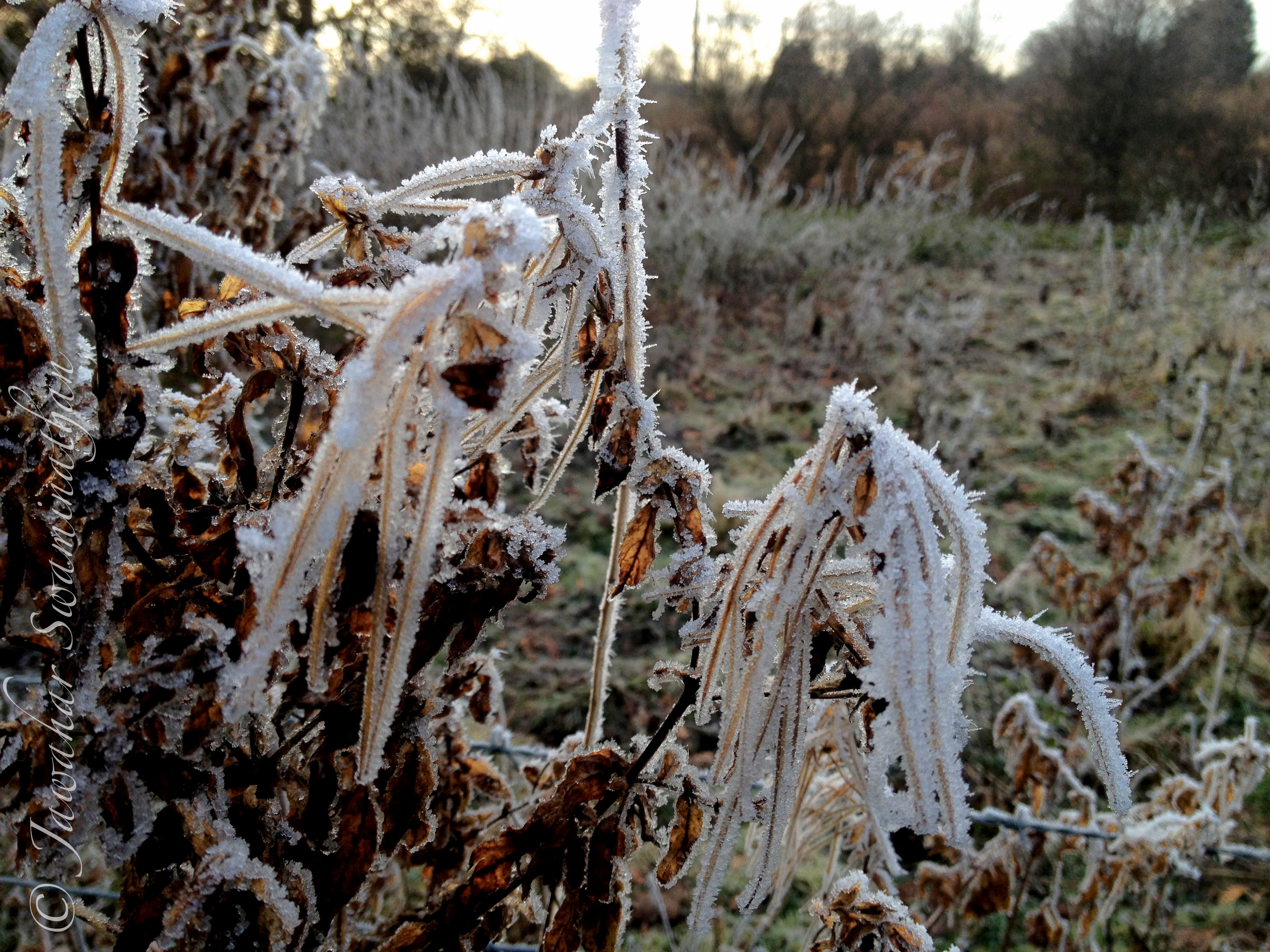
The temperature across East Anglia touched a chilly -6C over the last two nights. Winter is well and truly here in Cambridge. The rapid drop in temperature meant some great opportunities for photography across my place of work. The pictures below are all from my iPhone 4S. As always you can click on the pictures to see and appreciate these flowers of ice.
Ice flowerThis Brassica died out in the summer, but there’s this second chance to see how it would have looked!Extreme frost!!Frozen in time!The leaves of this plant are usually dark green except today!This used to be a Teasel plant..
All pictures with an iPhone 4S (it was too cold to carry anything else!). The images were post-processed in Color Effex Pro 3.0 plugin inside Adobe Lightroom 4.3
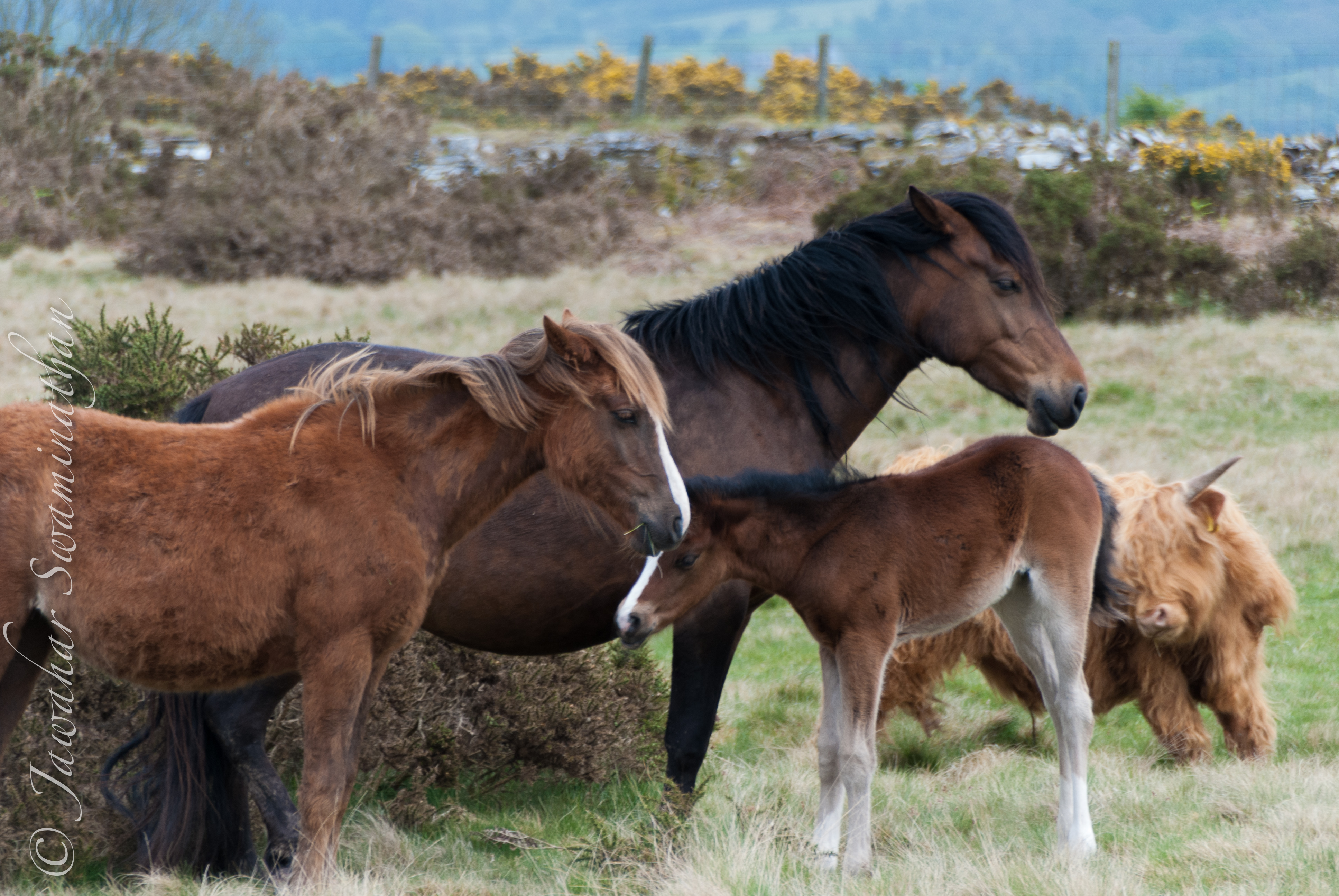
I really didn’t think I’d get this far, but this is my hundredth blog posting!! The pastoral scene below is from the Brecon Beacon National Parks. Horses and a highland cow!
I mustn’t forget to add that it was extremely windy on the day, which is probably why the horses have such expressions on their faces!
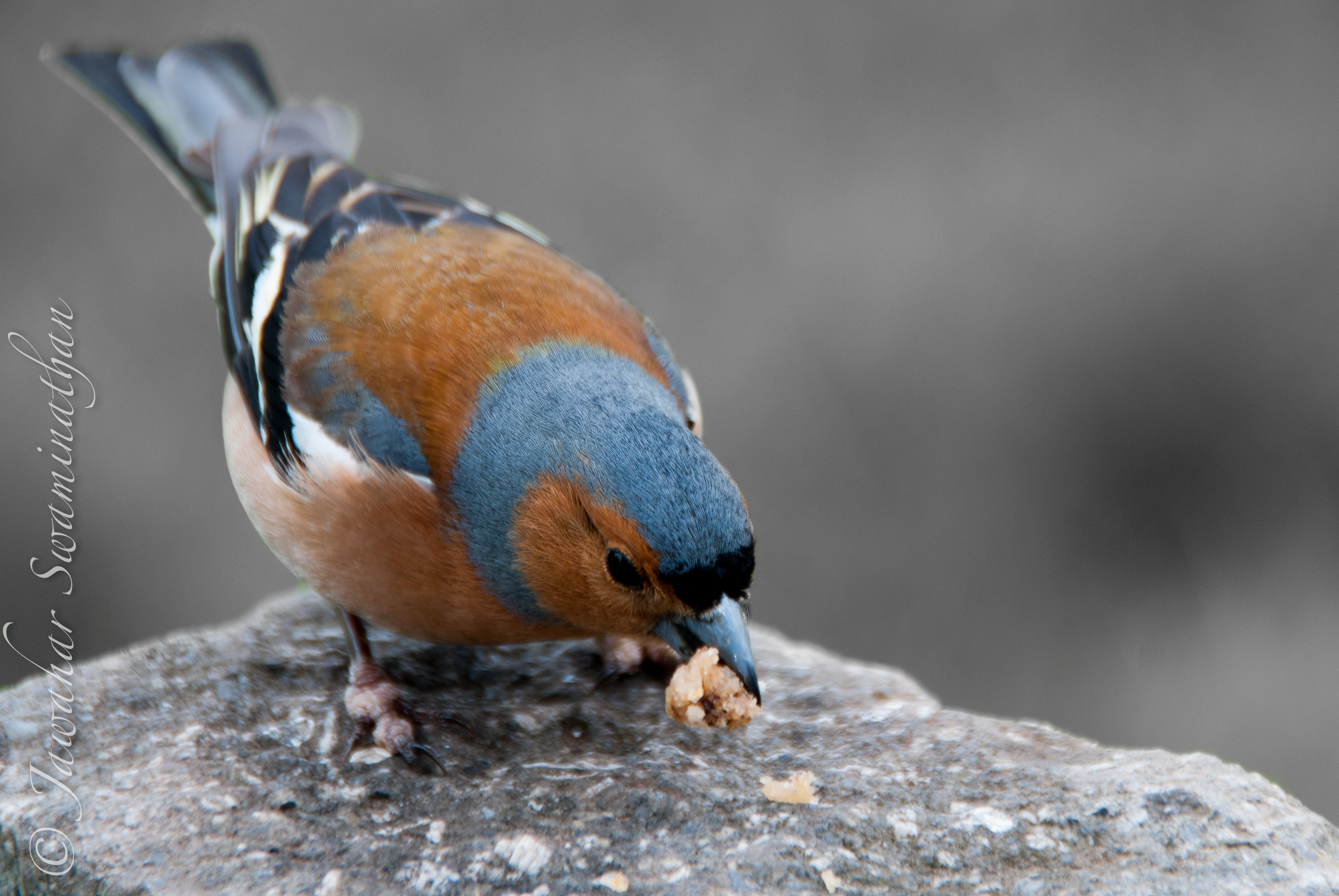
At the Brecon Beacons National Park in Wales, a male chaffinch showed great interest in carrot cake crumbs, appearing to within a foot of where we were sitting.
Chaffinches are common to the British Isles although reports suggest that their numbers are dwindling in suburban gardens and inner cities due to a loss of suitable nesting habitat.
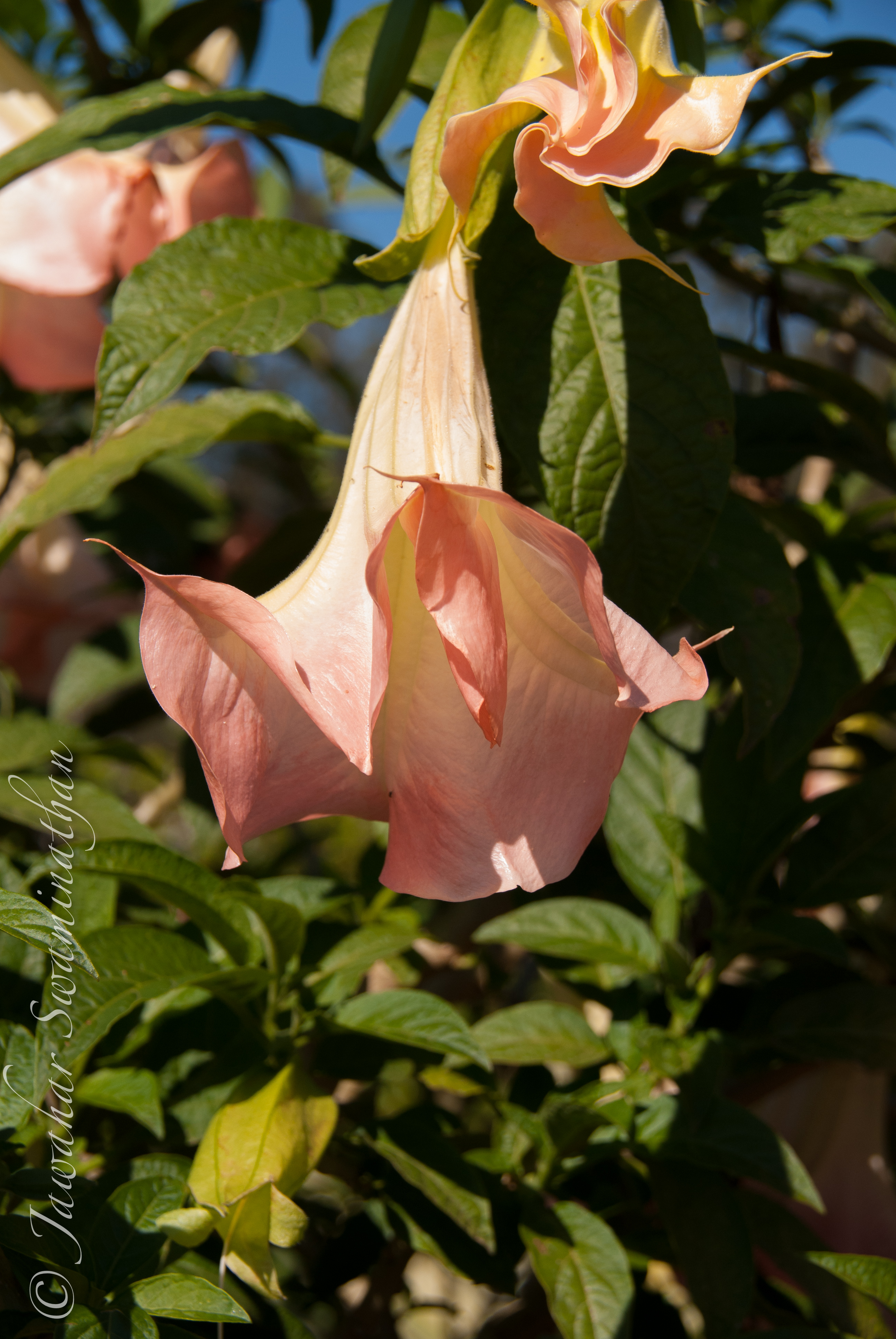
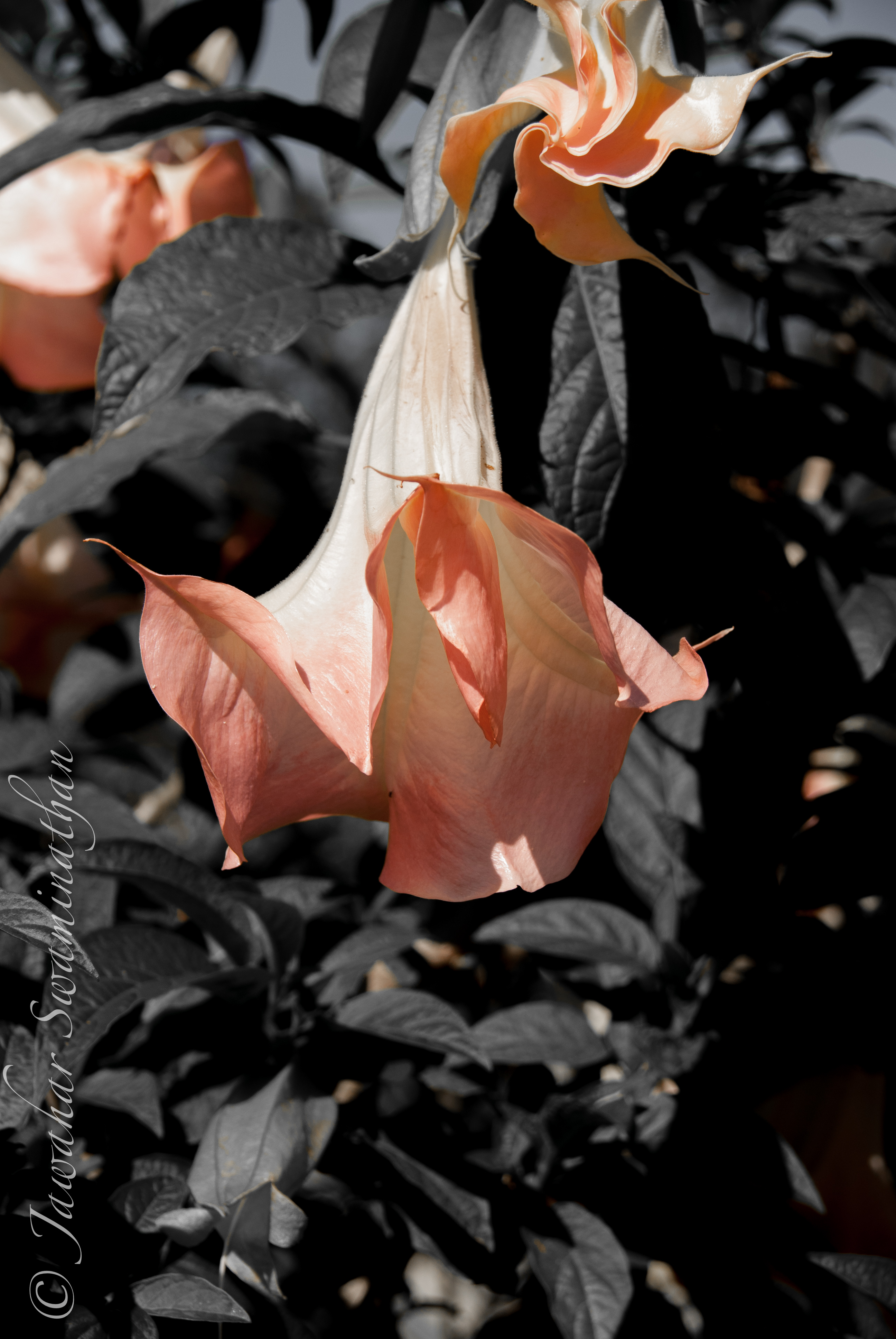
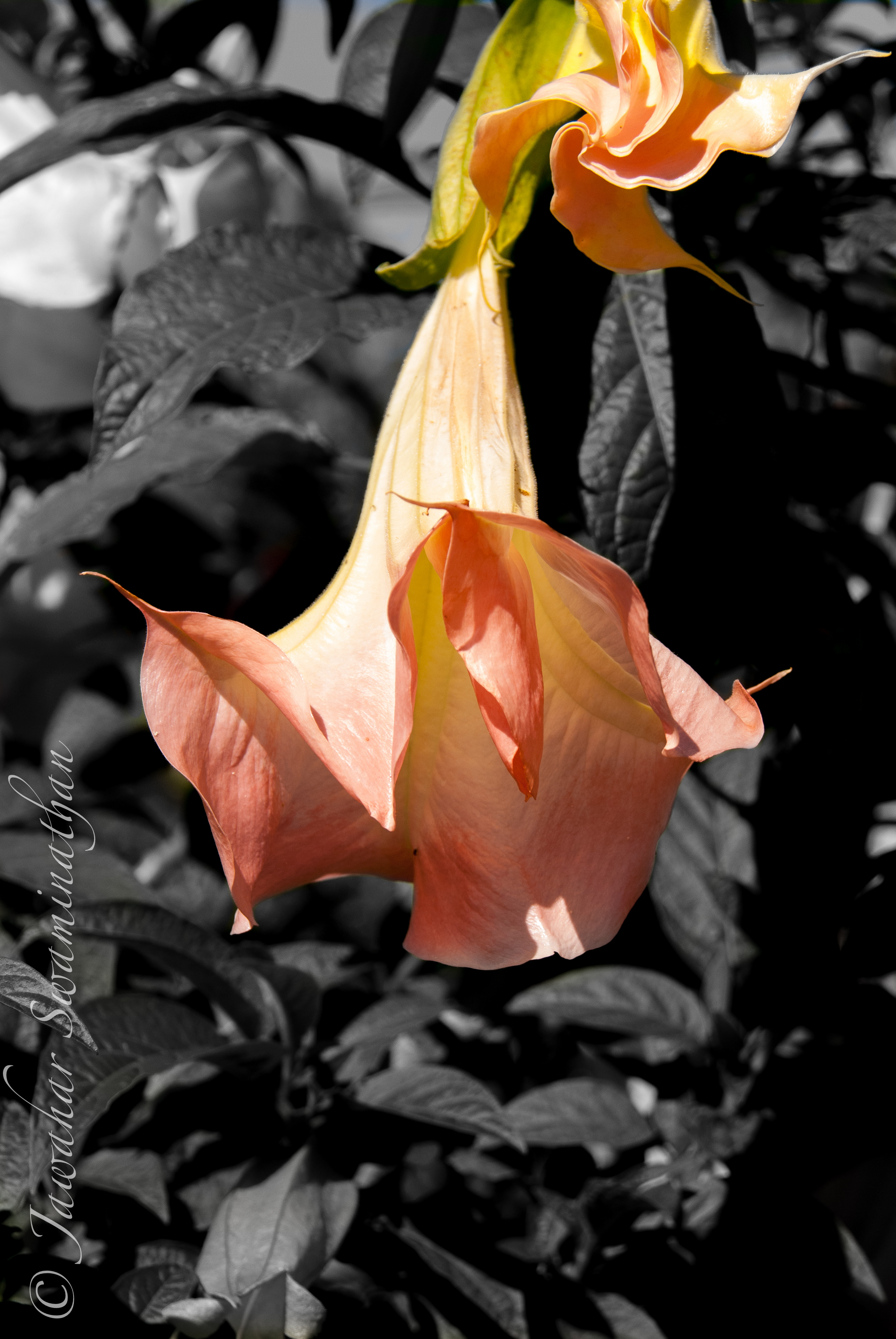
Do photographs look better when selectively colored? Selective coloring involves painfully desaturating a picture to leave only the portions that need highlighting. There are many ways to desaturate a photograph, and I use Adobe Lightroom adjustment brush to remove colour from portions of a picture. The pictures below show both the original picture and my selectively colored version. Which one do you prefer?
Original Image
One method of removing colors from a picture is by desaturating color groups. In the picture below, I removed all the greens, blues and yellow. This has the desired effect of making all the leaves and sky become monochrome while leaving just the flowers with color.
Removed greens, blues and yellow
The above makes the picture look a little artificial due to removal of the yellow-green components from the petals too, as well as with other flowers in the background showing through the foliage. I then attempted to use the adjustment brush to remove all color from the picture except for the two flowers in the foreground (as below).
Selectively colored
Personally I’m pleased with my selective desaturation as this brought out the vibrant colors of the flower, which were otherwise lost in the bright greens of the leaves and the blue of the sky.
Technical Details:Nikon D80 with Tamron 18-250mm f3.5/6.3 Lens
1/640 f/8.0 55mm
Location: Araku Valley, Visakhapatnam
Processed with Adobe Lightroom 4.1






 Juridicious