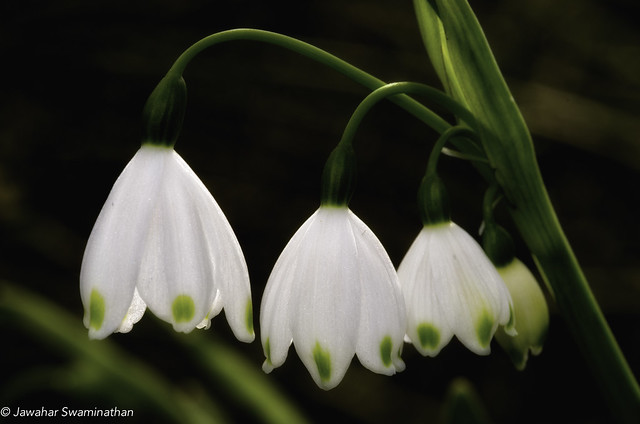
Shot at the Anglesey Abbey in Cambridgeshire. This is not a snowdrop but a snowflake.
Click on the photograph for more viewing options in Flickr.
Shot at the Anglesey Abbey in Cambridgeshire. This is not a snowdrop but a snowflake.
Click on the photograph for more viewing options in Flickr.
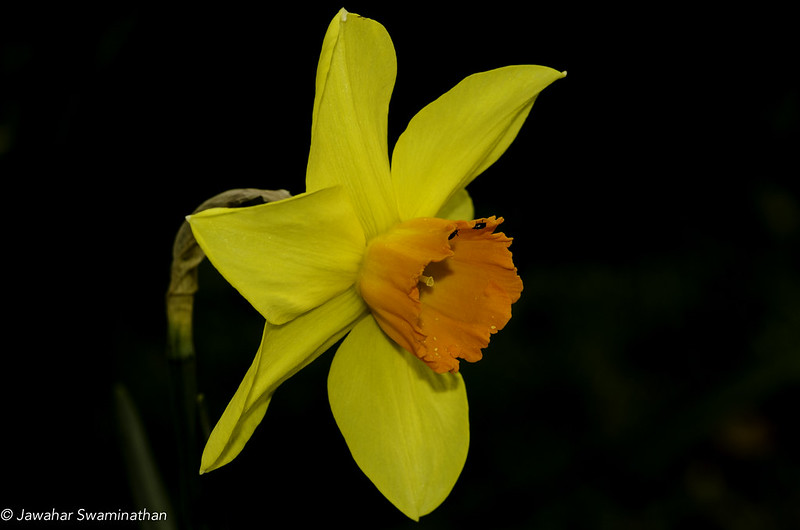
Every spring I try to take pictures of Daffoldils, which to me are the surest sign yet that the cold, wet and miserable winters are truly behind us and a (ever hopeful) good summer is to follow. The following photo was shot in daylight using a flash and high aperture to achieve a black background and enough depth of field to cover the whole flower!
Technical Details
Nikon D7000 with 105mm Sigma f/2.8 macro lens
ISO200, f/10, 1/250 second, built-in flash
Processed in Adobe Photoshop Lightroom
Happy New Year all! I’ve spent almost 2 months without taking a single photograph but have resolved to change this in 2015! First up, an unusual bloom for this of the year in England. These flowers are those of the Kalanchoe genus, succulent tropical species from the old world which decided to bloom in January here in Cambridge (I suppose that being on a window sill in the bathroom helped!).
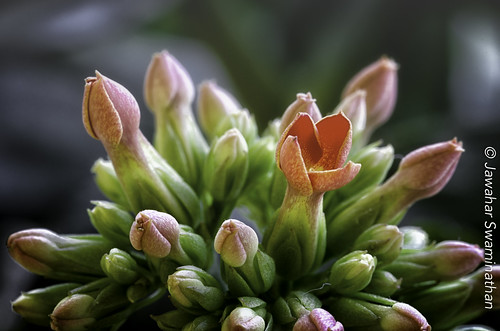
Photographed using a Nikon D7000 Camera with a Sigma 105mm f/2.8 lens. ISO 200, f/22, 21 second exposure using a remote shutter release cable. Post-processed in Adobe Lightroom 5.7.
Home grown foods are tasty, and some have very pretty flowers too – like these purple bean flowers. This is the first year I’ve grown these and now I harvest more than half-a-kilo of delicious fresh purple beans every two days!

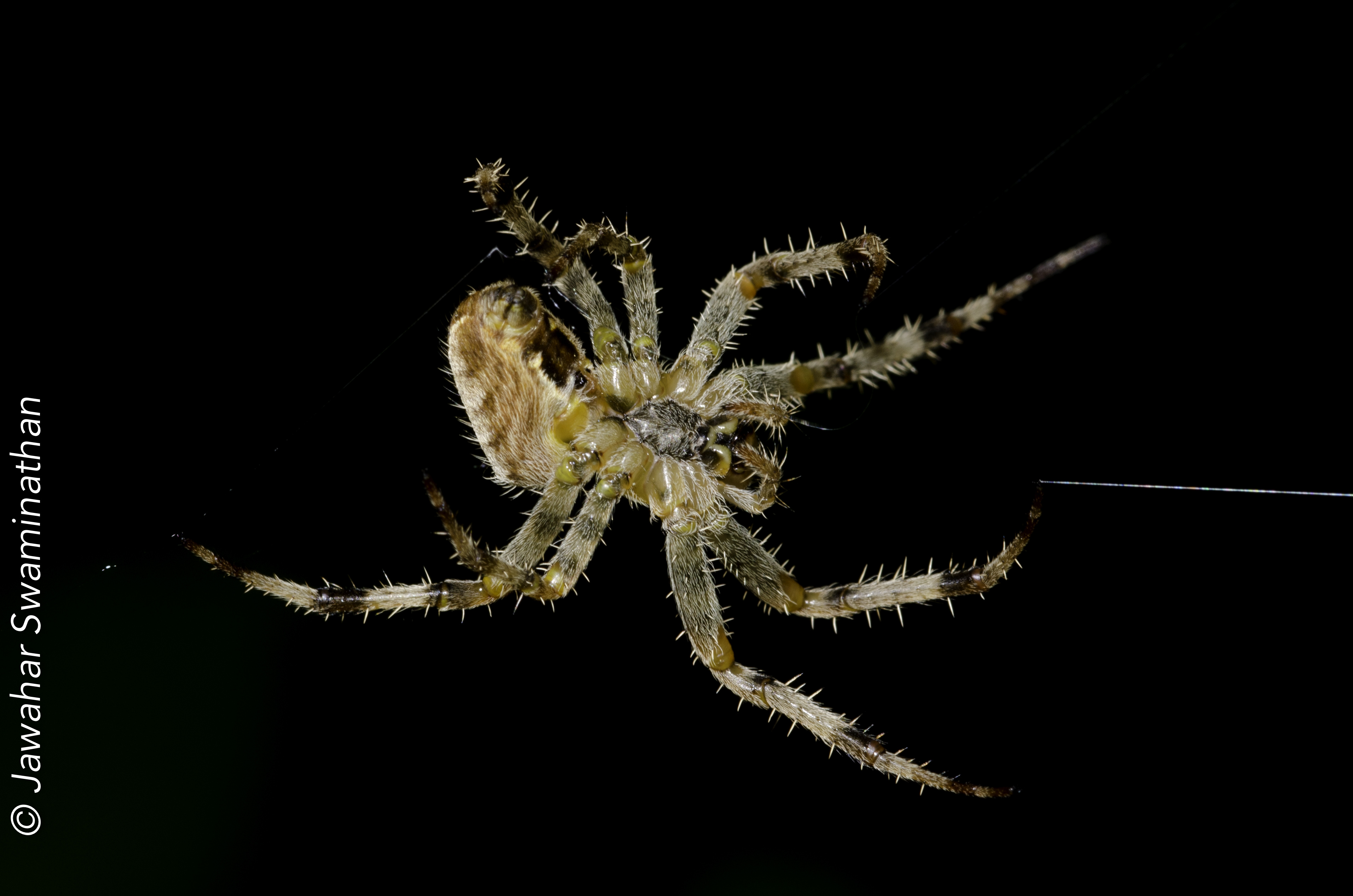
It is that time of the year again! Autumn – when gigantic spiders make their way into the house and make webs in every available nook and cranny! And this one below (garden cross spider) made a huge web (almost a metre in diameter) between my beans and tomato plants.. Shudder!!!
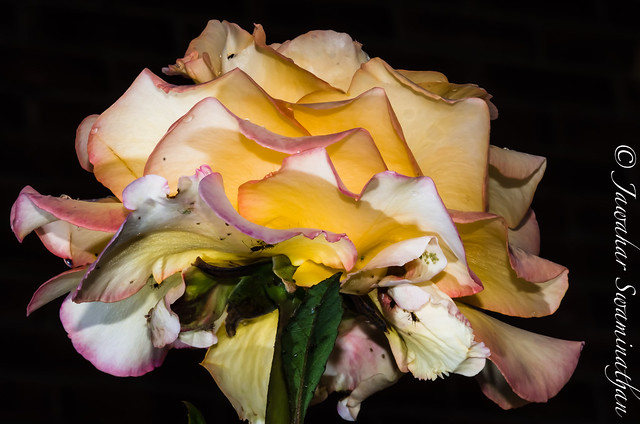
There is this rose bush in my garden which struggles to survive every year regardless of what I try to do make it feel happy. But year on year it produces one or two of these really vibrant flowers in autumn! Just one of two roses sadly before the winter frosts kick in.
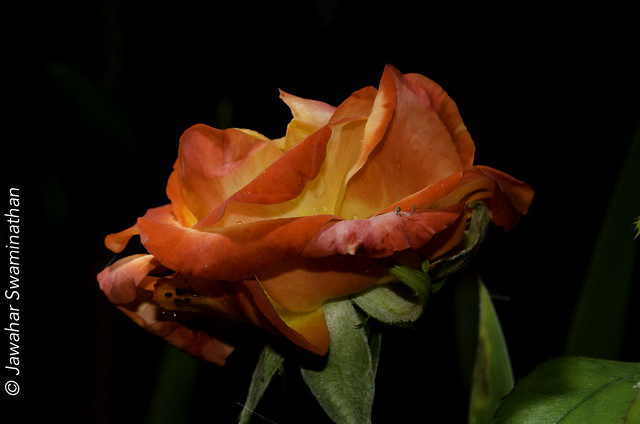
Technical Details:
Nikon D7000 with a 105mm f/2.8 Sigma macro lens
f/18, 1/250 second, ISO200
Remote slave flash SB800
This year I grew cosmos plants for the first time (from seed that too).. and they’ve now grown to a height of about 2 metres!! Lovely pink flowers held up on thin stalks. The height of these flowers means that they’ve opened themselves up to being photographed from underneath against the backdrop of the blue sky (as below).
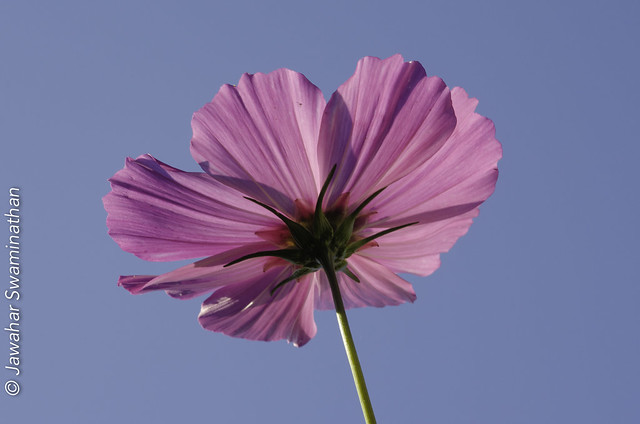
Technical Details:
Nikon D7000 with 105mm f/2.8 Sigma macro lens
ISO200, 1/100sec, f/13 manual mode
PP in Adobe Lightroom 5.5
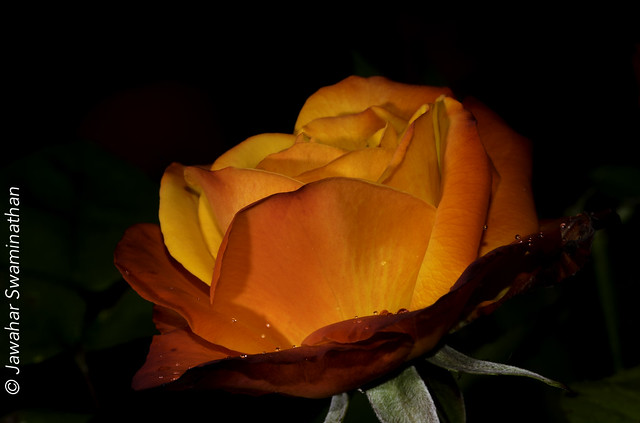
This rose has some of the deepest colours imaginable. It was a lucky buy at a local garden centre few years ago and have never ceased to amaze with the depth of colour!
Capturing this photograph gave me no end of satisfaction. It was a very small flower (< 5mm diameter) to work with and it was a windy day and getting focus and framing right using increased magnification from extension tube attachments on the lens was a challenge. Finally getting the black background using a remote flash was also difficult. In the end, the results showed a beautiful, almost hand painted flower with flecks of yellow, magenta and crimson on the petals. There is truly beauty in small things!!
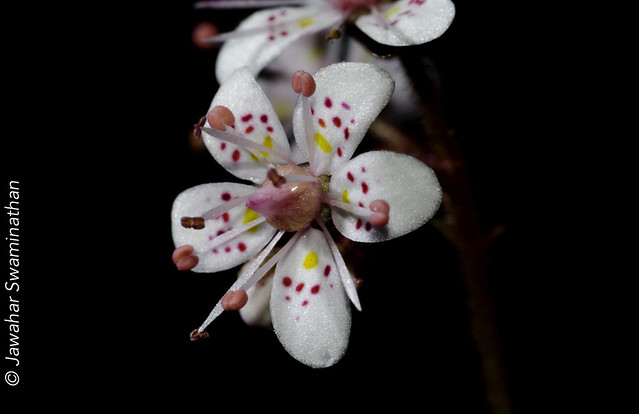
Nikon D7000 with a 105mm Sigma macro lens with extension tubes.
ISO200, f/18, 1/250 with remote slave flash
No post-processing!
One thing they teach in school biology is the concept of food chains and food webs – the links that show interdependence of organisms based on the foods they eat. The photo below shows one such food chain starting with the rose (the producer) providing nourishment in the form of sap for aphids. In turn aphids are milked by ants for honeydew, a secretion that aphids produce. Ants are also known to “farm” aphids storing their eggs over winter and then carrying newly hatched aphids to emerging plant shoots in spring (called a mutualistic relationship).
 Juridicious