Hibiscus is a great flower to photograph. The contrast between the green sepals and bracts, showy red petals (this particular variety), deep red pistils surrounded by bright yellow stamens make a great study in contrast especially against a dark background. You may not enjoy the botany below, but I’m sure you’ll agree that nature truly offers a marvelous spectacle in the microscopic.
Click on any picture to see a larger version!!
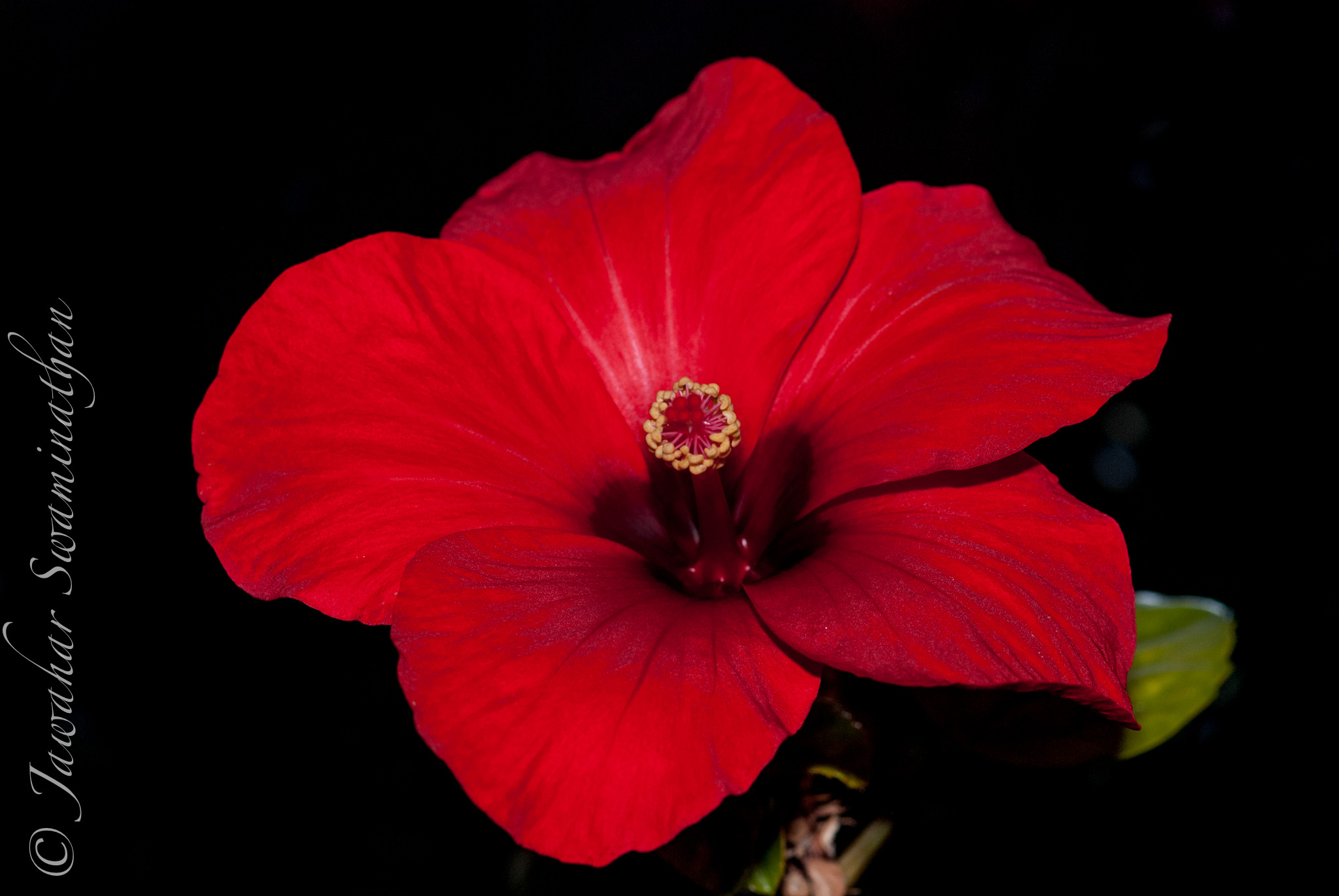
A fully open hibiscus flower
We all learned in school botany (well some of us!) about the various parts that make up a flower. Generally, flowers have 3 components –
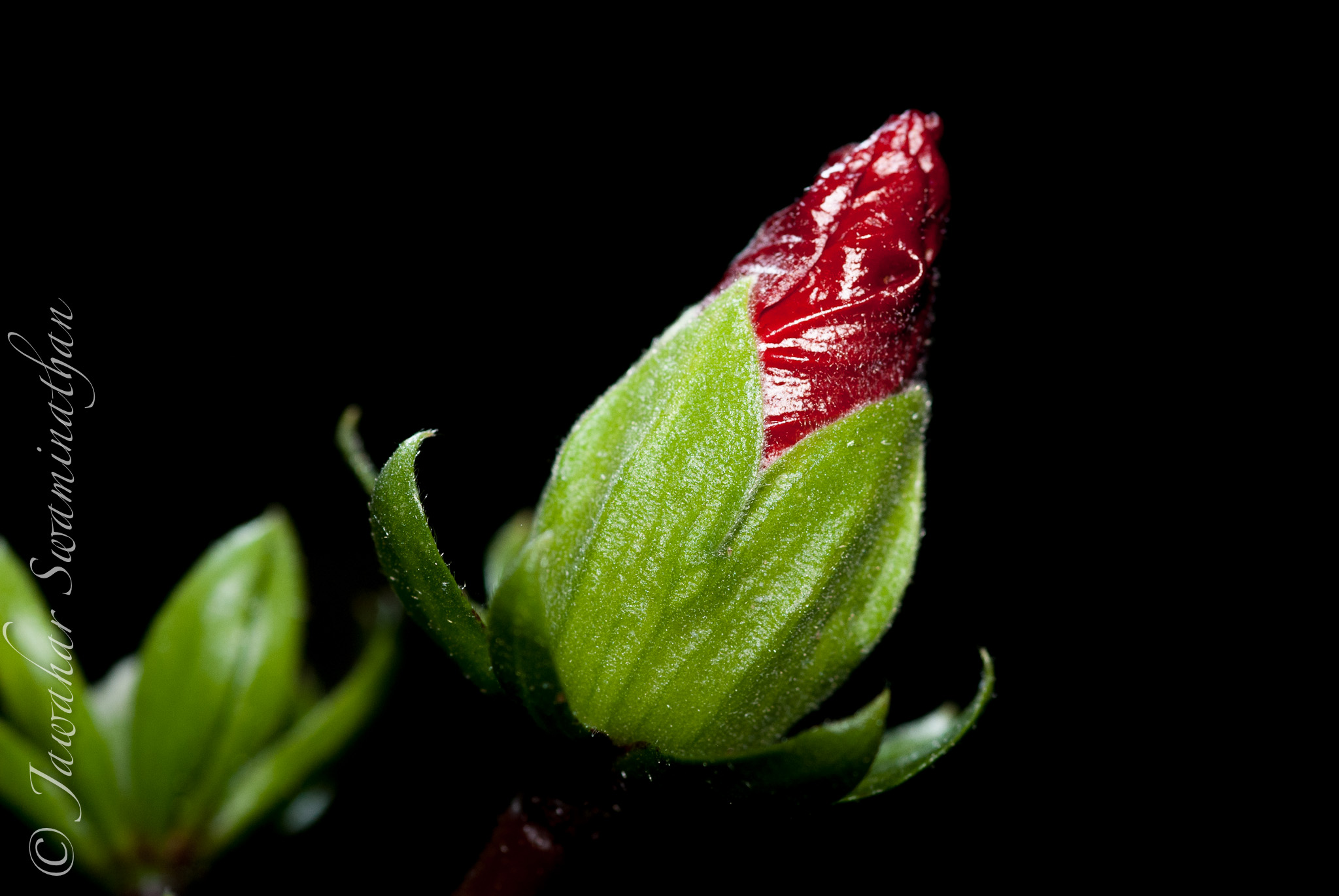
Calyx – made up of sepals that protect the bud in infancy and form the base of the flower
A hibiscus bud showing bracts and the calyx (which are both modified leaves!)
Corolla – made up of showy petals that encase the reproductive organs
A hibiscus petal
Reproductive parts (Corolla, Stamen) that are in turn
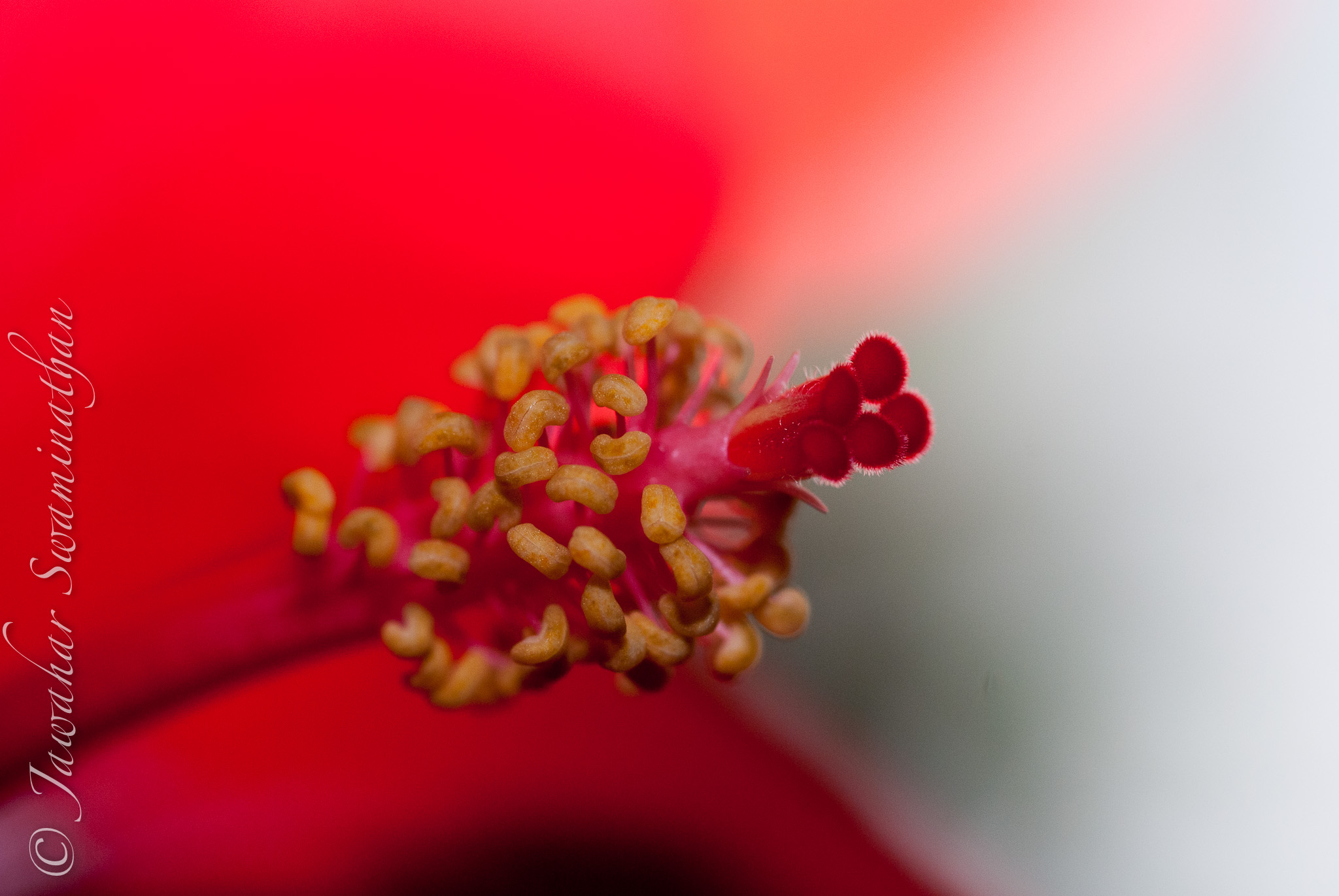
Detail of a hibiscus stamen (male) and pistil (female)Close-up of the reproductive organs of a Hibiscus flower. The yellow stamens and the red pistils.
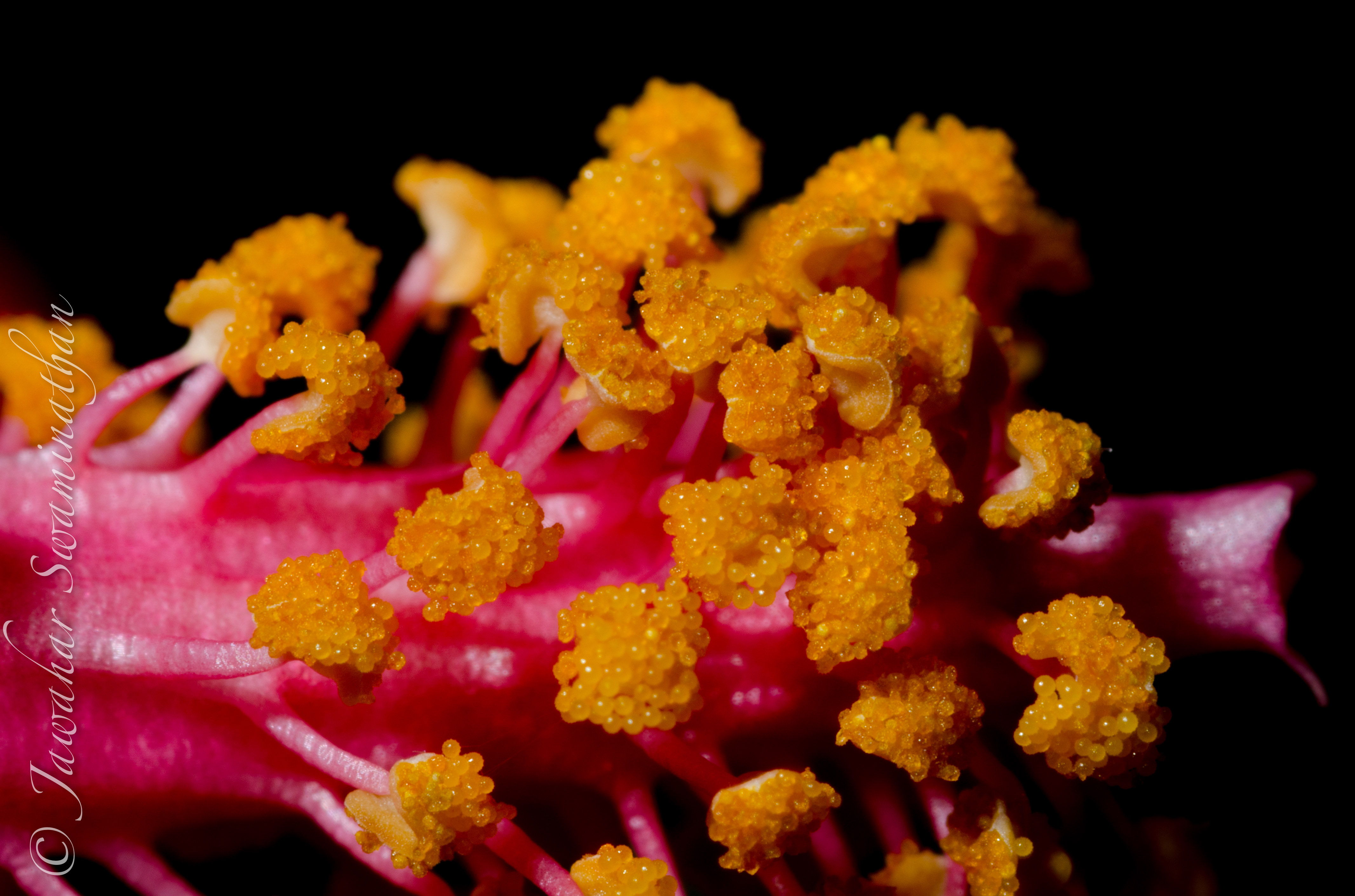
Stamen – that make up the male reproductive parts – in turn made up of the filament that holds up the pollen sac or anther. The anther releases pollen when open.
Detail of a Hibiscus flower stamen.Even closer. Glittering Hibiscus pollen on anthers held up by the filament – forming the stamen of the Hibiscus flower.
Pistil – The female reproductive parts of a flower. These are also made up of three components
Ovary – that finally forms the seed after fertilization
Style – a stalk above the ovary
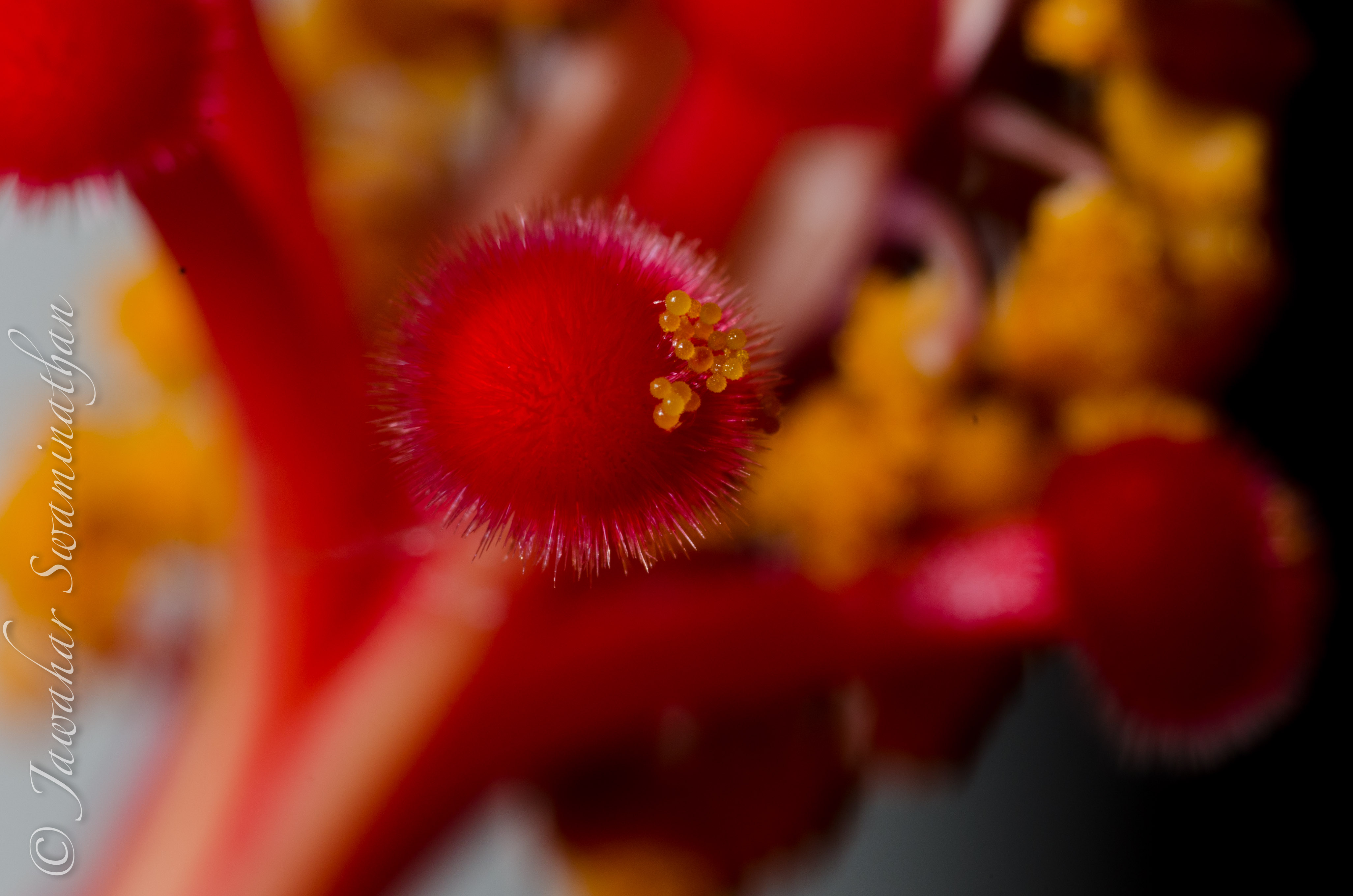
Stigma – the farthest extend of the female part of the flower which receives the pollen for fertilization. This is usually sticky and allows pollen to attach.
The stigma of a Hibiscus flower, with pollen on them.
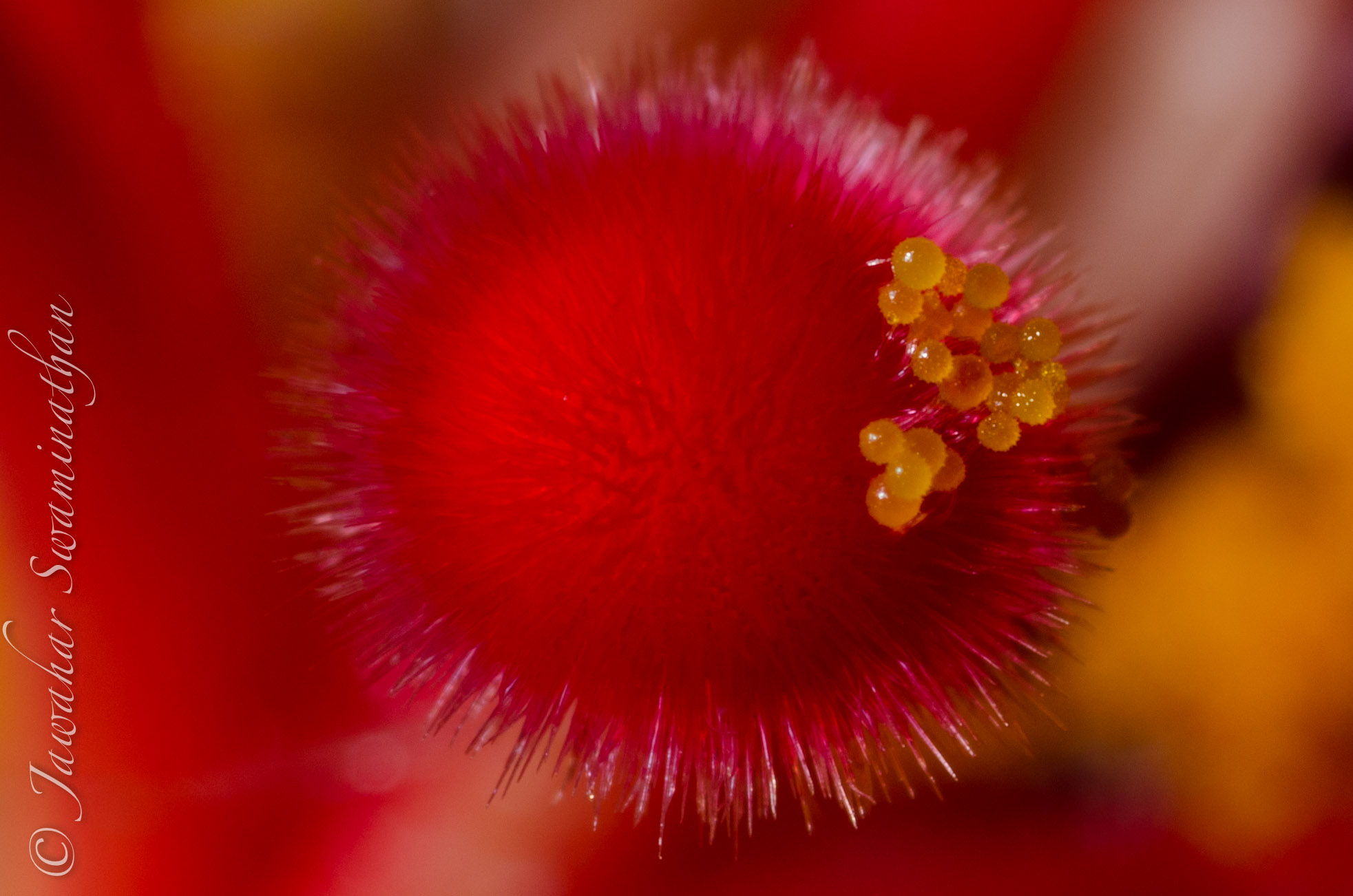
The pollen in the above picture look spherical, don’t they? But in the picture below, which is a crop of the above, you can see that the pollen grains are spiky, thereby allowing them to stick to the stigma surface.
100% crop of a stigma showing the real structure of pollen.
Well, that’s my botany lesson! Thanks for stopping by….
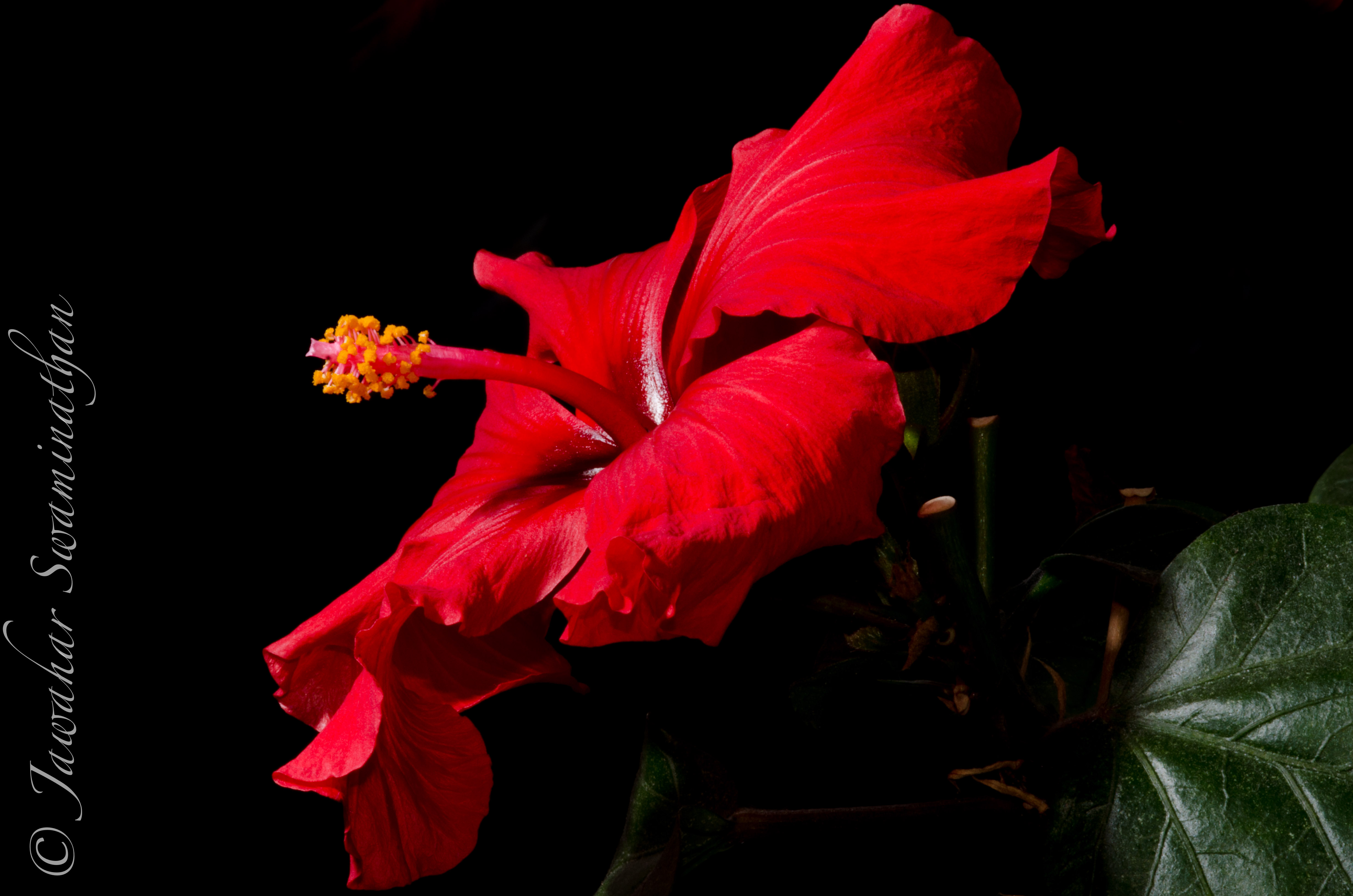
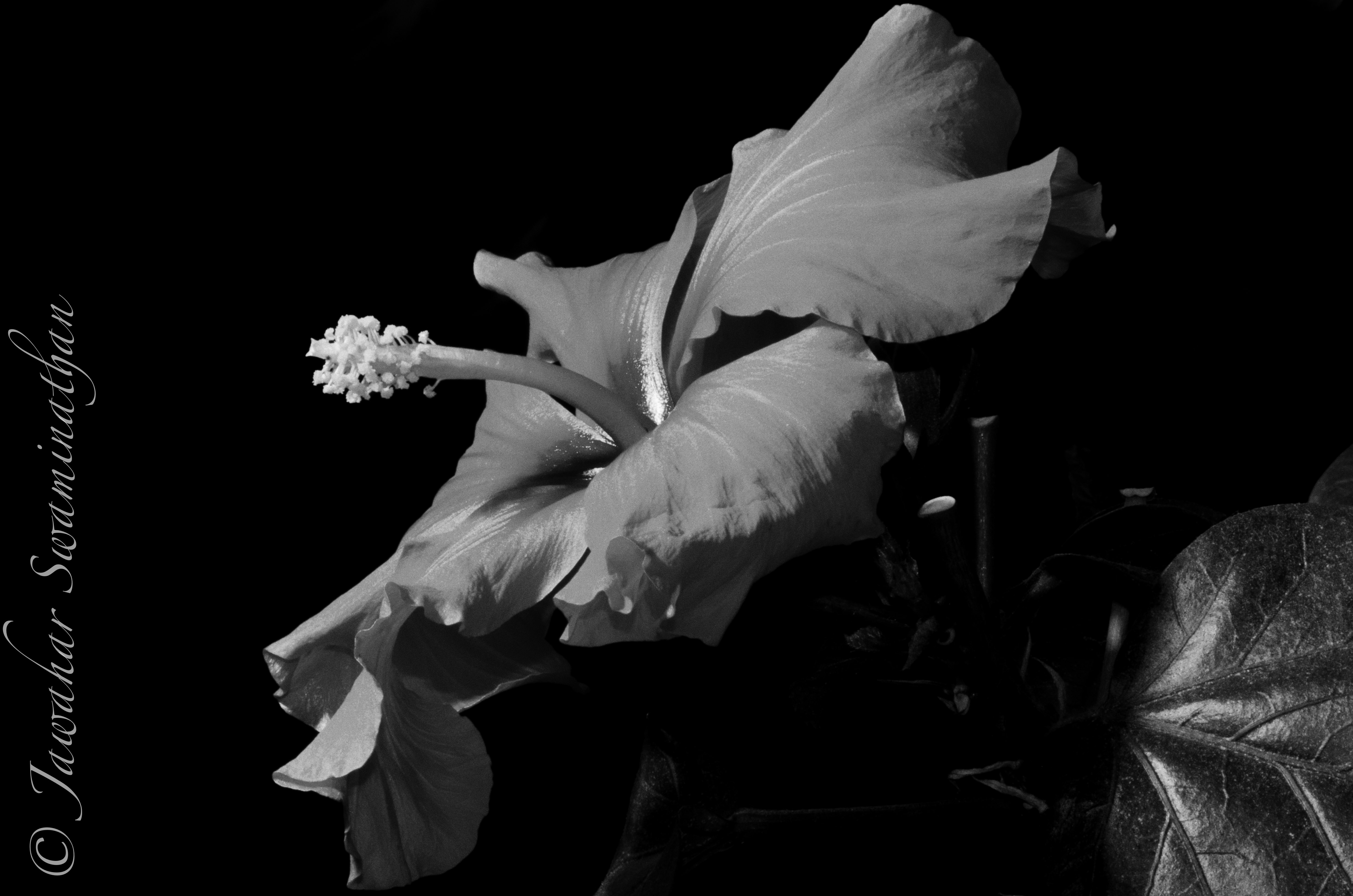
One of my pride and joy has been able to sustain an oriental hibiscus plant (indoors) through the vagaries of British weather, and in return I’m blessed with vibrant red hibiscus flowers 3-4 times in a month, sometimes more. Here is a study of a hibiscus flower in original (untouched or processed, exported from Lightroom), B&W rendition (processed in Silver Efex Pro), processed using Color Efex Pro filters to bring out detail.
Hibiscus rosa-sinensis. 1/100, F32 External SB-600 flash used at right angles to ensure black background.Processed in NIK Silver Efex Pro. Orange Filter.Processed using NIK Color Efex Pro. Detail Extractor and Tonal Range corrections.
I like the picture as it was from the camera (untouched). Why process a picture if it doesn’t really add anything more to the photograph?
Thanks for stopping by, and please do leave a comment on what you think?
Technical Details
Nikon D7000 (Manual Mode), ISO200
SB600 Speedlight External Flash in Slave mode at right angles to lens
Sigma 105mm/f2.8 macro lens
1/100 sec, F32 to ensure picture sharpness and black background
Post-Processed (where done) using NIK Software LightRoom plugins.
The world hasn’t ended so far today and it seems unlikely to do so in the next 8 hours left (or maybe the Mayan Calendar was just crap to begin with)!! But if it does in the next 8 hours and 22 minutes, I wanted to leave you with a couple of pictures in what could be my last blog posting!!
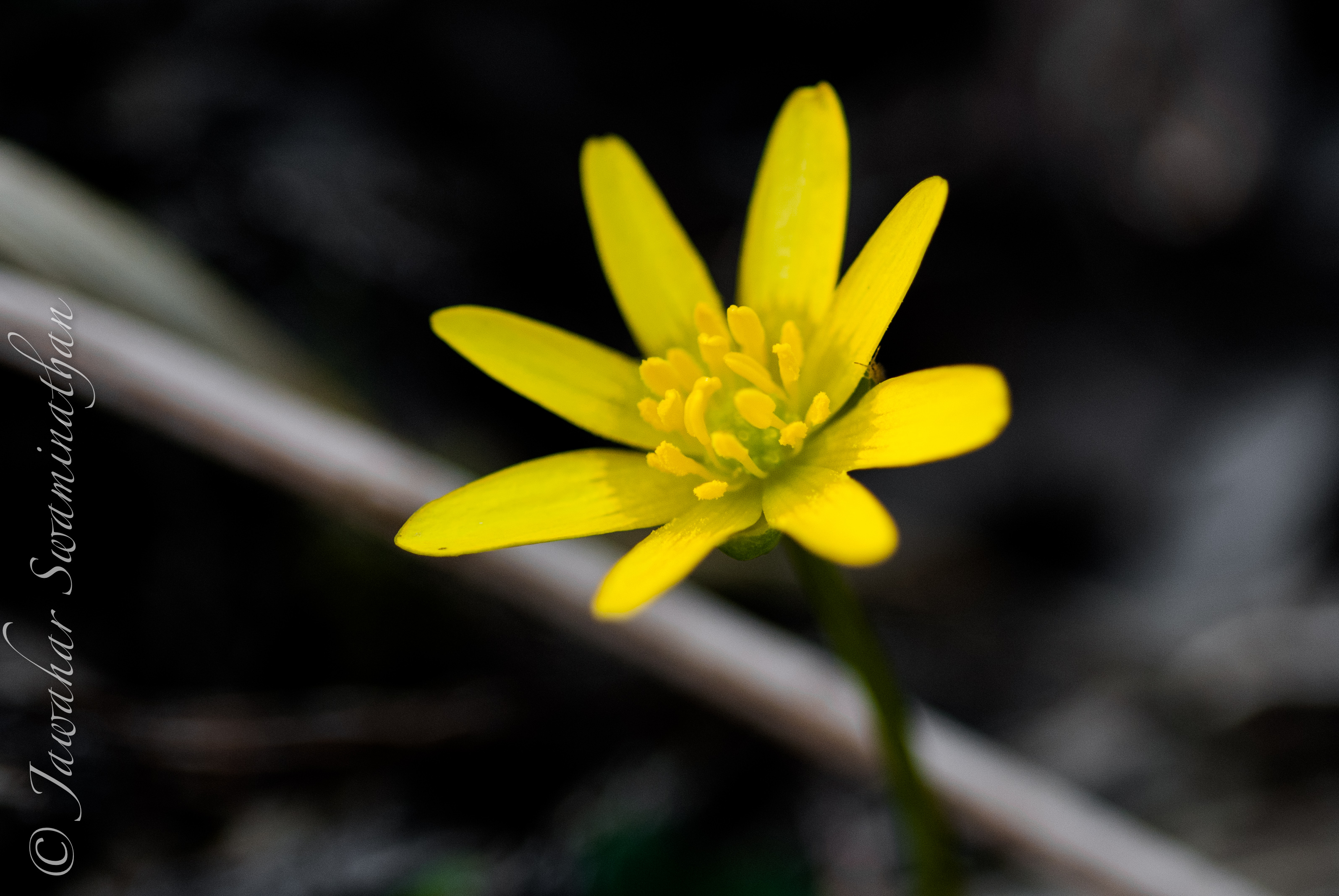
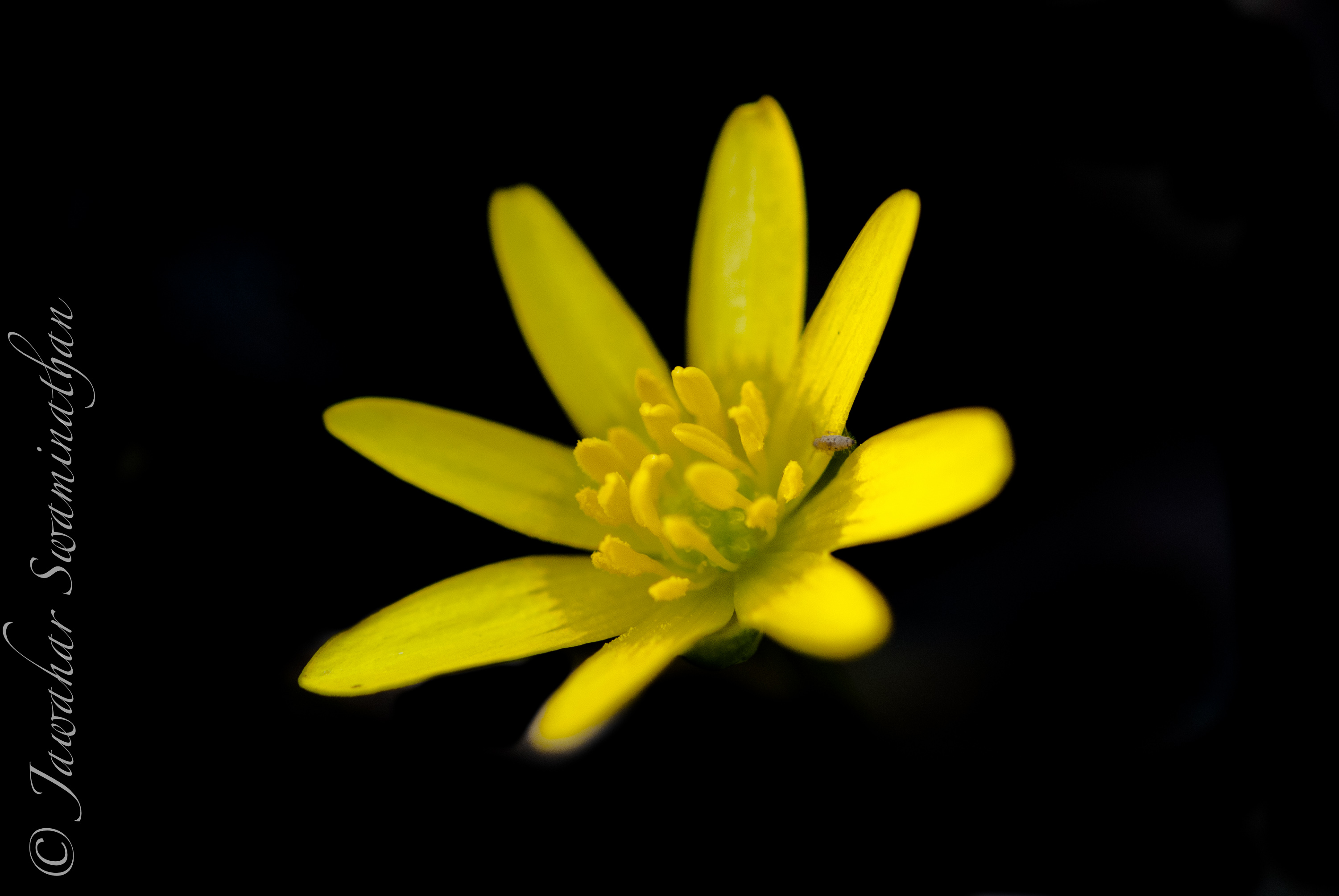
Did you spot the tiny spider in both the pictures on the middle-right of the picture? These flowers are those of the Lesser Celandine. Also known as pilewort since the plant was believed to be useful for the treatment of piles. Impressive knowledge to have if the world comes to an end.
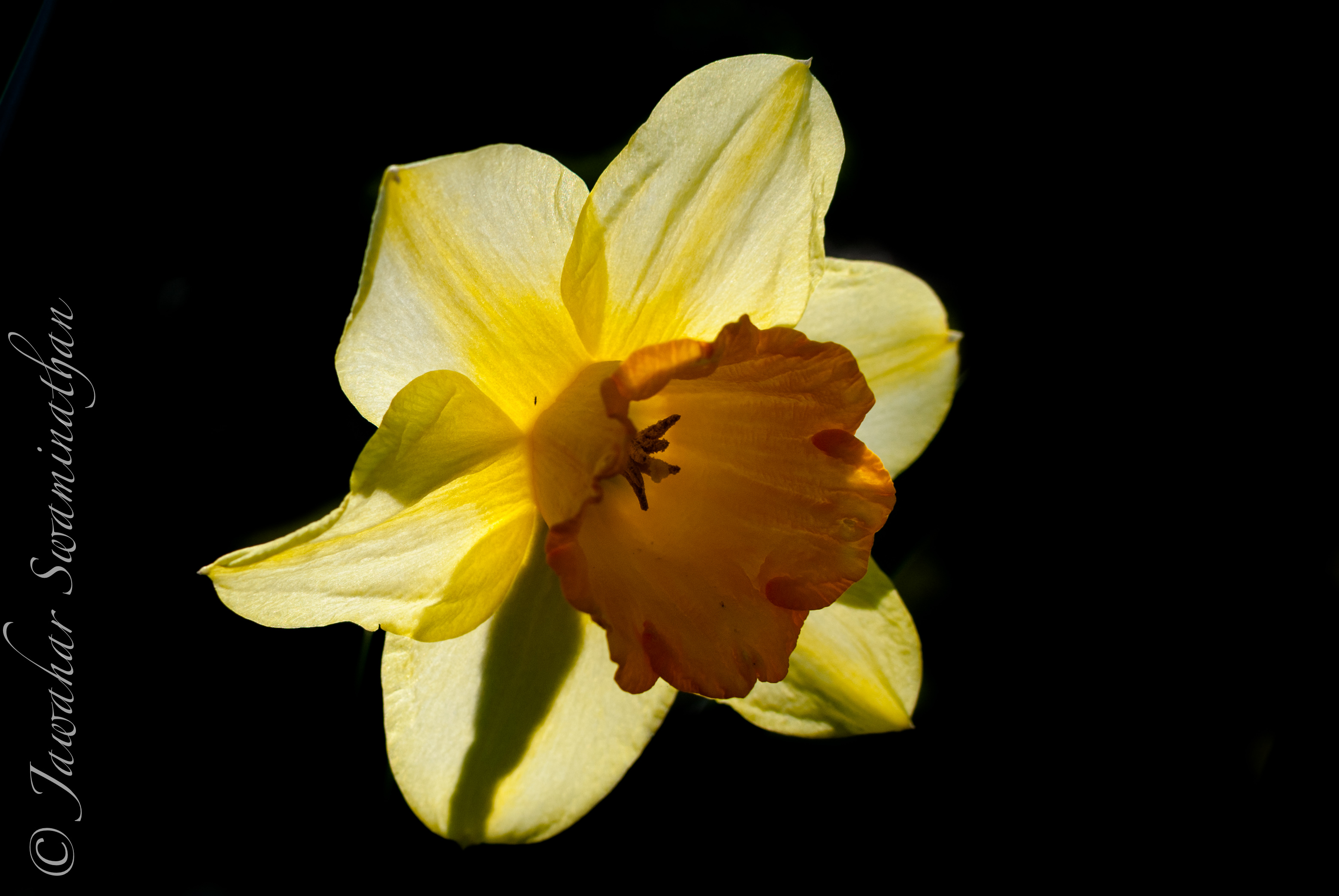
I know this is the middle of winter!! Just to cheer us up and to look forward to the lazy days of spring and summer, here’s a lovely daffodil on a black background.
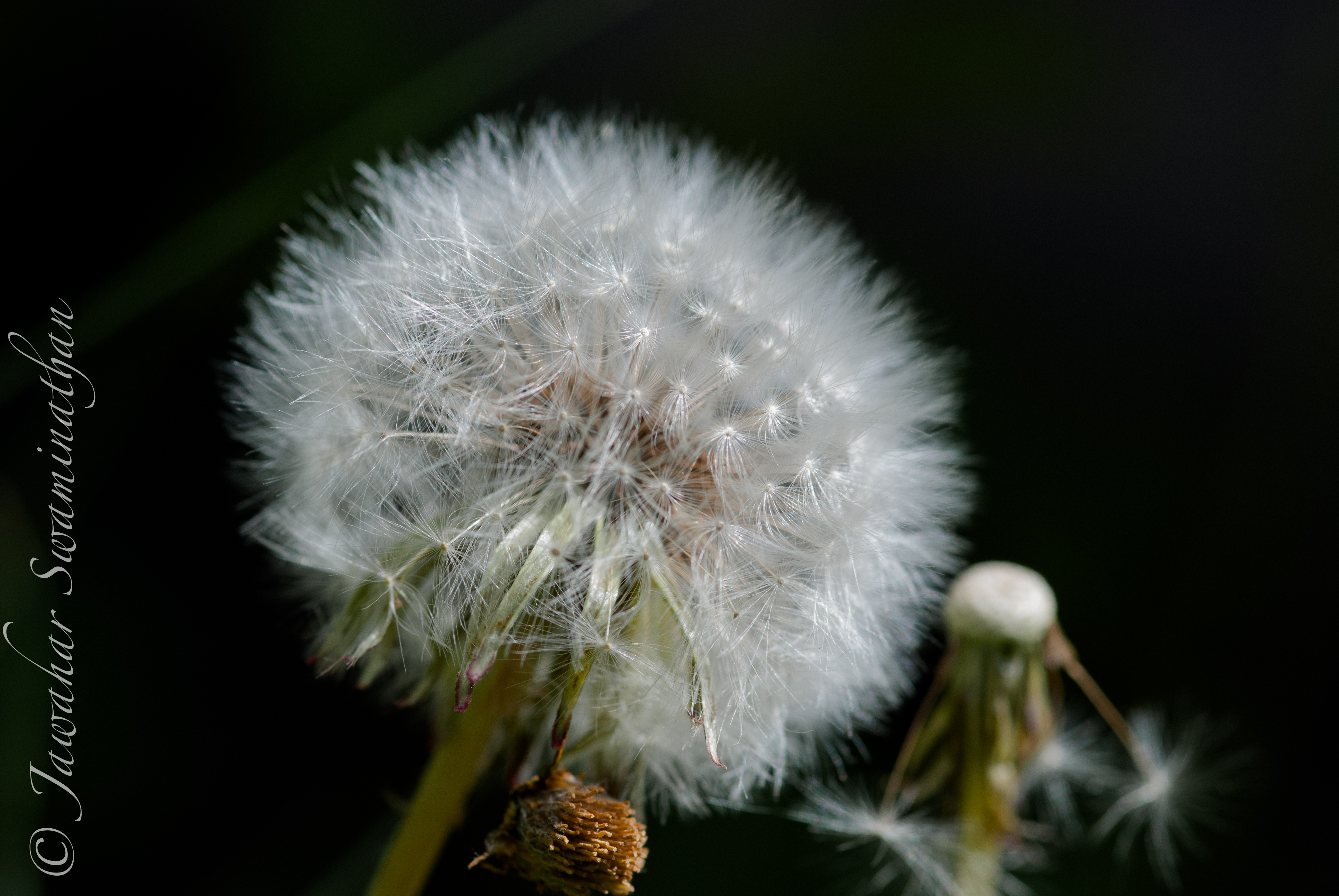
Mention Dandelion to any gardener who loves their lawns and they will tell you a few stories about how difficult these plants are to get rid of, and how pernicious these weeds can be. Dandelions belong to the Taraxacum genus of the family Asteraceae and found in most of Europe and North America. They tend to have leaves that are flat and close to the ground and produce bright yellow flowers throughout late spring and summer. Whilst the flowers tend to brighten up any wasteland, they also grow happily between grass in lawns. Due to their low habit, they avoid being cut down by standard lawn mowers. Every plant produces a beautiful spherical head of winged seeds that easily disperse in the wind (see below).
So the next time I see these growing in my garden (which I’m sure I will), I’ll be reaching out for a recipe book and not my glyphosate containing weed killer!
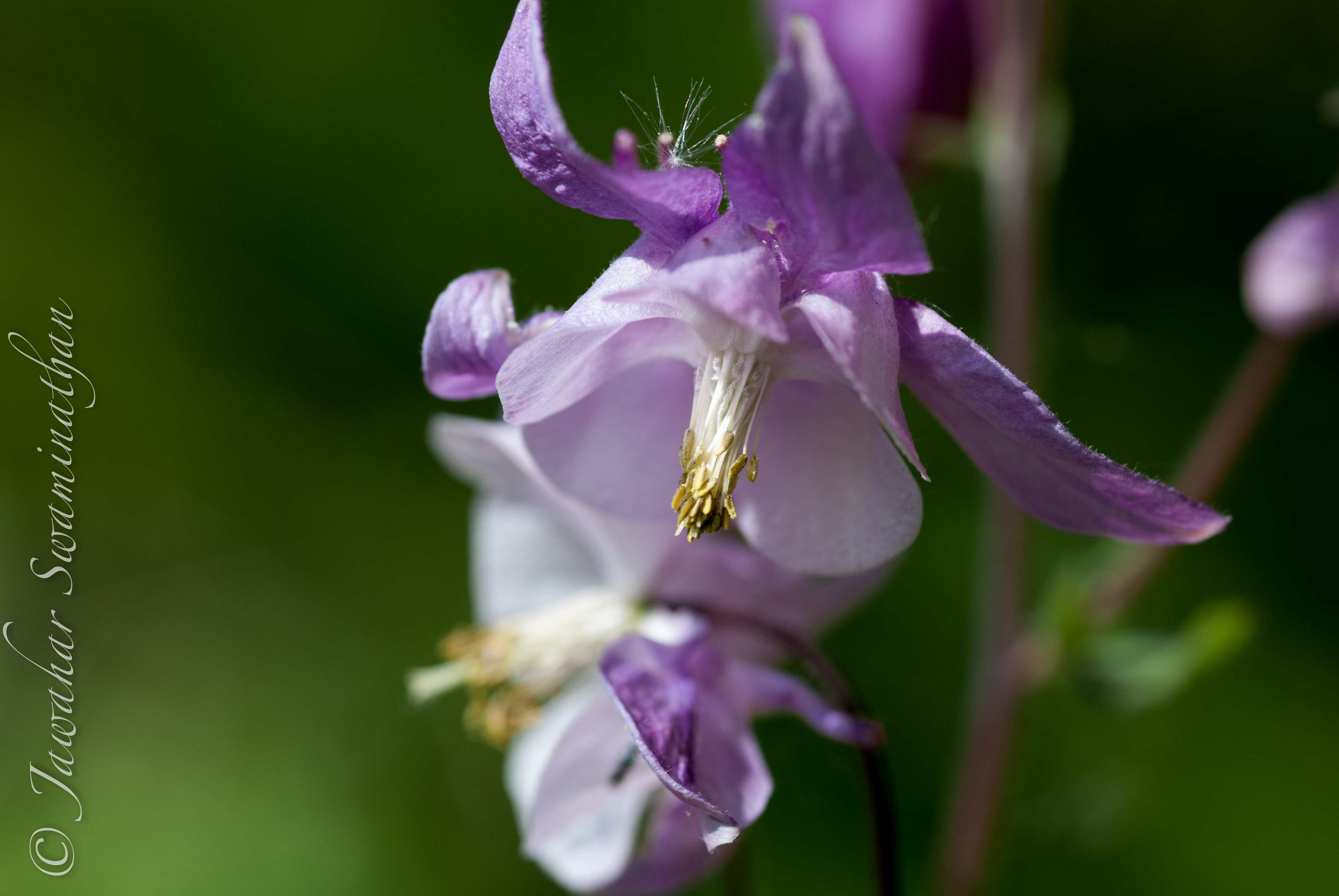
From earlier this summer (or whatever that passed for that term this year!). A few years ago I wouldn’t have known what Aquiligea was, but my knowledge of these plants has increased after the purchase of a few plants.
Apparently the name Aquilegia comes from the latin aquila, or eagles claw based on the shape of the petals.
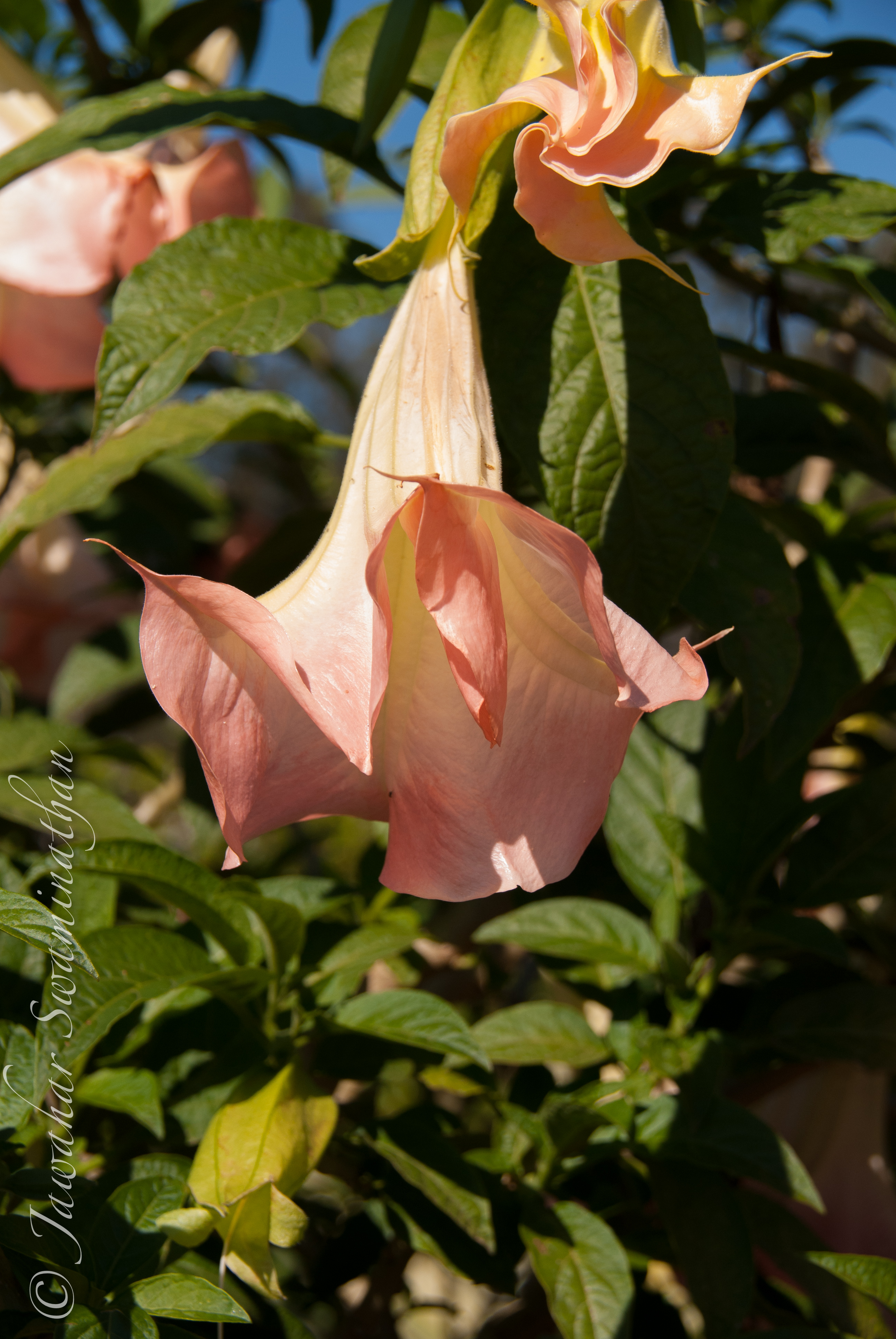
Do photographs look better when selectively colored? Selective coloring involves painfully desaturating a picture to leave only the portions that need highlighting. There are many ways to desaturate a photograph, and I use Adobe Lightroom adjustment brush to remove colour from portions of a picture. The pictures below show both the original picture and my selectively colored version. Which one do you prefer?
Original Image
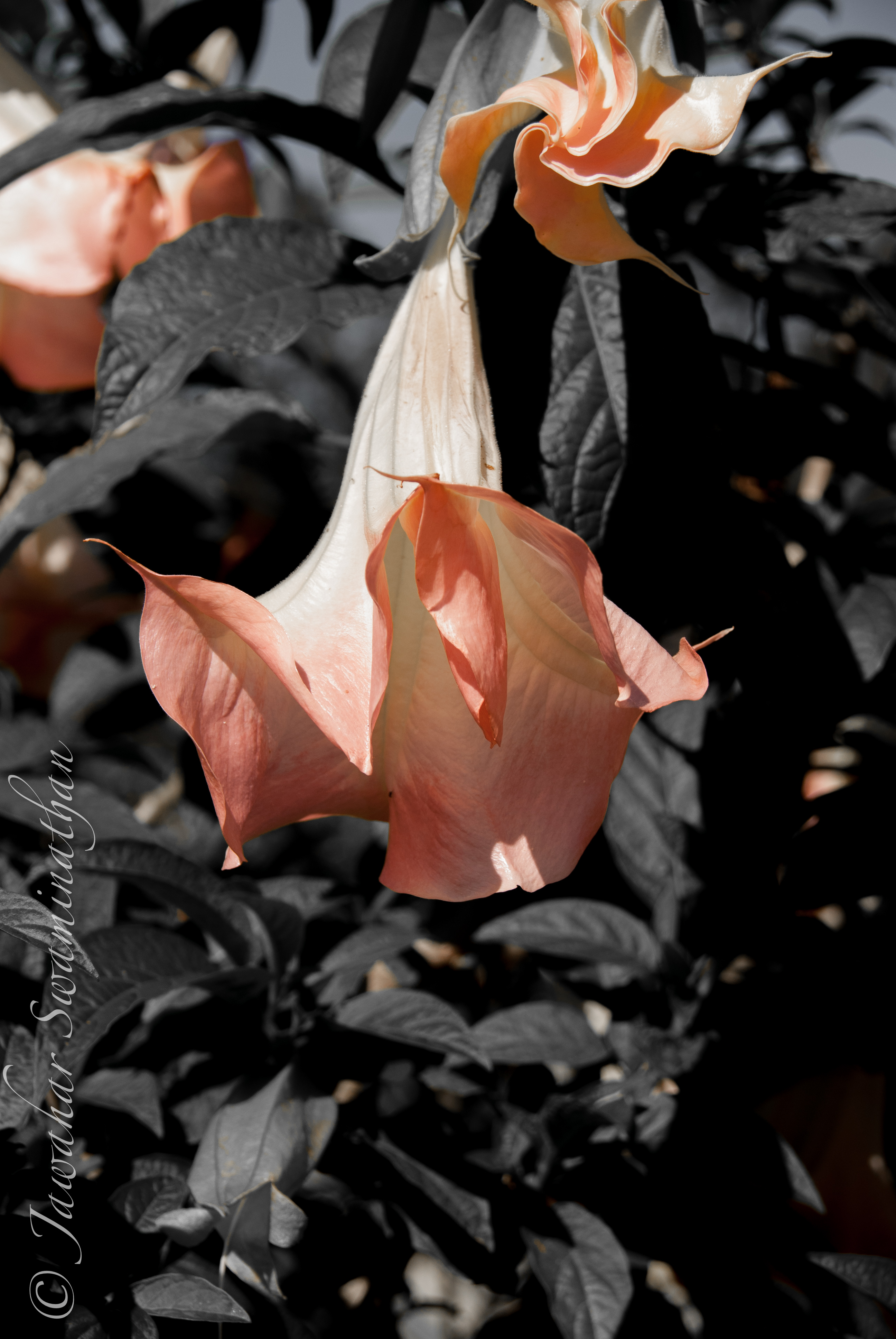
One method of removing colors from a picture is by desaturating color groups. In the picture below, I removed all the greens, blues and yellow. This has the desired effect of making all the leaves and sky become monochrome while leaving just the flowers with color.
Removed greens, blues and yellow
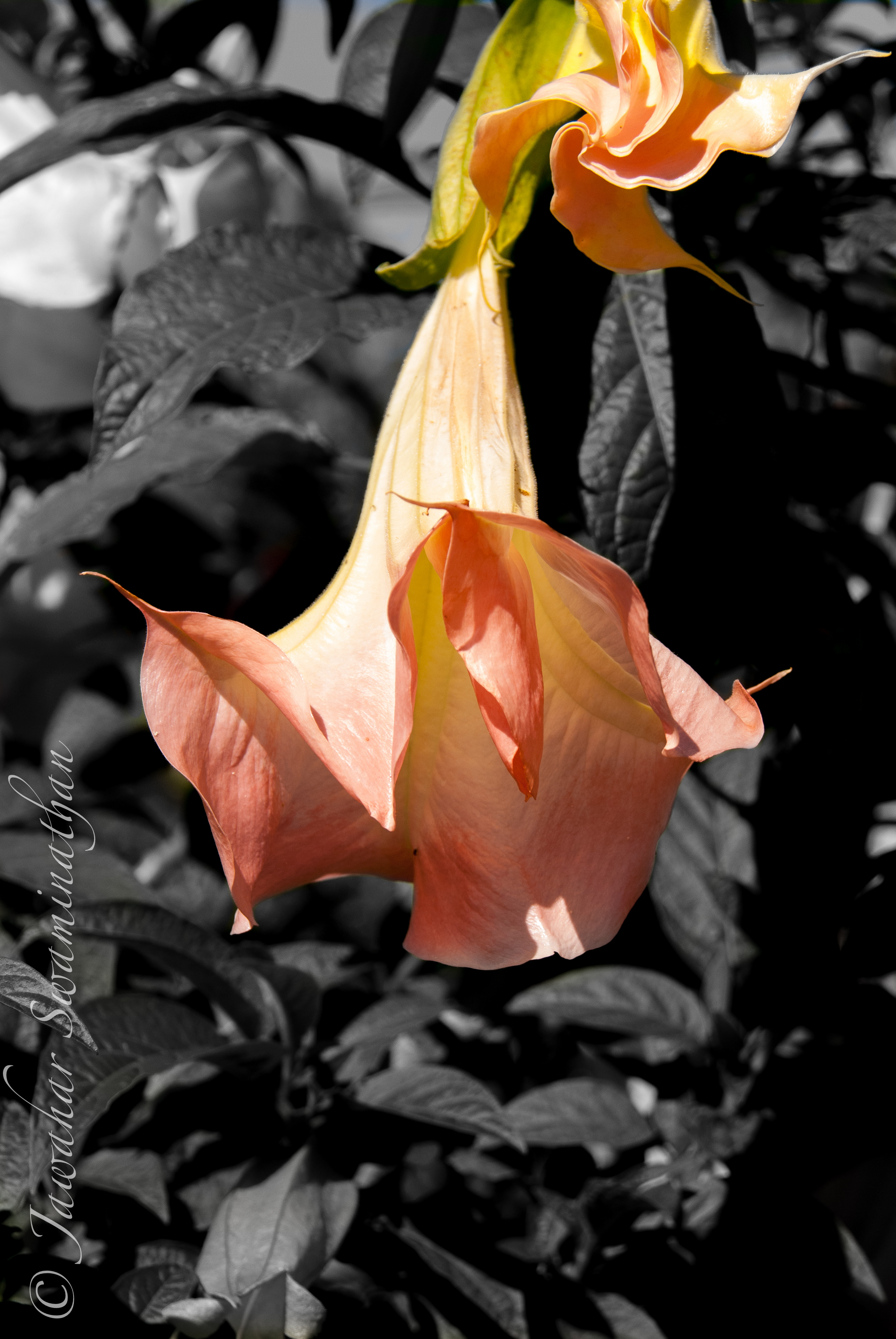
The above makes the picture look a little artificial due to removal of the yellow-green components from the petals too, as well as with other flowers in the background showing through the foliage. I then attempted to use the adjustment brush to remove all color from the picture except for the two flowers in the foreground (as below).
Selectively colored
Personally I’m pleased with my selective desaturation as this brought out the vibrant colors of the flower, which were otherwise lost in the bright greens of the leaves and the blue of the sky.
Technical Details:Nikon D80 with Tamron 18-250mm f3.5/6.3 Lens
1/640 f/8.0 55mm
Location: Araku Valley, Visakhapatnam
Processed with Adobe Lightroom 4.1
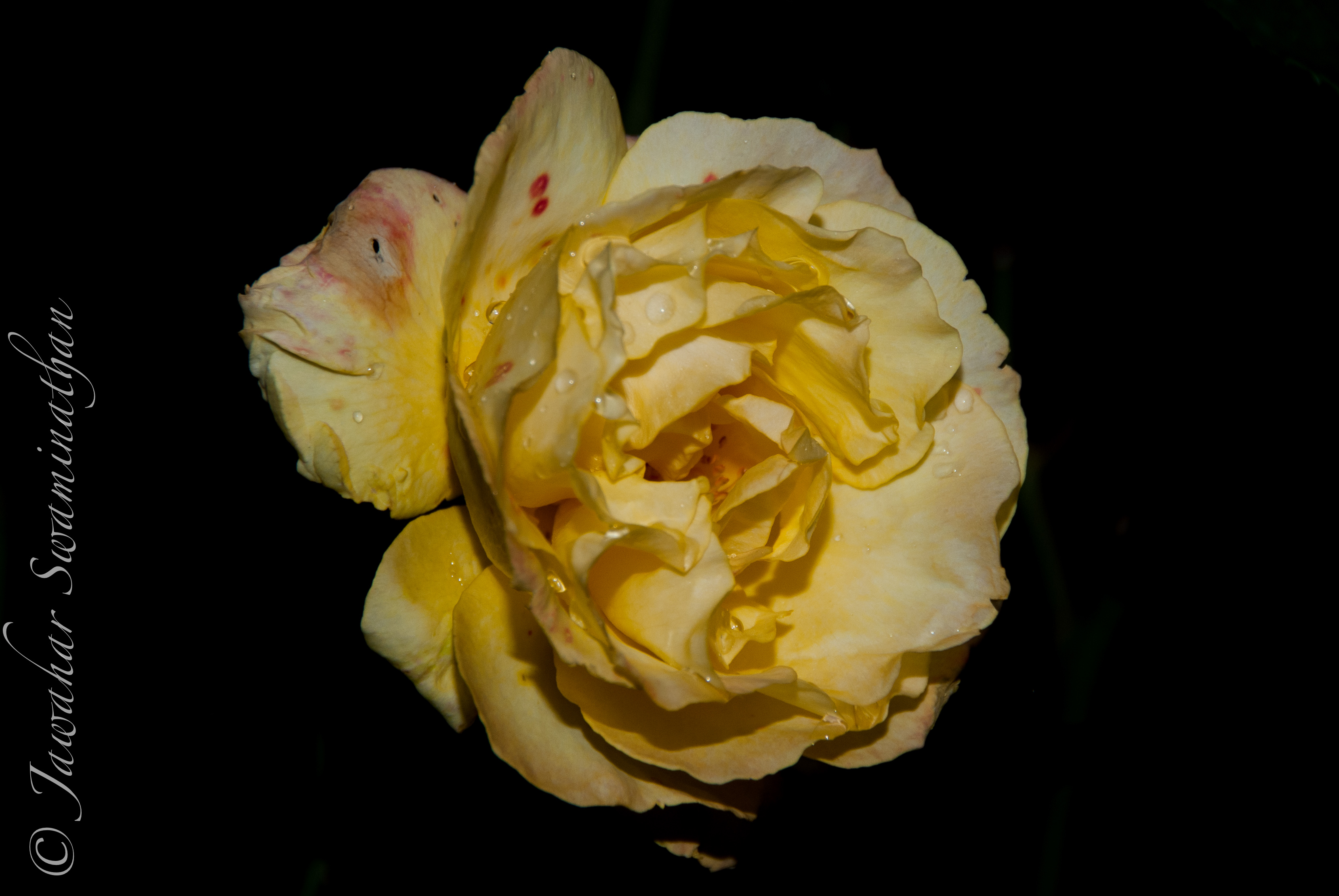
October gets over today, and cold rain and winds lash Cambridge. The nights come early. In the midst of all this, a single rose valiantly blooms for the last time in 2012.
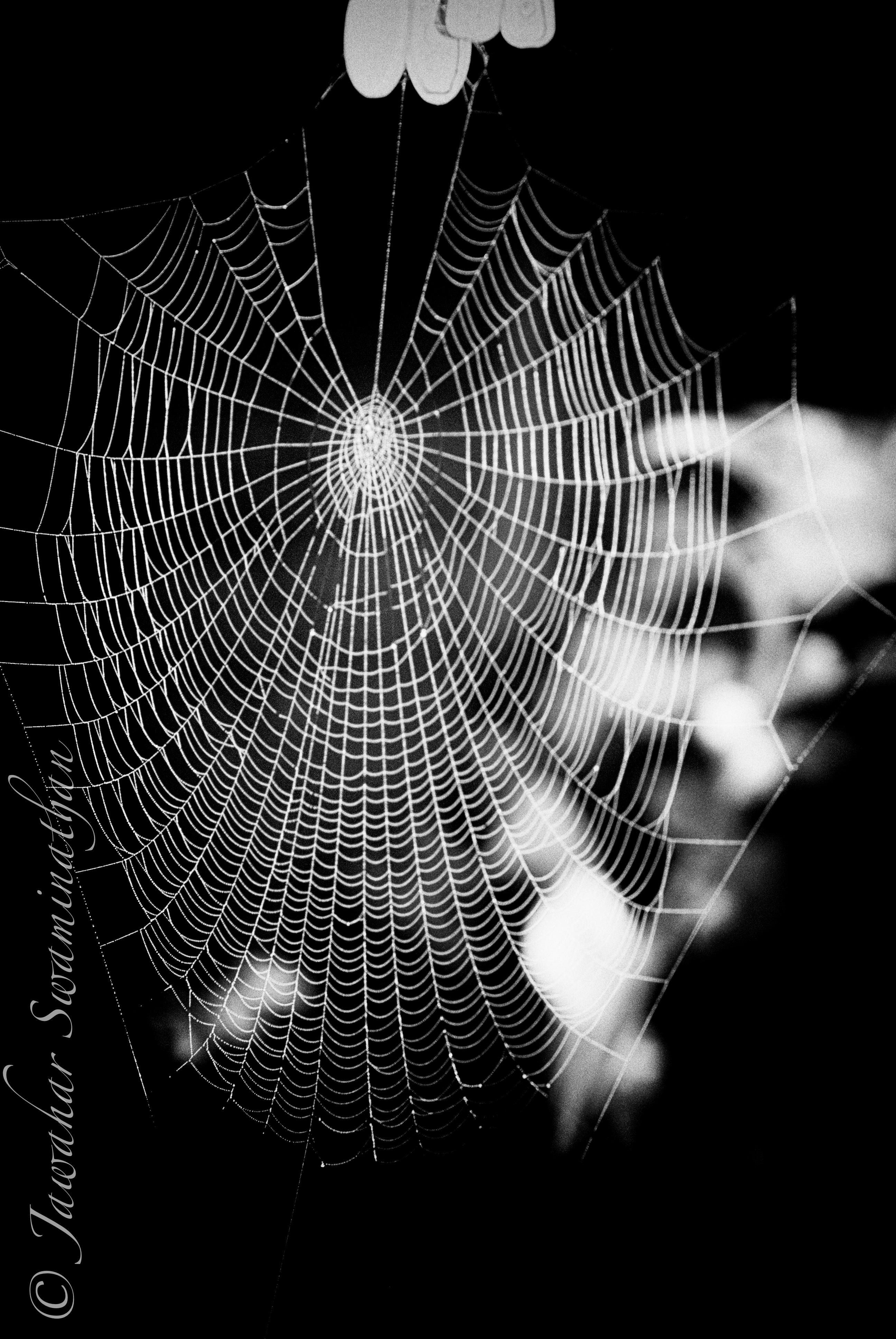
Autumn mornings offer a great chance to see myriad spider webs drenched in the early morning dew making a million natural necklaces of tiny pearly dew drops. I took these pictures on just one such day. The industrious spider had built this web on the clothesline overnight.
1/60 f/5.0 ISO200 with flash1/60 f/5.0 ISO200 with flash1/60 f/5.0 ISO200 with flash
I am constantly amazed at the persistence of the spider to continually attempt to make a web in the most unlikely of places, day after day. Maybe there is a lesson in it for us all…. Technical details
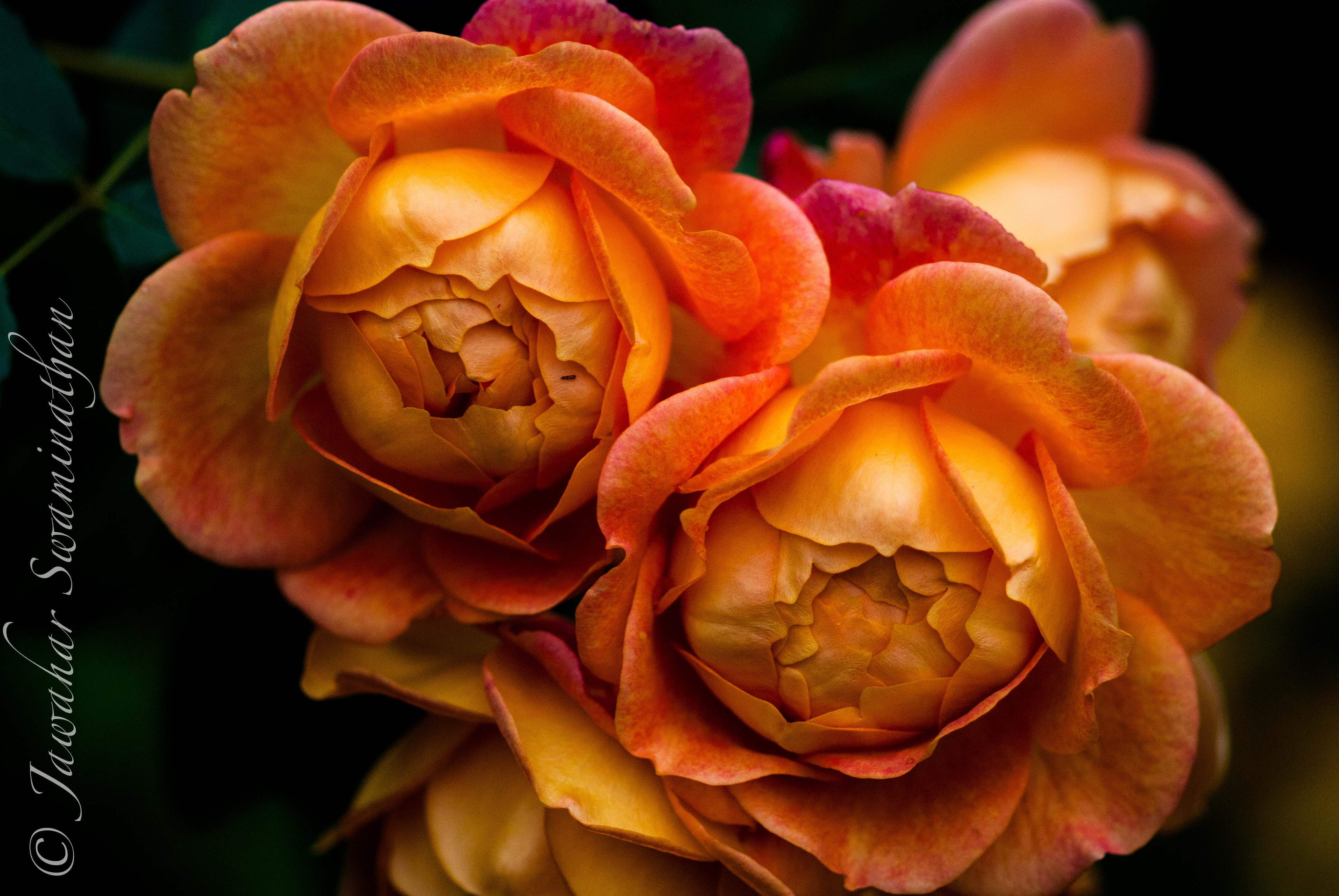
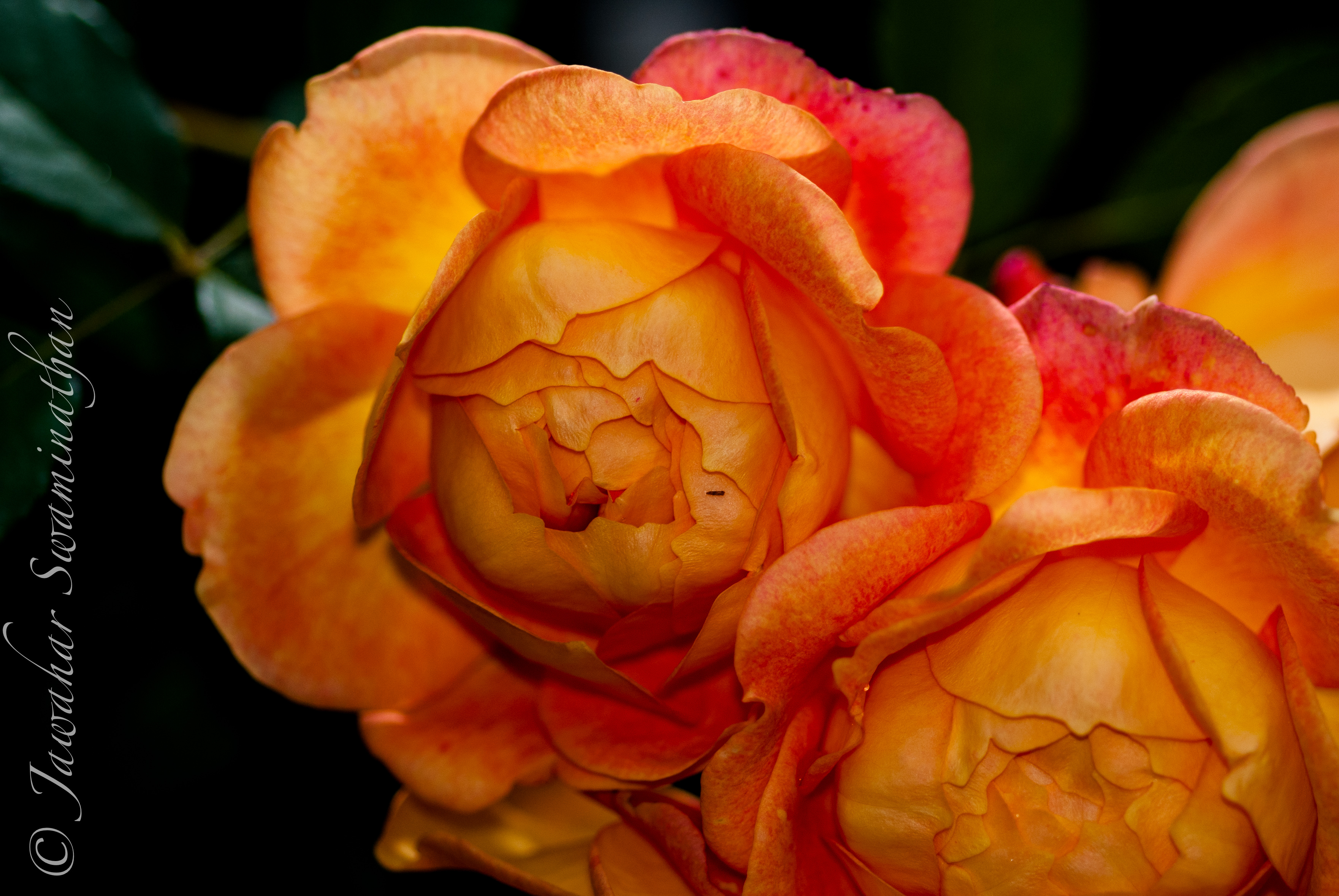
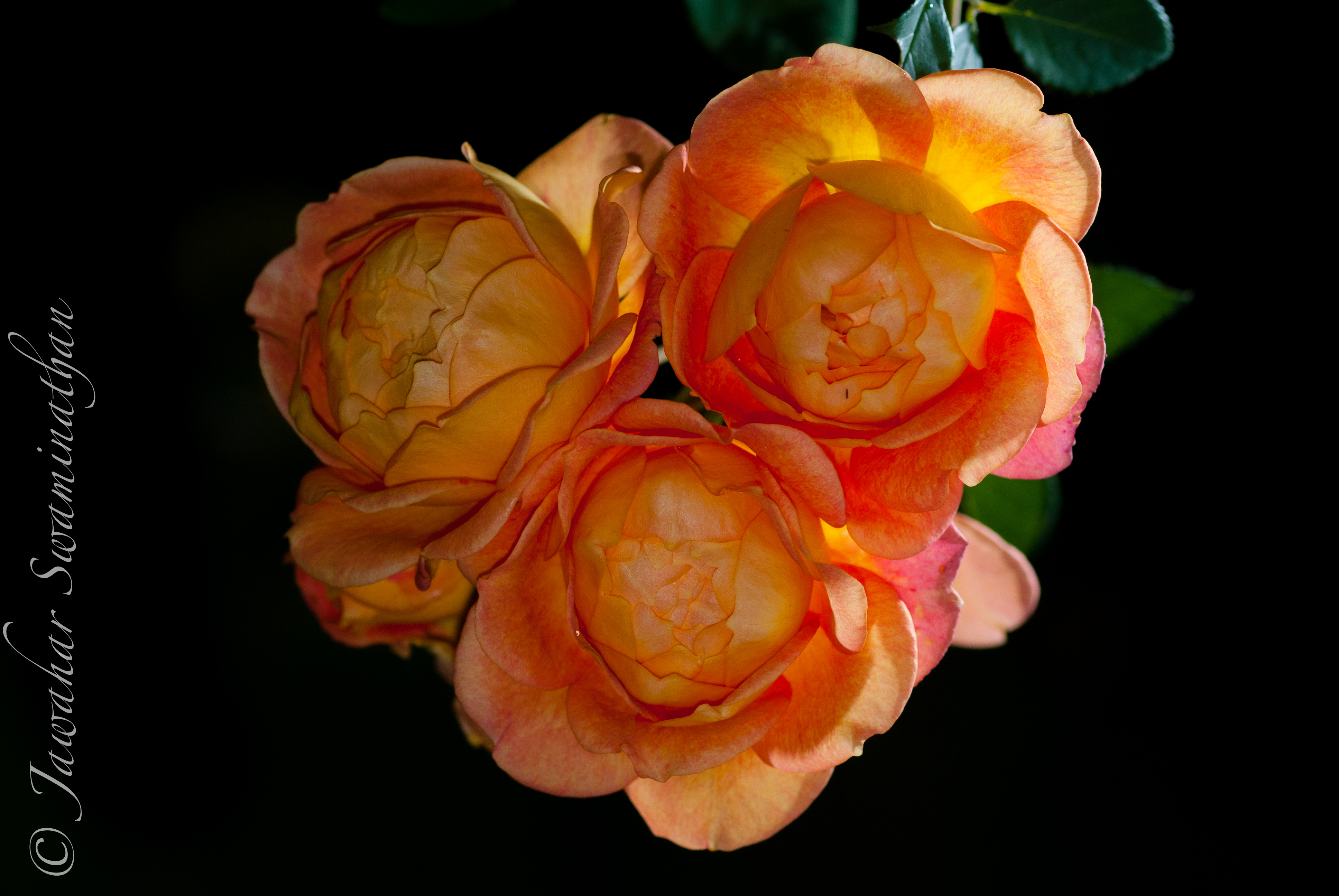
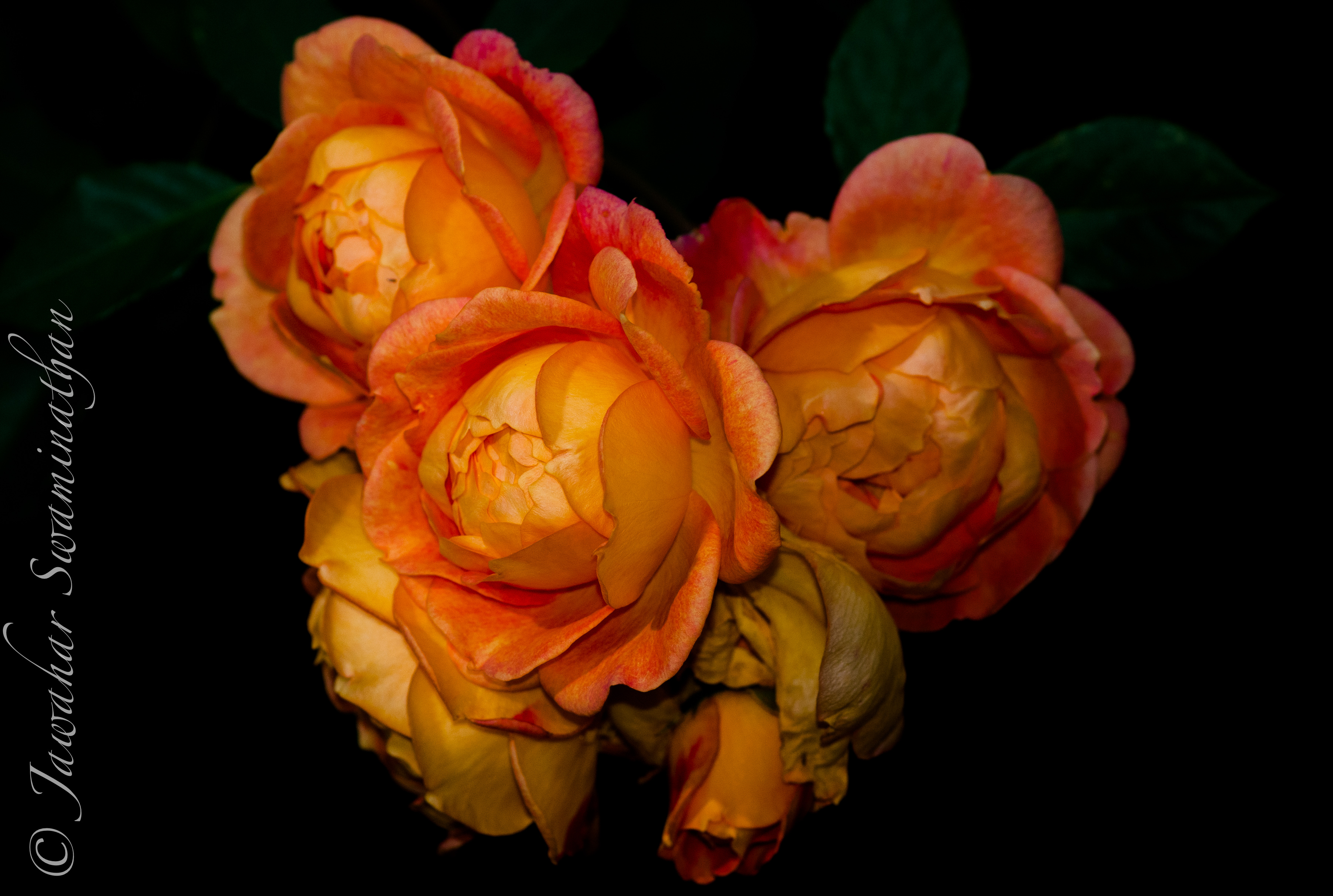
Last week I had this really nice bunch of gold-coloured roses and I wanted to try out my photography skills using a remote flash on commander mode. I placed the flash on the tripod and right angles to the photograph with some interesting results. One of two of these are with the flash on the camera, but can you tell the difference?
head-on flashexternal flash behind rosesexternal flash behind rose to the rightexternal flash at right angles to the camera. Light coming from the left.External flash right angles to camera from left. Longer exposure.external flash about 45 degrees to camera in a V arrangement
The main advantage I found to having an external remote flash was to be able to play with the colours and backgrounds. No post-processing carried out for any of these pictures. The roses too look different depending on the light source.
What do you think? Click on any image to see a full-size view.








 Juridicious