If the doors of perception were cleansed everything would appear to man as it is, infinite – William Blake

Photographed at the Chowmahalla Palace, the seat of the Nizams of Hyderabad, India (January 2012).
If the doors of perception were cleansed everything would appear to man as it is, infinite – William Blake
Photographed at the Chowmahalla Palace, the seat of the Nizams of Hyderabad, India (January 2012).
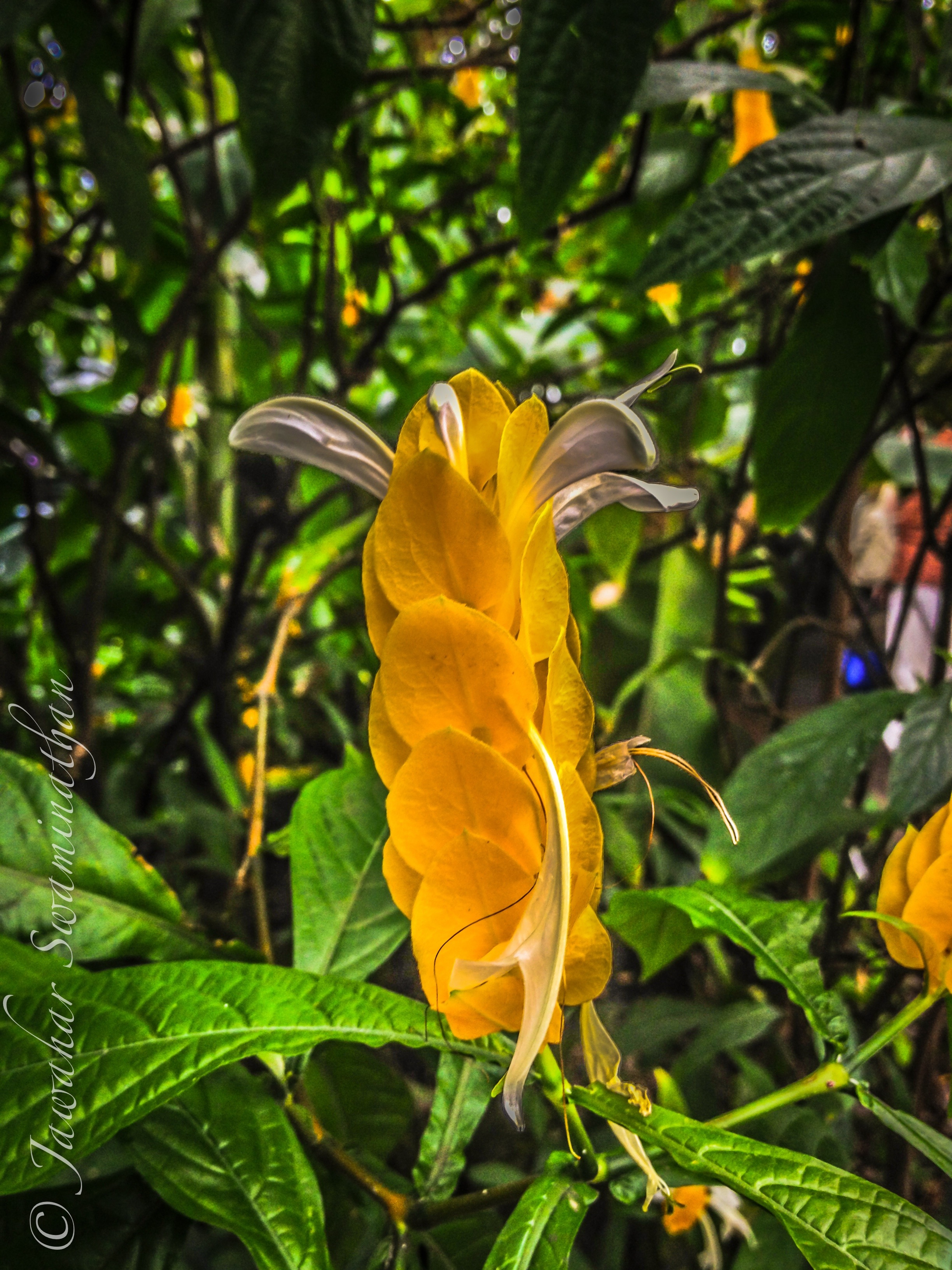
Pachystachys lutea goes by the really interesting common name of Lolipop Plant or sometimes golden shrimp plant. It is easy to see why these names make sense for this sub-tropical plant from the photograph below.
The next in the series of sculptures by Philip Haas is Autumn. Autumn is characterised by ripe fruit (grapes, apples, blackberries) and vegetables (pumpkins, barley) ready for the picking.

These sculptures are inspired by Giuseppe Arcimboldo‘s paintings of “The Four Seasons”. Arcimboldo used fruits, vegetables and grains to creative identifiable and imaginative portraits.
Technical Details
Photographed using Nikon D7000 with a 18-250mm F4.5/6.3 Lens
Autobracketed at -2, 0 and +2 in aperture priority mode (f/6.3 ISO 200)
Processed in Photomatix Pro and Adobe Lightroom
In the New York Botanical Gardens stand 4 imposing 15 foot tall painted fibre glass statues sculpted by the famous Philip Haas. Each statue represents a particular season of the year, and have been inspired by the renaissance artist Giuseppe Arcimboldo. The picture is of Winter, a foreboding season of creeping ivy, mossy scarred bark and bare branches.


This picture is a HDR composite of 3 bracketed photographs at -2, 0 and +2, processed first in Photomatix Pro and then in onOne picture perfect suite for final adjustments. Please click on the image to see the picture in large size.
Agaves are commonly mistaken to be cacti due to their appearance – spiny thick succulent leaves etc. However, Agaves are not related to cacti or Aloe, with whom they share a passing resemblance. The agave plants are monocarpic, which means that they flower only once in their lifetimes after which they die. As the flowering cycle could be decades, some species of Agave are also known as century plants.

The photograph above is that of Agave bovicornuta from the New York Botanical gardens taken with an iPhone 4S and post-processed in Adobe Light 5.0.
Please raise your hand if you are one of those (like me) who always thought pineapple fruits hung from a plant upside down. For a long time I had this vision of a pineapple tree with many pineapples hanging downwards from branches (like that in an apple tree). The first time I saw a pineapple on the plant many years ago, it was, needless to say, a moment for pause and surprise.

Pineapples belong to the Bromeliad family, and like other bromeliads, are low growing plants with tough waxy leaves. This particular specimen was seen at the New York Botanical Gardens and photographed with an iPhone 4s.
The artichoke (Cynara cardunculus) is a type of thistle whose unopened buds (hearts) are used in Mediterranean cuisine. The photograph below is that of the wild (and therefore inedible variety) artichoke, also known as cardoon. That the artichoke is closely related to the thistle is clear from the purple head of petals that sit on top of the flower.

Photographed at the New York Botanical Gardens on 22nd July, 2013 using an iPhone 4S. Later processed in Adobe Lightroom simulating a single frame HDR.
Related Articles:
http://juridicious.com/2012/08/13/british-wild-flowers-thistles/
Yet another view of the colour and texture in the mundane. More colourful pegs. Photographed with an iPhone and processed in NIK Snapseed.

A window at the Boston public library, bathed in a golden glow.

A three shot HDR image processed in Photomatix Pro.
Who said the mundane and the ordinary cannot be interesting. The picture below is of simple clothesline pegs captured in HDR.

 Juridicious