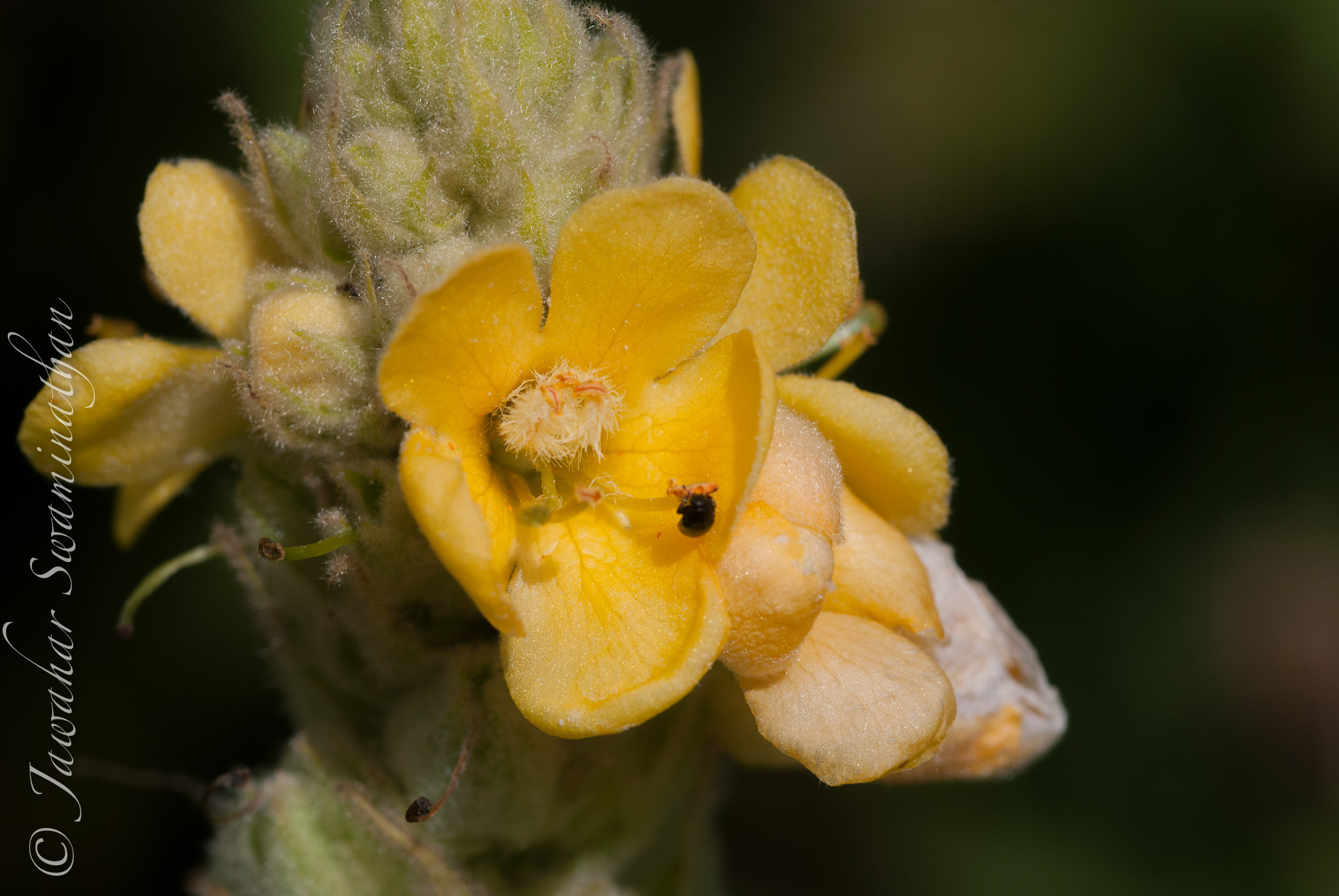
Great mullein (Verbascum thapsus) is a robust, upright plant that is covered with thick white woolly hairs. It is commonly found in grassland, and verges. The flowers are produced on an upright stalk and are usually bright yellow in colour.
Great mullein (Verbascum thapsus) – a member of the figwort family of plants.
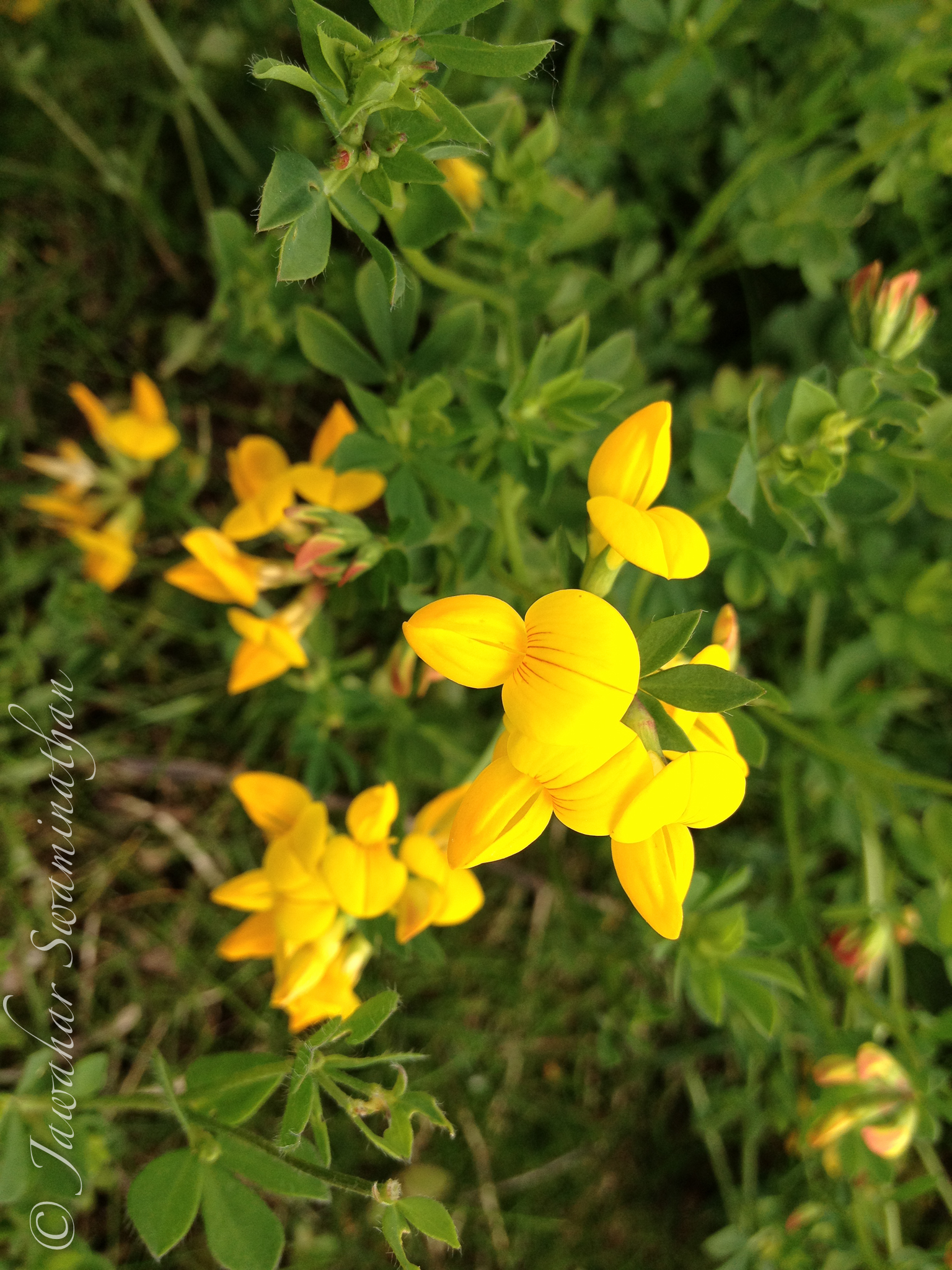
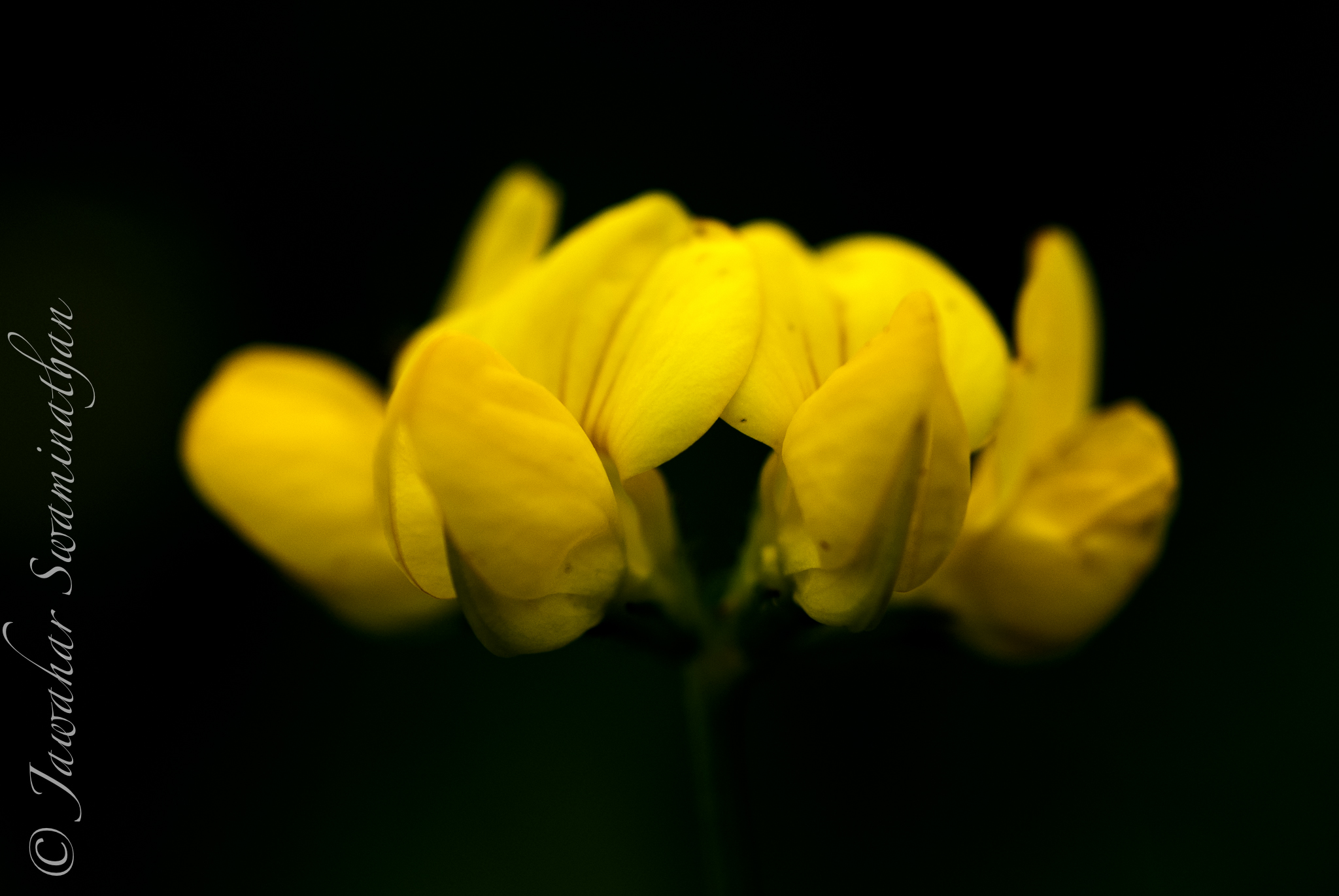
A common sight in British grasslands and meadows. In high season, whole fields seem coated in yellow. These plants, also called Lotus corniculatus, belong to the same family as the pea.
Common Bird’s-foot trefoilMacro-view of Common Bird’s-foot trefoil flowers.
Have you ever wished you knew the name of that plant with those bright flowers that you encounter in the countryside, or even your backyard? Even if the plant were a weed you wanted desperately be rid of, wouldn’t it be nice to kill it after you knew what its name? Some people tell me there’s no fun in classification as it spoils the enjoyment that can be had by just admiring what nature gives to us. Isn’t that a bit like saying “I love this beautiful town, but I don’t really want to know where I am!“. Giving names to things we see is, to me at least, a means by which we make sense of the world around us, communicate with others, and have a common platform for exchange of information and knowledge.
My lunchtime walks in South Cambridgeshire often take me across hedgerows, fallow fields, meadows and suchlike. In the summer, these abound with myriad flowers and plants of various sizes, hues and colours. Barring the most coarse of classifications – “that looks a bit like a daisy” or “probably related to the pea family” – I didn’t have a clue on what these were called. As someone who regularly carries a camera, it was most dispiriting not to know what flower one was taking a picture of. I recently bought an excellent guide of British Wild Flowers by Paul Sterry and used it to identify the flowers that follow. There is also this brilliant website – http://wildflowerfinder.org.uk/ that is very useful in identifying wild flowers.
Another flower that I see everywhere these days is the Great Willowherb (Epilobium hirsutum). The plants are between 1-2m tall and have lots of purple flowers with white insides and a 4-lobed stigma.
Great Willowherbflower (common and widespread in the UK)Common centaury (Centaurium erythraea)– from the same family (Gentianaceae) that gives us name gentian blue.. Flowers 10-15mm across on plants that are no more than a foot tall.
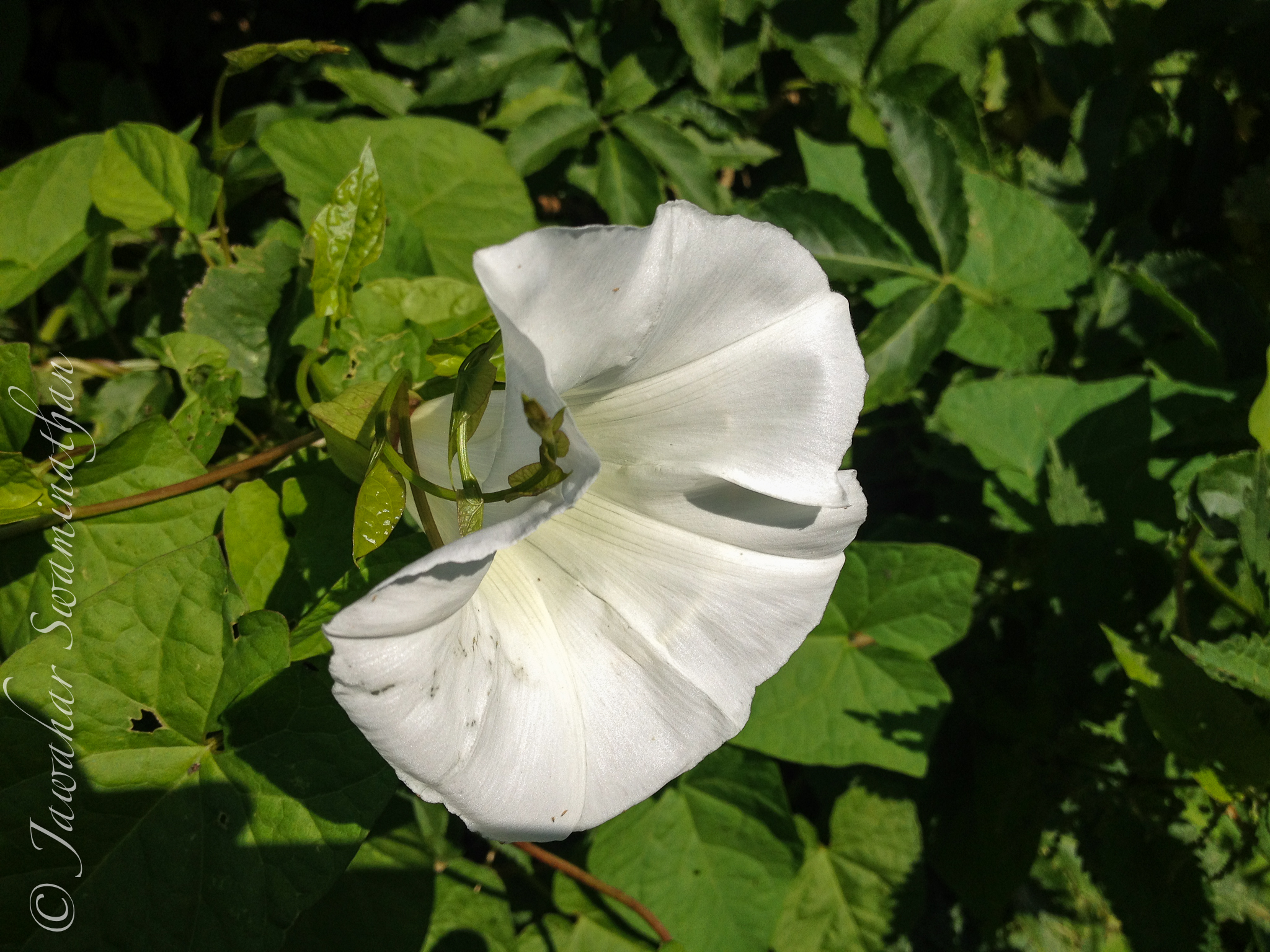
Bindweed – Convolvulaceae
The scourge of the english garden, I didn’t realise that there are different sorts of this member of the morning-glory family of mostly creeping plants. Easily identified by their funnel-shaped flowers. The convolvulaceae also include food bearing plants like sweet-potato (Ipomoea batatas). Here are two of the bindweed family (one of these is slowly killing my hedge as well!).
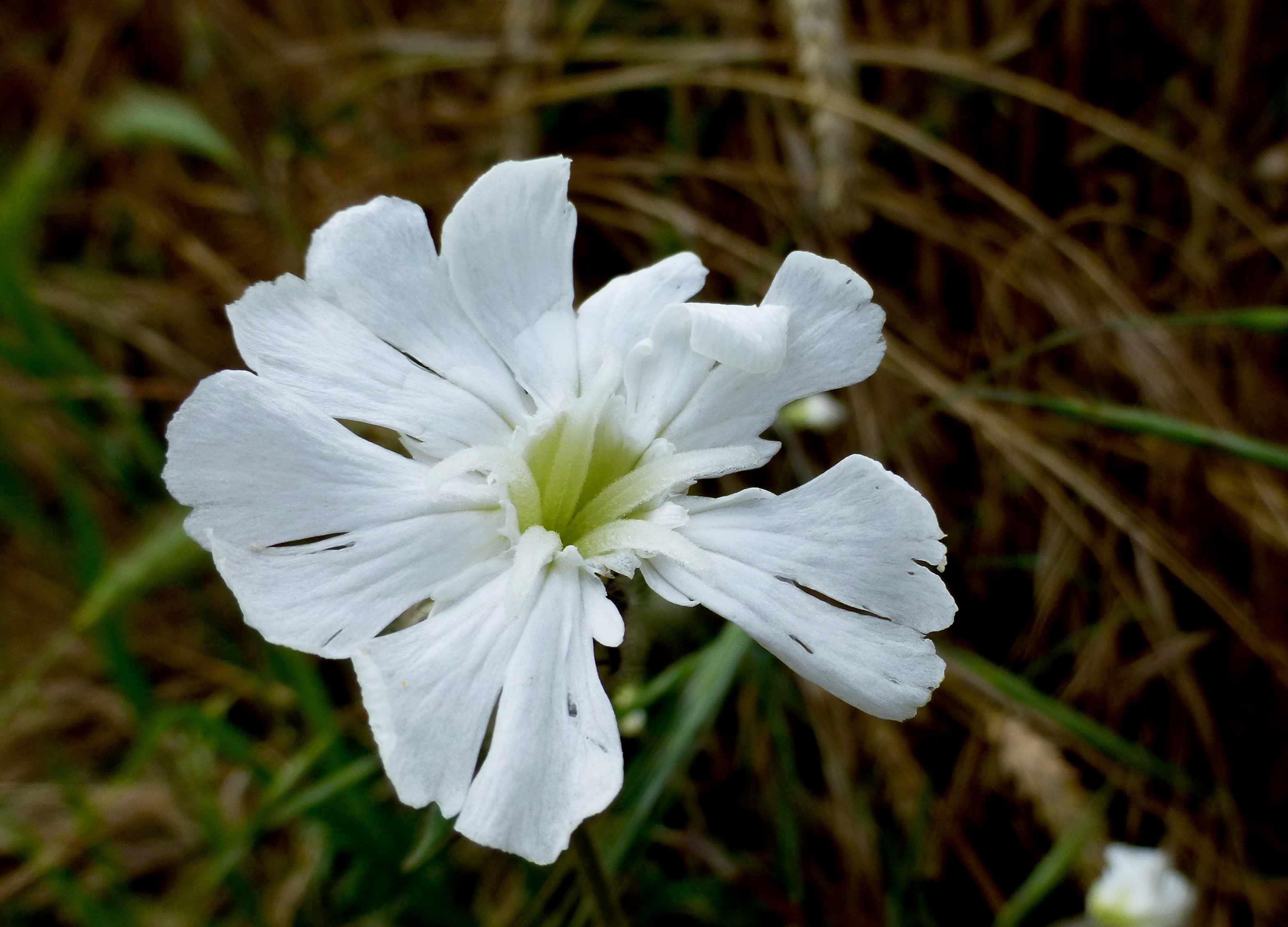
Campion: I see this plant with its funny flowers almost everywhere (they have this rather bulbous base which makes it look like the flower squeezing out), only I didn’t know what its name.
That concludes my first foray into wild flowers in Britain. As I seem to have many more unidentified flowers in my collection, it looks like I have some more reading to do! If, like me, you’ve been ignorant of the sheer variety of wild plants in your neighbourhood, I hope I’ve provided some initiative for you to get out and find out what they are.
Summer time.. The meadows and hedgerows are full of wildflowers that one rarely sees in a typical english garden. Here are a few (I don’t know all their names unfortunately).
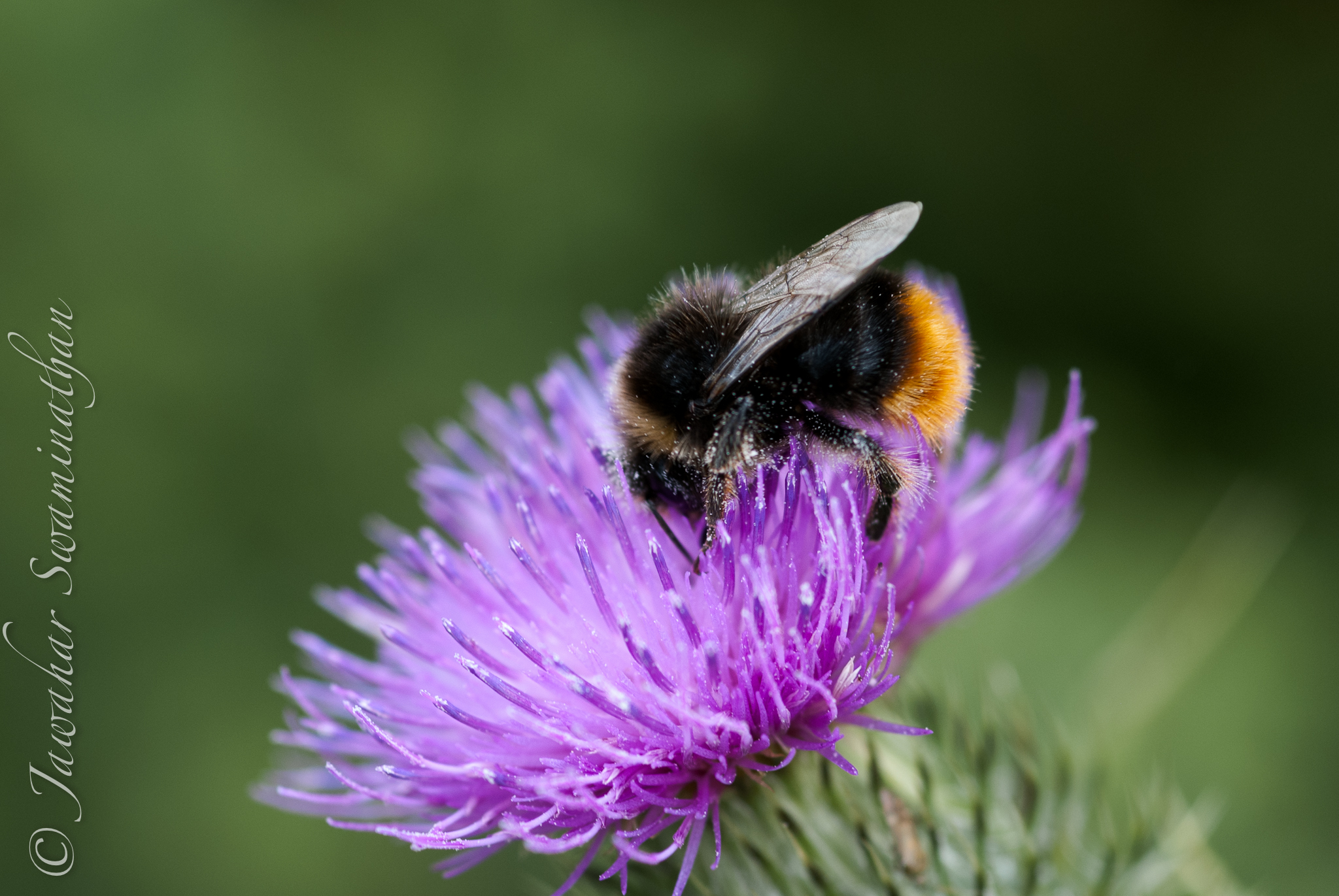
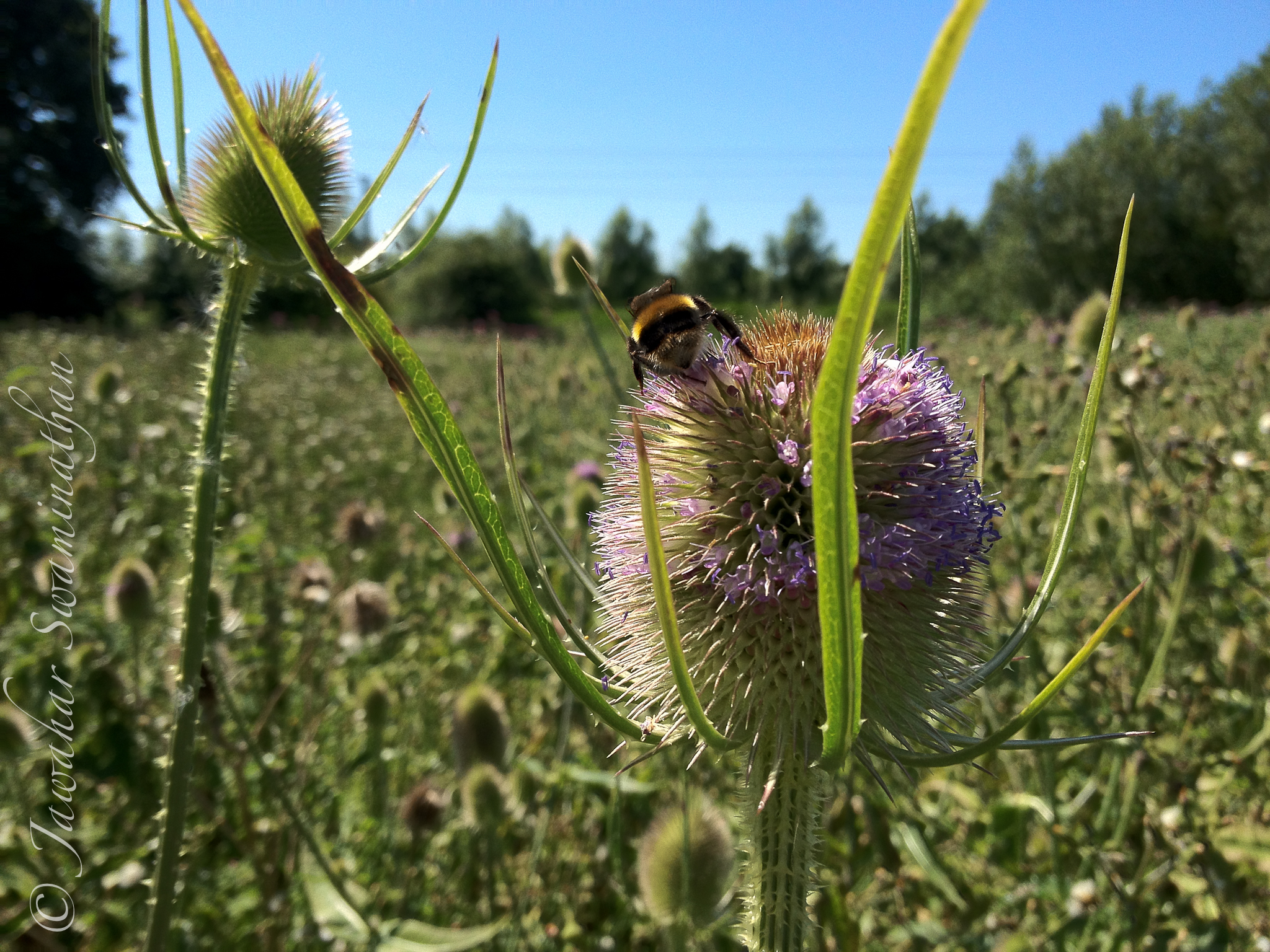
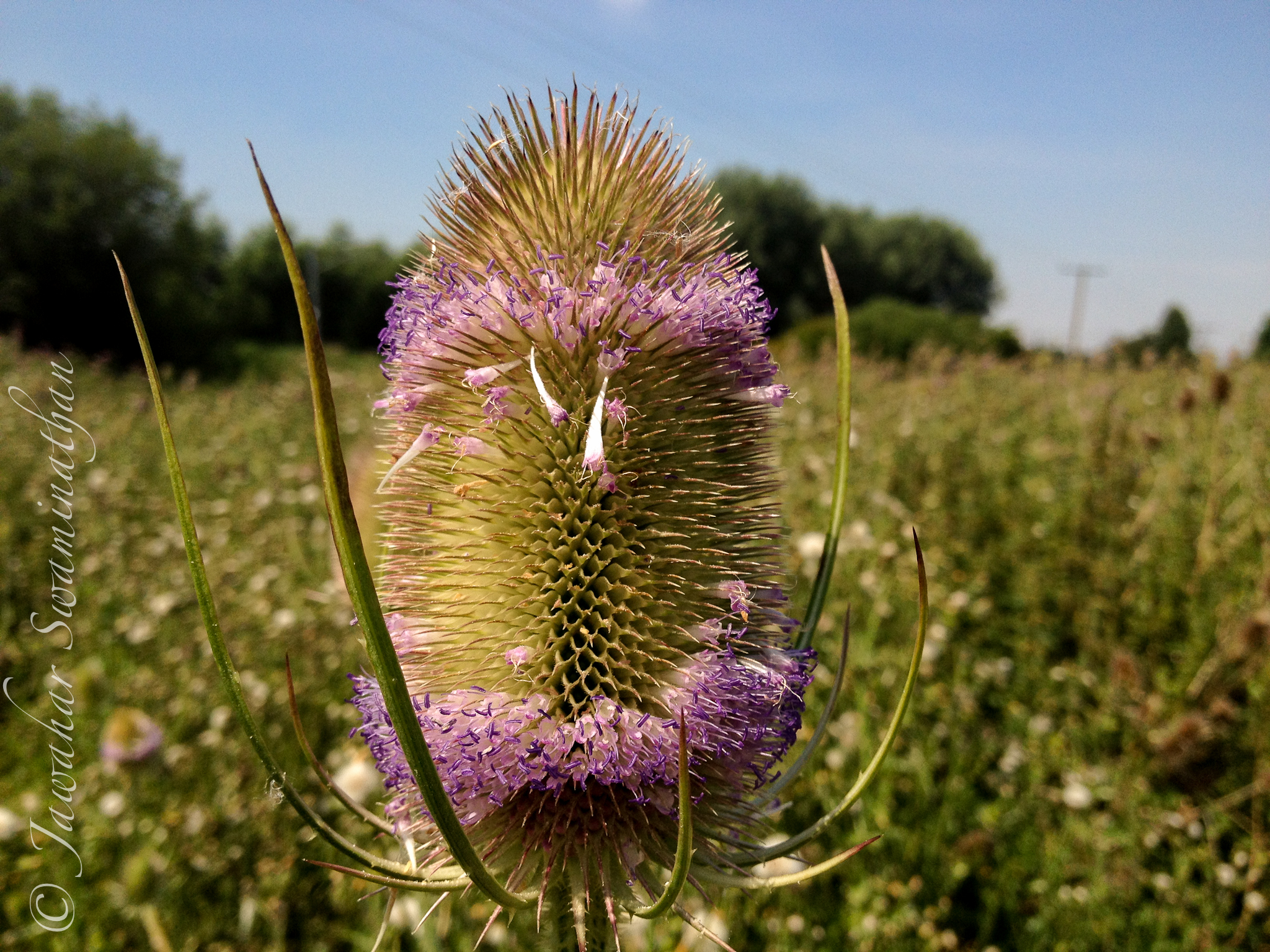
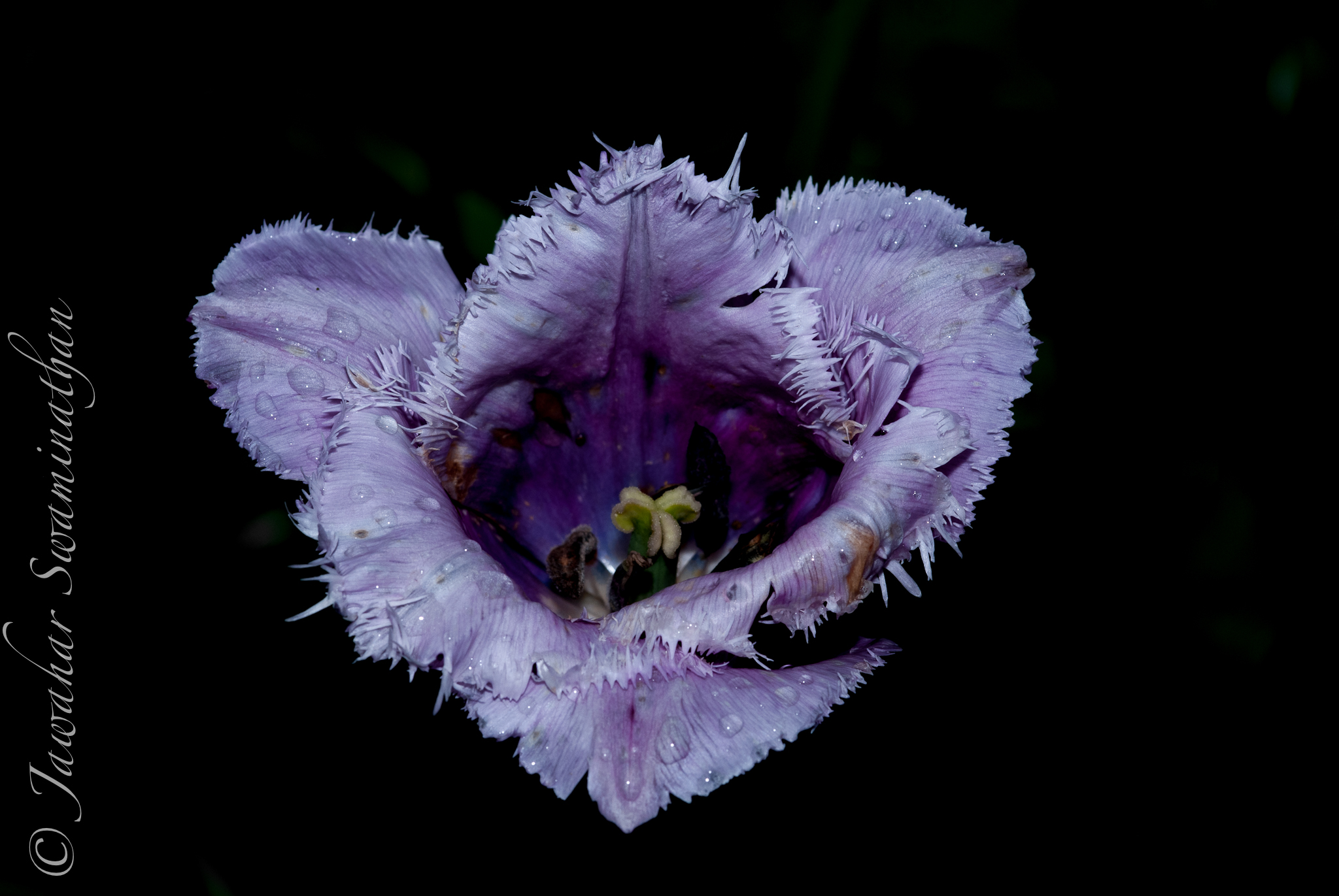
Teasel flower and a bumblebee showing its bottom!Teasel inflorescenceUnknown FlowerUnknown flowerCalystegia sepium (Hedge Bindweed or bellbind) – A perennial weed but nice trumpet flowersPretty pink flowers of unknown species
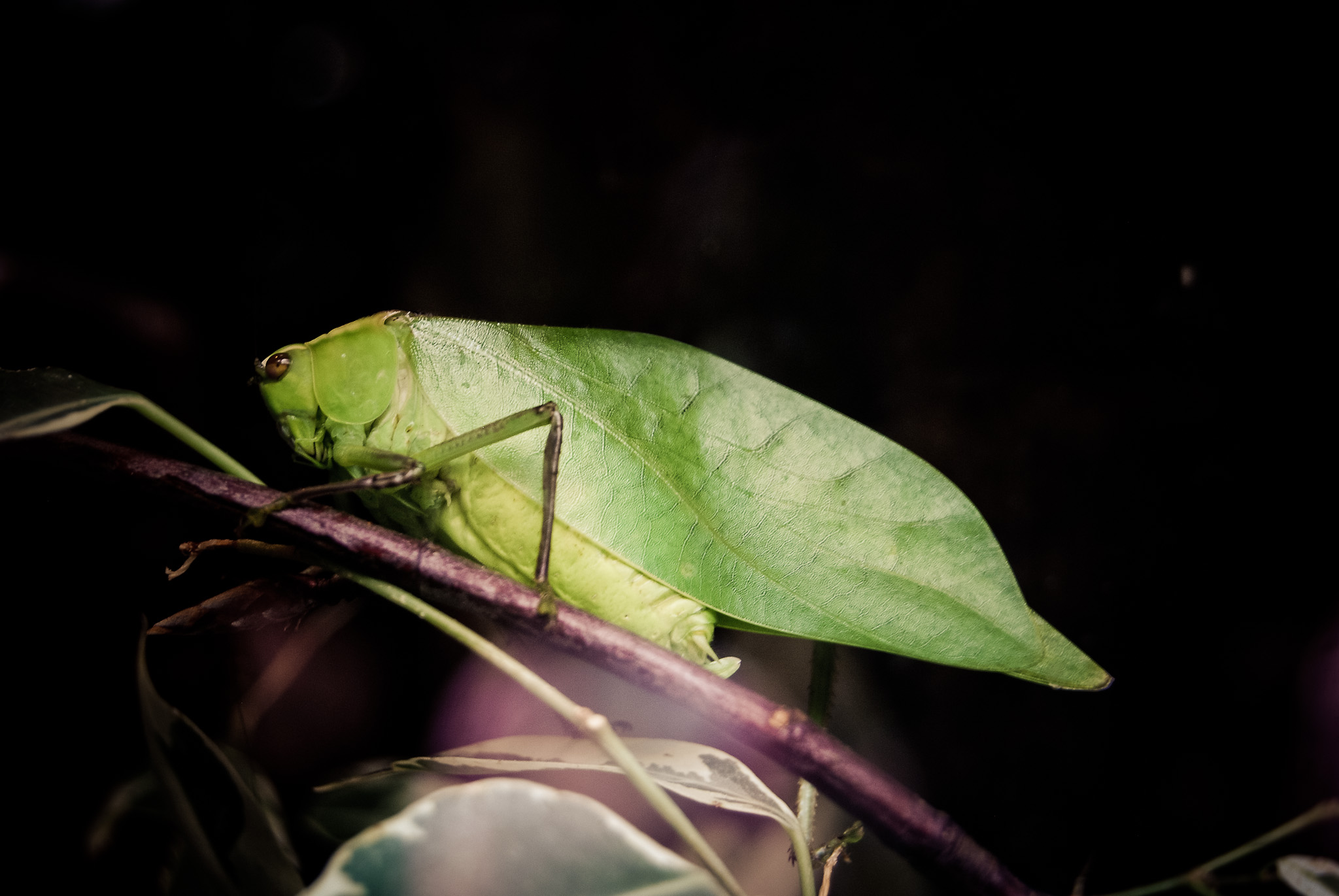
As far as camouflage go, leaf insects must be one of the true masters. They belong to the genus Phyllidae and are native to South Asia and Australia. Leaf insects are so called because of the colouring and patterns on their wings that resemble leaves (with veins, and even serrations or nodules on some species), making them invisible to predators.
This particular leaf insect was photographed at Chester Zoo, one of five species that the zoo manages.
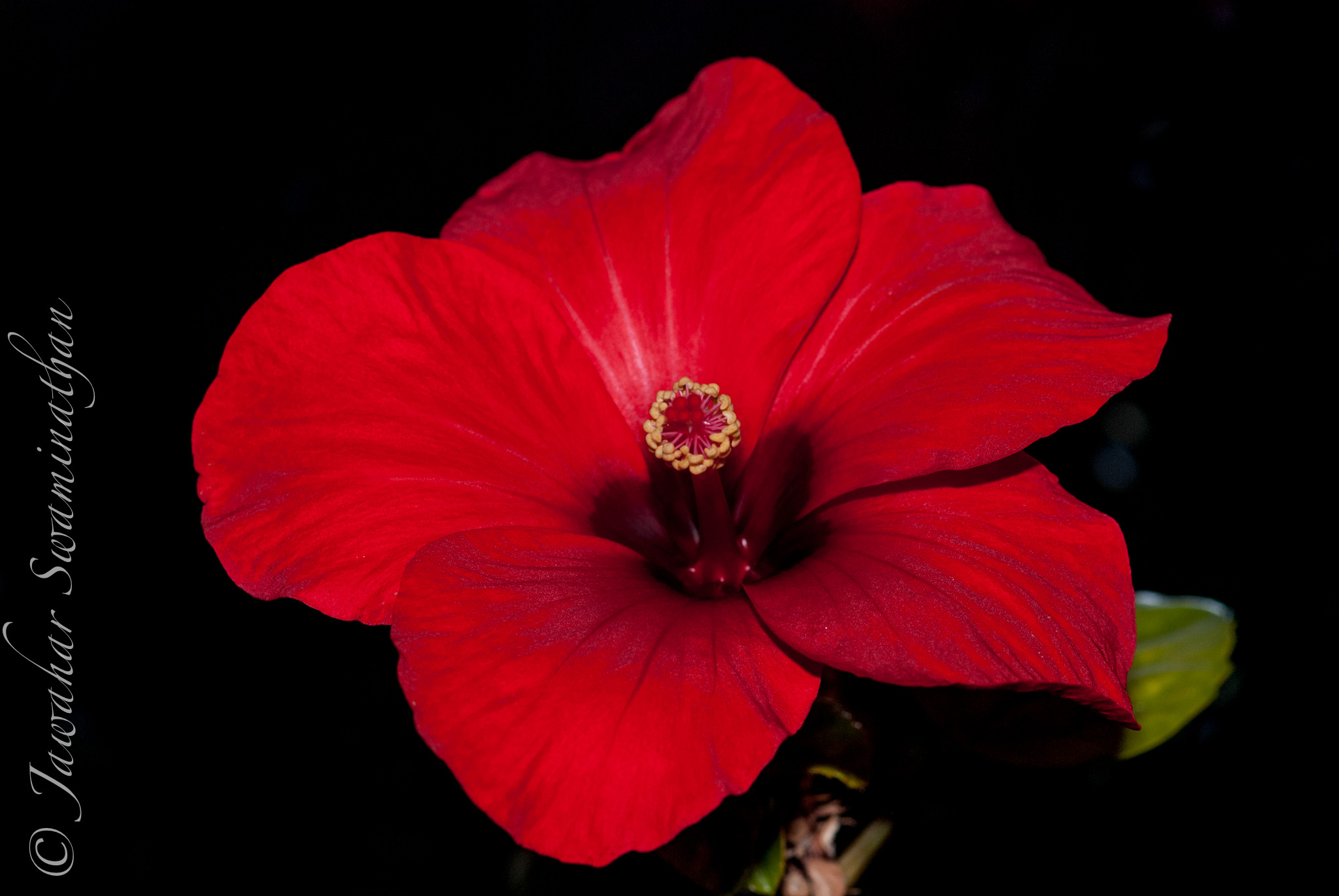
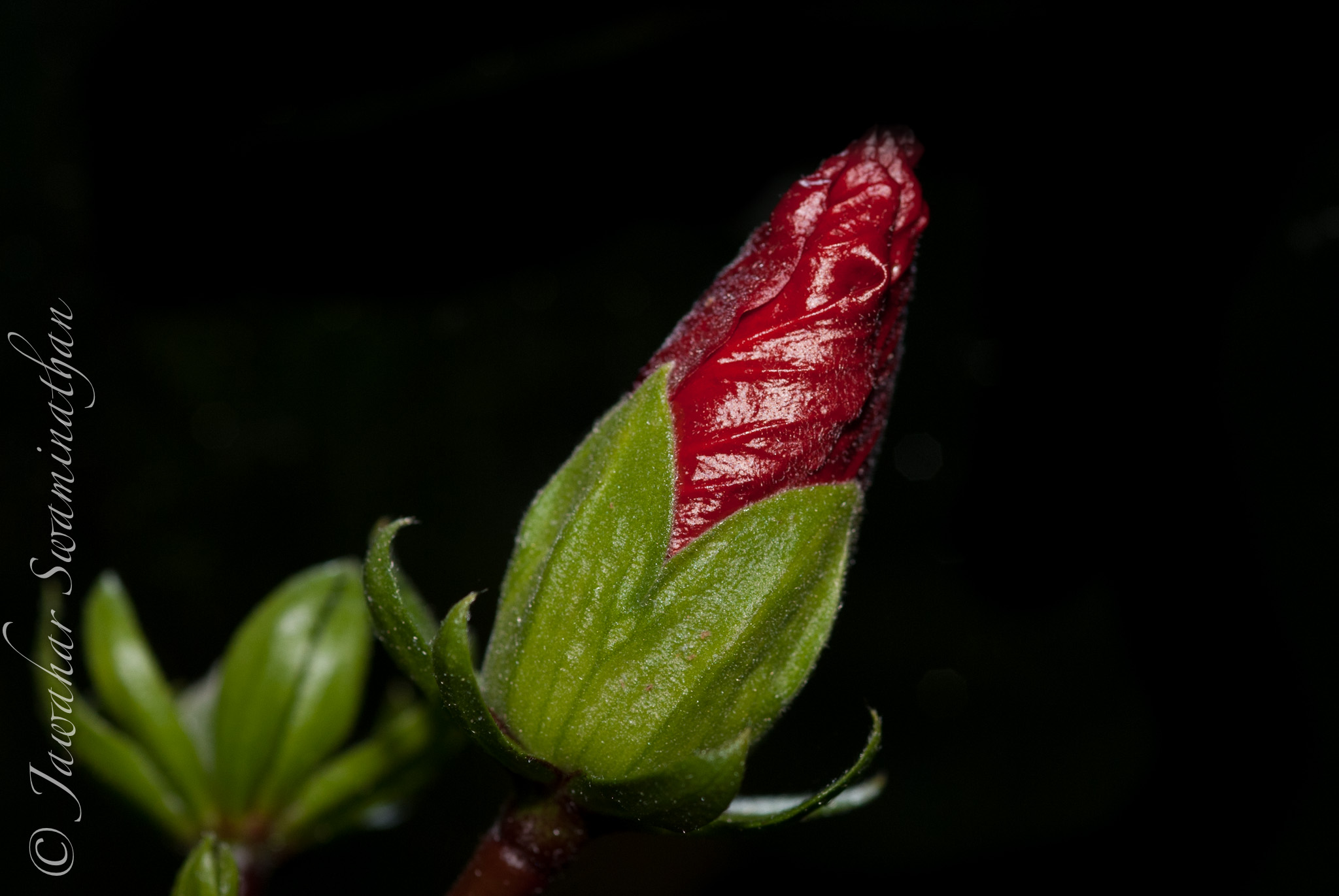
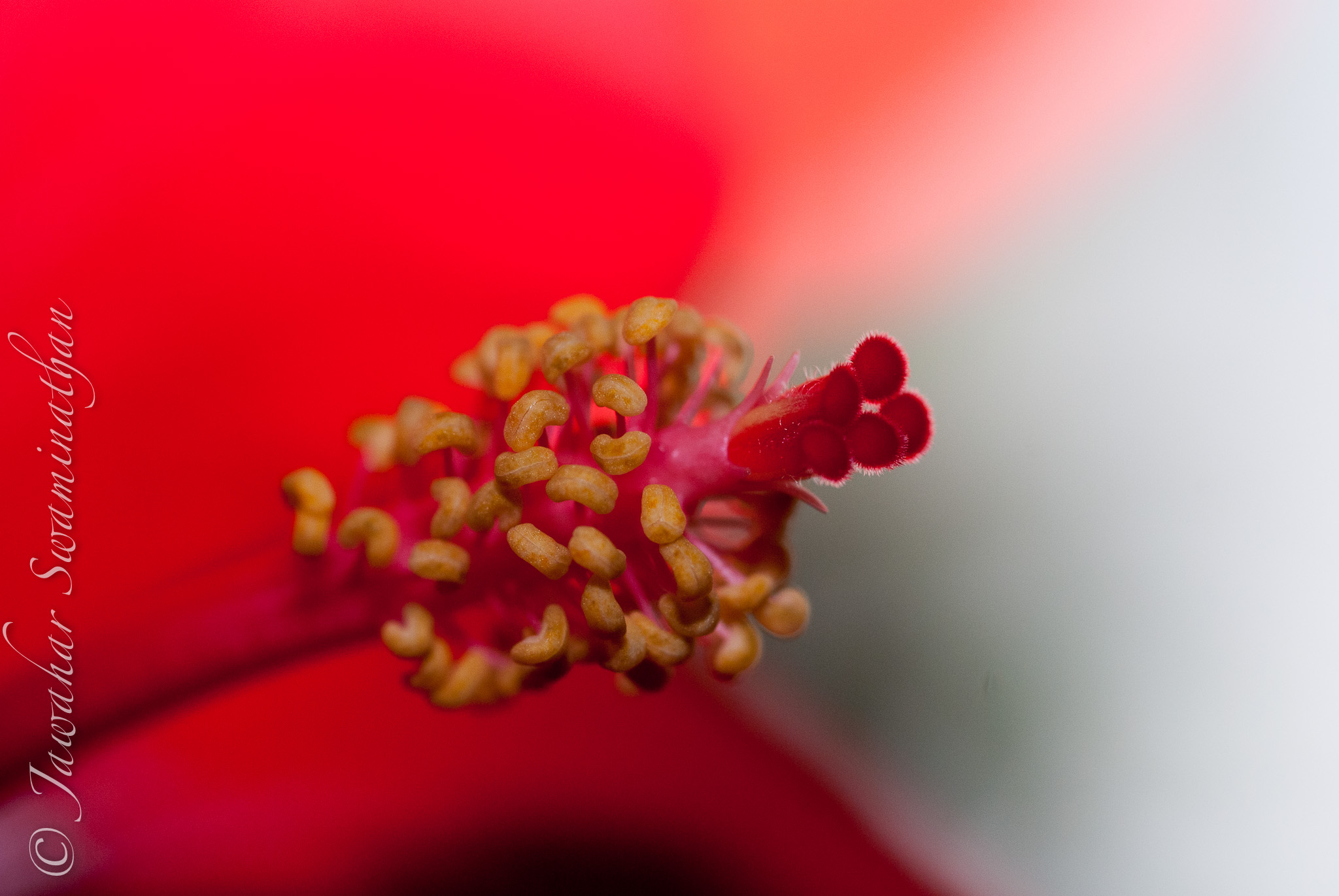
Growing Hibiscus indoors in a country like Britain poses challenges. For one, these plants need to be grown inside the house all year round, and need good warmth and sunlight. But the troubles fade when the flowers begin to appear. Big red (or orange/white depending on the variety) short-lived flowers add much-needed splash of colour indoors and offer a hint of the orient!!






 Juridicious