NEMO is a science centre in the city of Amsterdam in the Netherlands. It is an iconic structure that is shaped like a ship, that also celebrates glorious dutch maritime history. The building has been designed by the famous Italian architect Renzo Piano.
View from the pedestrian footbridge leading to the NEMO Science CentreAnother view of the iconic and futuristic structure. The roof of the museum offers panoramic views of Amsterdam and is a great place to relax with a cool drink.
All photographs have been post-processed by the use of NIK Color Efex Pro 4.0 filters to enhance contrast and detail. Click on any of the pictures for a larger view on Flickr.
A boat in choppy high tide North Sea waters at Sheringham in Norfolk. At low tide the sea recedes to well beyond the markers leaving a pleasant sandy beach.
Via Flickr:
A boat in choppy waters. Sheringham, Norfolk
Sheringham is a small picturesque town in North Norfolk. This picture shows the town towering over the sea defence walls protecting the town from flooding.
Gonville and Caius College – the fourth oldest college in Cambridge (Estd: 1348) has a very interesting six-sided sundial on one of the gates. The exact time I took this picture was 1:54PM GMT, and interestingly the sundial shows a time that is just an hour off.
Is this due to difference in local and GMT? Or was I looking at the wrong sundial? A later visit may answer that question.
Of the 31 constituent colleges that make up the University of Cambridge, none is more famous than the Trinity College. Apart from being the largest constituent college in Cambridge (or Oxford), members of the college have won more Nobel Prizes (32 of a total of 75 awarded to Cambridge University members) than any other institution in the world! The college itself is one of three royal colleges in Cambridge (St. Johns and Kings College being the other two). Trinity was established in 1546 by King Henry VIII of England, but it was under the leadership of Thomas Nevile, that the college was designed and built. The list of notable alumni of Trinity makes impressive reading, from Isaac Newton, Lord Tennyson, Ernest Rutherford and Niels Bohr to Jawaharlal Nehru, Amartya Sen and Bertrand Russell, and definitely worth a visit on days the college is open to visitors.
The following pictures of Trinity College, were all shot in sets of three and then merged into HDR using HDR Efex Pro from NIK software.
The great court of Trinity College, CambridgeCentral fountain at the great court, Trinity College, Cambridgeante-chapel with marble statues of famous Trinity alumni.The Trinity College Chapel organ – built between 1693-1708Trinity college chapel with the eagle lectern (foreground) and stalls.Statue of Sir Isaac Newton, a prominent Trinity alumni. (non-HDR)
Technical Details
Nikon D7000
Tamron 18-250 f3.5/6.3 Lens
Adobe Lightroom 4.1 with HDR Efex Pro from NIK software
I took over 150 pictures at the Golconda Fort, Hyderabad, India on my last visit, which felt like a lot at that time. Now in the comfort of my computer at home, I wish I’d taken another 150-odd. The Golconda fort offers endless possibilities for photography. There are relatively unexplored nooks and crannies and it isn’t too difficult to get away from the throng of visitors to the fort.
The Golconda fort complex.Half-way destination at top. As seen from the office complex of buildings at the foot of the fort.Crumbling buildings inside the walls of the fort. In its heyday, this fort and its buildings would have been a site to behold.Ancient steps that no longer lead to a destination.Remains of another era!
It is easy to let the mind wander into imagination of how this place would have looked in its heyday. Now all that remain are crumbling stones that tell a story of a time gone by. Rooms stark with their shorn walls, mute in their silent despair, as they too gradually disintegrate to dust.
In the next installment of this series on Golconda Fort, I shall be covering the journey to the top of the fort. Please click on any picture to see further detail on my flickr pages.
Technical Details:

Nikon D80
Tamron 18-250 f3.5/5.6 lens
Post-Processed in Adode Lightroom and NIK Color Efex Pro 4.0
I love selective colouring photographs. While this is one of the most time-consuming step of a post-processing workflow, it can breathe life into otherwise ordinary photographs. It can also be used to draw attention to a particular object in crowded field. The following pictures are my experiments with applying selective desaturation in Adobe Lightroom on a few pictures from my trip to Amsterdam 2012 spring.
Dutch Gouda cheese on sale at the Bloemenmarkt (flower market)Housing shortage in Amsterdam has resulted in these unique permanent water homes, with plumbing, electricity and other mod cons.A sporty boat on one of the many canals in AmsterdamPreviously posted picture of water taxis in Amsterdam.
You may wish to click on the pictures to see a larger version on flickr. As always I look forward to comments and criticisms.
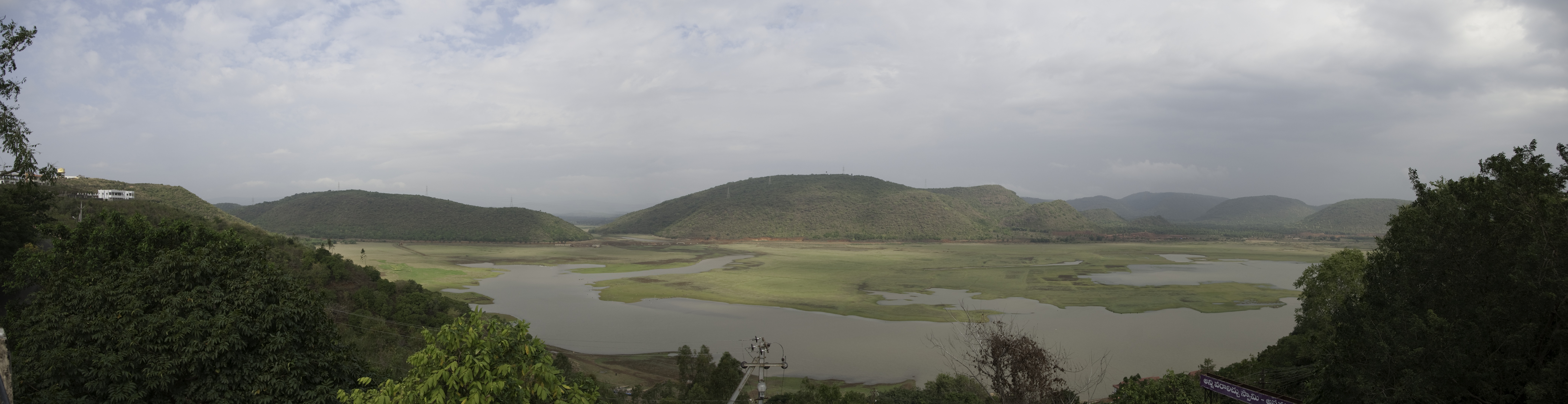
Panoramic view of the Pampa reservoir from the Sri Veera Venkata Satyanarayana Swami temple in Annavaram (click on picture to see in full size)
The temple itself is a short climb from the Annavaram village, and is also accessible by car. Legend has it that the location of the statue of the deity appeared in a dream to a local brahmin E. Prakasam, who with the help of the local zamindar (landowner) Sri Raja I.V.Ramarayanam traced the statue to the top of the hillock and helped to set up the temple in about 1891.
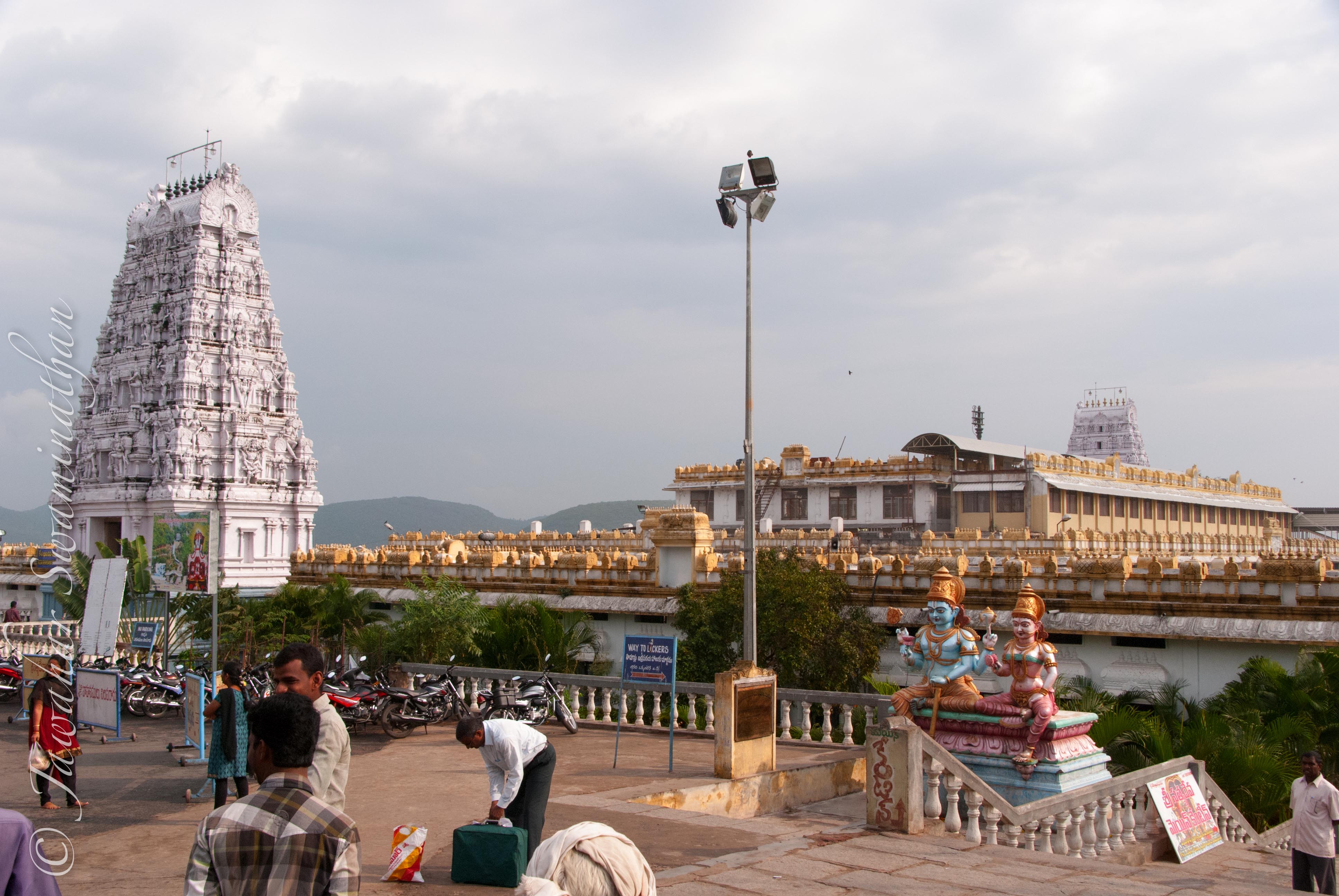
The temple of Sri Veera Venkata Satyanarayana Swami, Annavaram. Both the western (foreground) and eastern entrance gates (gopurams) are visible.
The name Annavaram is a conjugation of the words Anina (Wanted) and Varam (Boom). This temple is now considered to be second only to the famous Venkateswara temple at Tirupati in Andhra Pradesh. The temple is constructed in the classical Dravidian style with two tall towers (gopurams) facing due east and west.
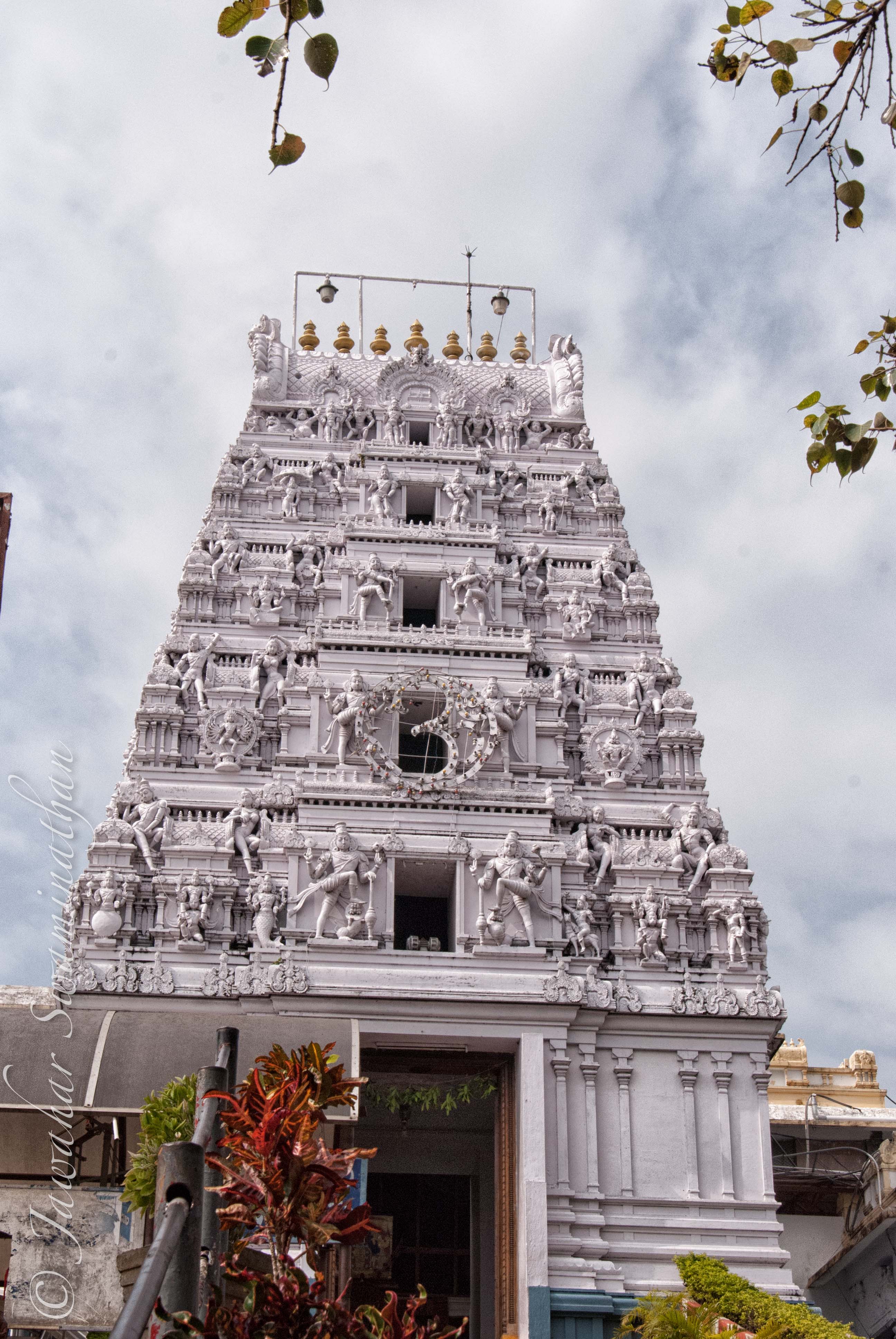
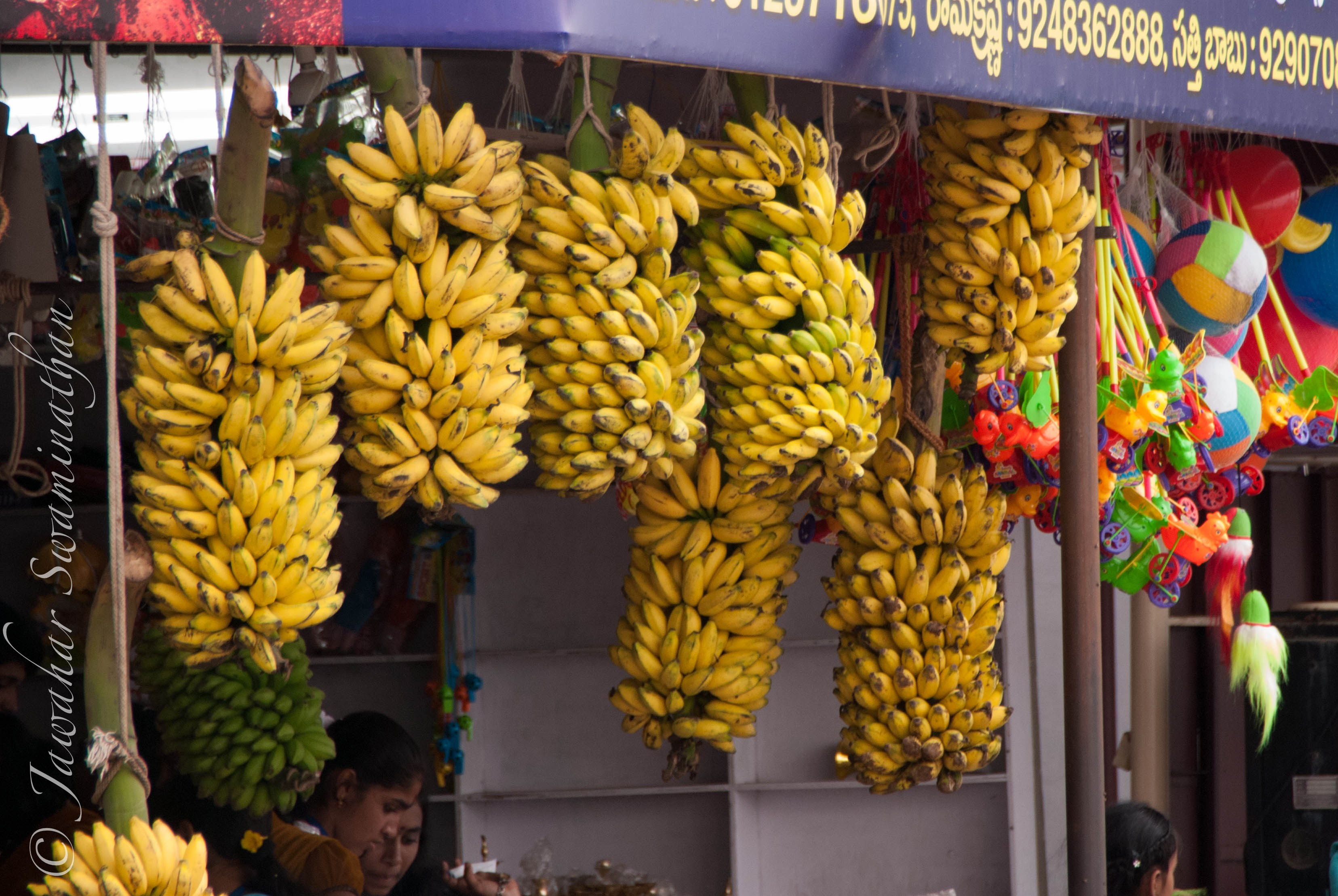
Western entrance gate (gopuram)The main entrance (East) of the temple.Fruits and other offerings (and souvenirs) on sale at a local shop in the temple complex.
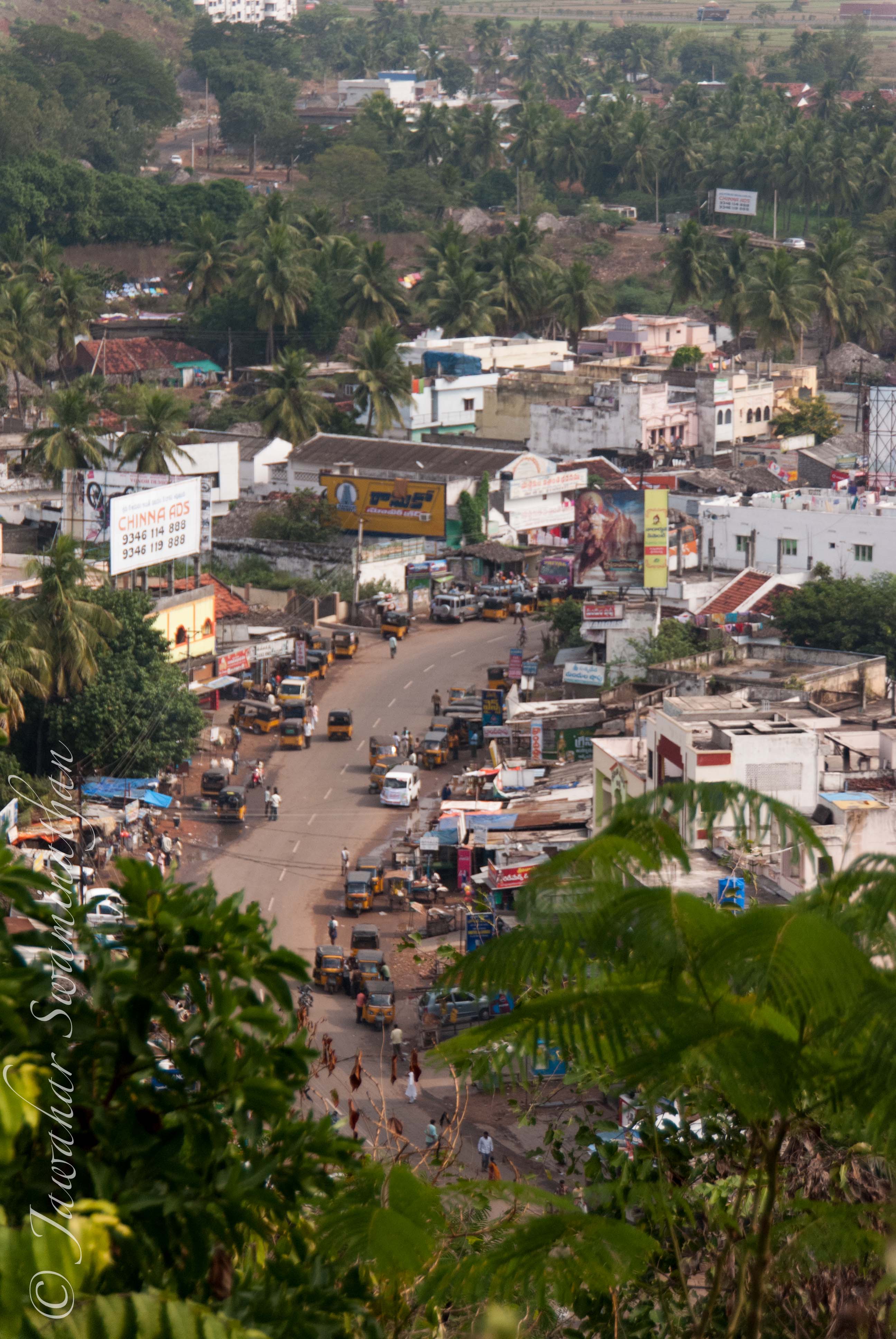
The temple complex offers great views of the Bay of Bengal (on a clear day) 11 miles east of the temple as well as the village of Annavaram 300 feet below.
Far from the maddening chaos of Annavaram below.
The large central courtyard of the temple has facilities for pilgrims to bathe, stay or eat, as well as halls and rooms for various religious ceremonies (marriages etc).
Central temple courtyard, with the western entrance on the far left.
A stroll through the temple shows that the temple was constructed and extended over time, with some old buildings and some more recent construction. The oldest part of the temple as it stands today dates to just over 110 years. But if the legends are true, then a temple may have existed in this very place for many centuries before falling into disrepair.
A seemingly old gate in the temple complex not built in the Dravidian style
Pilgrims flock to Annavaram from all over the state to fast and pray. On any day of the year, the temple is a hub-hub of activity.
Sacred saffron cloth tied to a tree branch in hope of fulfillment of a wish
I must confess that I’ve never been inside the sanctum itself in all my visits to this temple. I find the environs of the temple fascinating and love observing the faith and piety in the pilgrims visiting the place. I also find the views in and around the temple beautiful and serene.
Rays of the sun casting a beautiful light on the Pampa reservoir, as seen from the Annavaram Satyanarayana Swamy temple. Slight HDR effect.
Annavaram is definitely worth a visit, even if you’re non-religious, and particularly if you are a practicing hindu. The trip from Visakhapatnam takes about 2.5 hours by hired taxi cab. On a clear day you should also be able to see Bay of Bengal (but I’ve never managed to see this in all my visits).





 Juridicious